Wild-type ATTR amyloidosis, also known as senile systemic amyloidosis, is a non-hereditary form of transthyretin amyloidosis that occurs without a genetic mutation in the TTR gene.
In this condition, the transthyretin protein becomes unstable with aging, misfolds, and forms amyloid fibrils that deposit in tissues, particularly the heart. Unlike hereditary ATTR amyloidosis, wild-type ATTR is not inherited and does not require a family history.
Wild-type ATTR amyloidosis is increasingly recognized as an important cause of heart failure in older adults.
Wild-type ATTR amyloidosis develops when normal transthyretin protein gradually becomes unstable over time. Even without a genetic mutation, aging can promote protein misfolding and amyloid formation.
These amyloid deposits accumulate slowly, most commonly in the heart muscle, leading to progressive stiffening of the heart walls. This process results in cardiac amyloidosis.
Because it develops gradually and primarily affects older individuals, wild-type ATTR amyloidosis is often mistaken for common age-related heart disease.
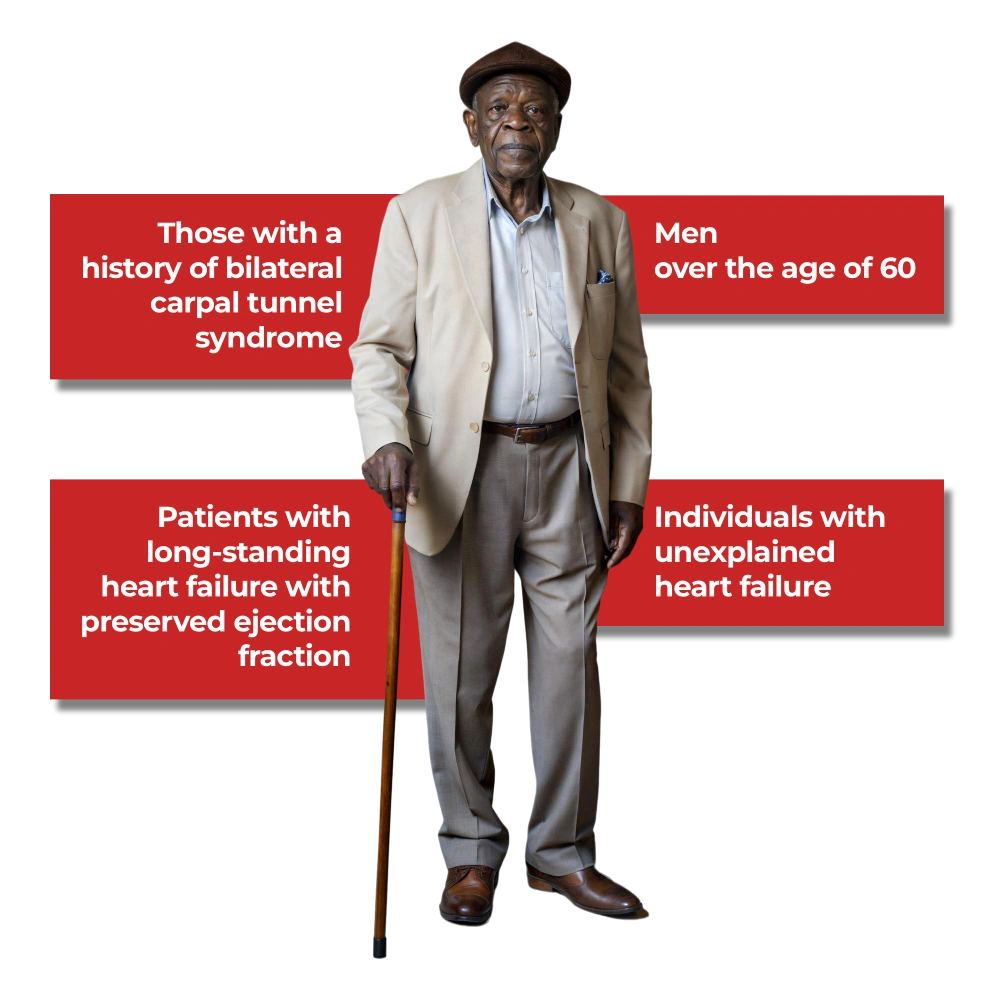
Wild-type ATTR amyloidosis most frequently affects:
Men over the age of 60
Individuals with unexplained heart failure
Patients with long-standing heart failure with preserved ejection fraction
Those with a history of bilateral carpal tunnel syndrome
Carpal tunnel syndrome may appear years before cardiac symptoms and can be an early red flag.
Importantly, wild-type ATTR amyloidosis can occur in African populations but remains significantly underdiagnosed due to limited awareness and restricted access to advanced cardiac imaging.
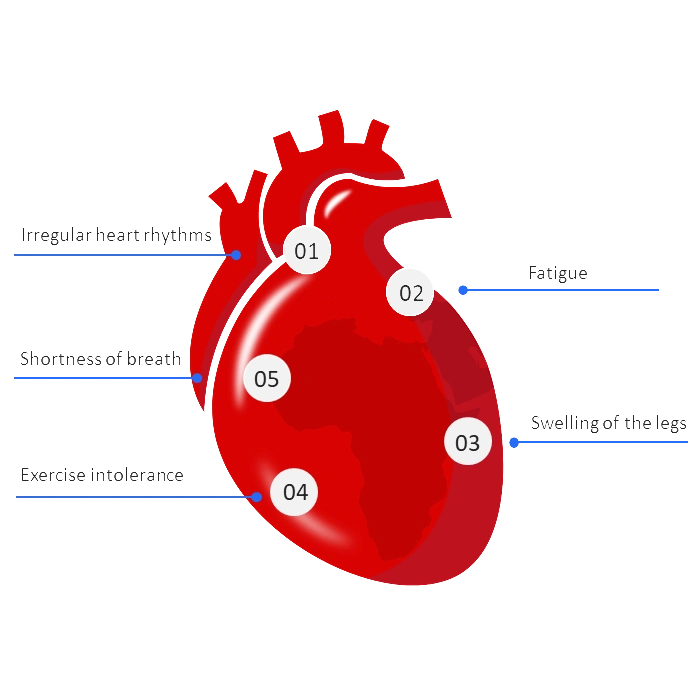
Amyloid deposits in the heart cause the walls of the left ventricle to thicken and stiffen. This impairs normal filling of the heart and leads to symptoms of heart failure, including:
Shortness of breath
Fatigue
Swelling of the legs
Exercise intolerance
Irregular heart rhythms
Over time, untreated disease can lead to progressive heart dysfunction.
Wild-type ATTR amyloidosis is frequently misdiagnosed because its symptoms overlap with common cardiovascular conditions such as hypertensive heart disease or age-related cardiomyopathy.
In many African countries, access to diagnostic tools such as nuclear scintigraphy for cardiac amyloidosis and advanced cardiac imaging is limited. As a result, many cases remain unidentified.
This does not mean the condition is rare. It means it is under-recognized.
Diagnosis typically involves:
Clinical suspicion in patients with unexplained heart failure
Cardiac imaging studies
Blood and urine testing to exclude other types of amyloidosis
In selected cases, tissue biopsy
Unlike hereditary ATTR amyloidosis, genetic testing does not reveal a TTR mutation in wild-type disease.
Wild-type ATTR amyloidosis is no longer considered untreatable. Disease-modifying therapies that stabilize transthyretin protein are now available and have been shown to slow progression when initiated early.
A summary of treatment approaches is available from the Mayo Clinic.
Supportive heart failure management remains essential and should be tailored to the unique physiology of amyloid cardiomyopathy.
Wild-type ATTR amyloidosis is likely underdiagnosed across Africa. Aging populations, increasing rates of cardiovascular disease, and limited awareness create a setting where many patients may be misclassified as having routine heart failure.
Improving awareness among cardiologists, internists, and general practitioners is essential to identifying patients earlier and improving outcomes.
Amyloidosis Africa works to increase recognition of wild-type ATTR amyloidosis through medical education, research collaboration, quality improvement initiatives, and advocacy across the continent.
Amyloidosis Africa is dedicated to making wild-type ATTR amyloidosis visible, diagnosable, and manageable across African health systems while strengthening clinical capacity and research representation.
We advance cardiac amyloidosis care across Africa through collaboration, training, and research. Join us to change the future of heart health and empower local clinicians with knowledge and tools.