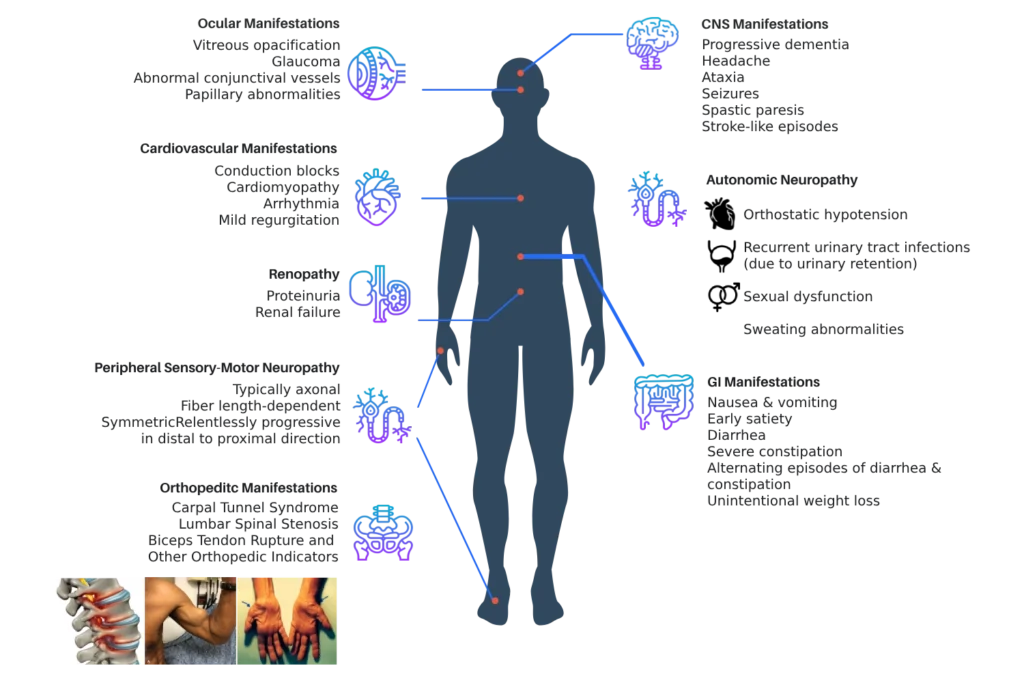
Hereditary ATTR amyloidosis, also known as variant ATTR amyloidosis, is a genetic form of transthyretin amyloidosis caused by a mutation in the TTR gene. This mutation leads to the production of an unstable transthyretin protein that misfolds and forms amyloid fibrils.
These amyloid deposits accumulate in organs and tissues over time, most commonly affecting the heart, peripheral nerves, and autonomic nervous system. Hereditary ATTR amyloidosis is a progressive condition, but early recognition can significantly improve outcomes.
Hereditary ATTR amyloidosis is caused by a change in the DNA sequence of the transthyretin gene. This altered gene produces a transthyretin protein that is more likely to misfold and aggregate.
The condition is inherited in an autosomal dominant pattern. This means that a person only needs one copy of the altered gene to develop the disease. Each child of an affected parent has a 50 percent chance of inheriting the mutation.
A detailed scientific overview of the condition is available in GeneReviews.
Hereditary ATTR amyloidosis is caused by mutations in the transthyretin (TTR) gene, and certain variants have been identified more frequently in people of African ancestry.
One of the most well-known variants is Val122Ile (V122I), also referred to as p.Val142Ile in updated genetic nomenclature. This mutation is particularly common among individuals of West African descent and in African diaspora populations. Studies published in the New England Journal of Medicine have shown that approximately 3 to 4 percent of African Americans carry this variant, making it one of the most prevalent amyloid-associated mutations worldwide.
The Val122Ile mutation primarily affects the heart and is strongly associated with ATTR cardiac amyloidosis. It often presents later in life and may be misdiagnosed as hypertensive heart disease or heart failure with preserved ejection fraction. Because symptoms overlap with common cardiovascular conditions, many affected individuals remain undiagnosed.
While Val122Ile is the most recognized ATTR mutation associated with African ancestry, it is not the only one. Genetic diversity across African populations is extensive, and additional TTR variants may exist that are underreported or insufficiently studied due to limited access to genetic testing and research infrastructure in many African countries.
A comprehensive scientific overview of hereditary ATTR amyloidosis, including genetic variants and clinical manifestations, is available in GeneReviews.
Understanding ATTR mutations in African populations is essential because it:
Improves clinician awareness when evaluating unexplained cardiomyopathy
Supports targeted genetic screening strategies
Enables family counseling and early monitoring
Strengthens African representation in global amyloidosis research
Importantly, carrying a TTR mutation does not automatically mean a person will develop severe disease. Age of onset, clinical presentation, and progression can vary significantly, even among individuals with the same mutation.
Expanding access to genetic services, structured screening programs, and research collaboration across Africa is critical to identifying affected families earlier and improving outcomes on the continent.
Amyloid deposits in the heart cause cardiac amyloidosis, leading to thickened and stiff heart walls. This interferes with normal heart filling and can result in heart failure.
Common symptoms include shortness of breath, fatigue, leg swelling, dizziness, and irregular heart rhythms. Cardiac involvement is a major determinant of prognosis in hereditary ATTR amyloidosis.
Many patients develop peripheral neuropathy, which may cause numbness, tingling, burning pain, or weakness in the hands and feet.
In addition, autonomic neuropathy can affect involuntary body functions, leading to symptoms such as dizziness on standing, digestive problems, urinary difficulties, and sexual dysfunction.
Symptoms of hereditary ATTR amyloidosis often develop gradually and may include:
Progressive heart failure symptoms
Nerve pain, numbness, or weakness
Dizziness when standing
Digestive disturbances
Carpal tunnel syndrome, sometimes years before other symptoms
Because these symptoms overlap with many common conditions, diagnosis is often delayed.
Symptoms of hereditary ATTR amyloidosis often develop gradually and may include:
Progressive heart failure symptoms
Nerve pain, numbness, or weakness
Dizziness when standing
Digestive disturbances
Carpal tunnel syndrome, sometimes years before other symptoms
Because these symptoms overlap with many common conditions, diagnosis is often delayed.
Identifying a TTR mutation allows affected individuals and families to:
Confirm the diagnosis
Screen at-risk relatives
Plan long-term monitoring and care
Access appropriate treatment and support
Genetic counseling helps individuals understand the implications of testing and make informed decisions for themselves and their families.
Hereditary ATTR amyloidosis is no longer considered untreatable. Disease-modifying therapies are available and aim to slow disease progression by stabilizing or reducing the production of abnormal transthyretin protein.
Supportive care remains essential to manage heart failure, neuropathy, and other complications. Early diagnosis allows treatment to begin before significant organ damage occurs.
Amyloidosis Africa is committed to supporting individuals and families affected by hereditary ATTR amyloidosis through awareness, education, research, quality improvement, and advocacy, while strengthening African participation in global amyloidosis efforts.
We advance cardiac amyloidosis care across Africa through collaboration, training, and research. Join us to change the future of heart health and empower local clinicians with knowledge and tools.