Heart Failure but Different: Why Cardiac Amyloidosis Requires a Different Treatment Approach
Heart failure is one of the most common cardiovascular conditions worldwide and represents a major cause of hospitalization and mortality. Standard management strategies for heart failure have been developed through decades of clinical research and typically include medications such as ACE inhibitors, beta blockers, and other guideline-directed therapies that improve survival and reduce symptoms.
However, cardiac amyloidosis represents a fundamentally different form of heart failure. Applying standard heart failure treatment strategies in these patients may be ineffective and, in some cases, harmful. Understanding these differences is essential for clinicians who encounter patients with unexplained heart failure symptoms.
In many cases, patients with cardiac amyloidosis are initially treated according to conventional heart failure protocols. Because the disease behaves differently, this can lead to medication intolerance, worsening symptoms, or delayed diagnosis. Recognizing that not all heart failure is the same is an important step toward improving outcomes for patients with cardiac amyloidosis.
Understanding Cardiac Amyloidosis
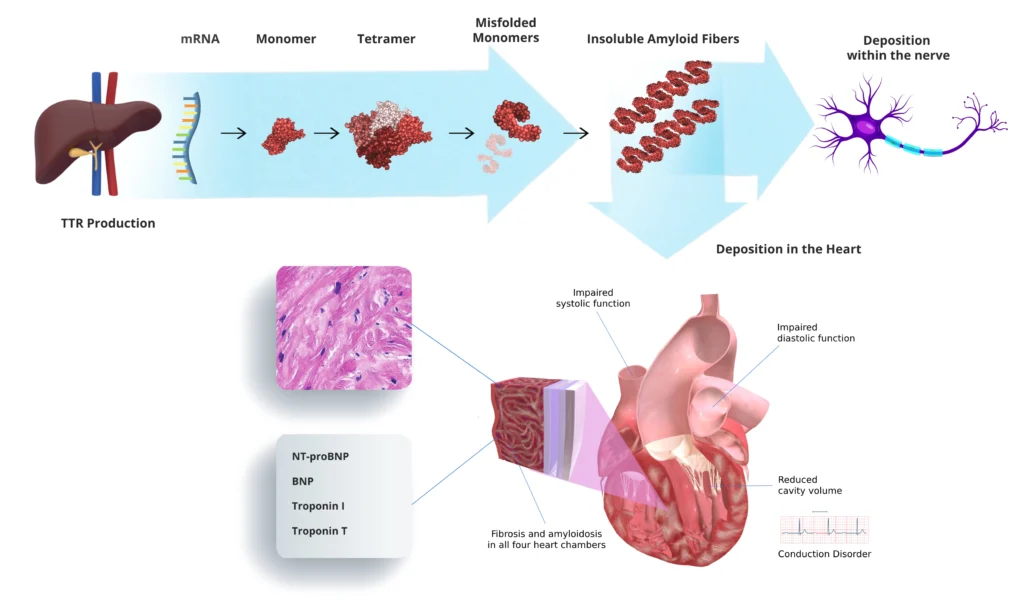
Cardiac amyloidosis is an infiltrative cardiomyopathy caused by the accumulation of misfolded proteins known as amyloid fibrils within the heart muscle. These abnormal protein deposits build up in the extracellular space of the myocardium and progressively stiffen the ventricular walls. As the disease progresses, the heart becomes less able to relax and fill properly during diastole.
The most common forms of amyloidosis that affect the heart are transthyretin amyloidosis and light chain amyloidosis.
Transthyretin amyloidosis, often abbreviated as ATTR, occurs when the transthyretin protein becomes unstable and forms amyloid fibrils that deposit in tissues, including the heart. This condition can occur as a hereditary disease caused by mutations in the transthyretin gene or as an age-related condition known as wild-type ATTR.
Light chain amyloidosis, also known as AL amyloidosis, results from abnormal plasma cells producing misfolded immunoglobulin light chains that deposit in organs such as the heart, kidneys, and nervous system.
Both forms of amyloidosis lead to progressive infiltration of the myocardium and result in restrictive cardiomyopathy. In this condition, the heart muscle becomes stiff and cannot fill properly during diastole. Over time this leads to symptoms including fatigue, shortness of breath, swelling in the legs, and reduced exercise tolerance.
Why Cardiac Amyloidosis Is Different from Typical Heart Failure
Traditional heart failure often develops when the heart muscle becomes weak or damaged, such as after a myocardial infarction or in dilated cardiomyopathy. In these cases, the primary problem is impaired contraction of the heart muscle.
,
Cardiac amyloidosis is different because the problem is not primarily weakness of the heart muscle but rather infiltration of the myocardium with amyloid fibrils. This leads to increased wall thickness, reduced compliance of the ventricles, and impaired filling of the heart.
Patients with cardiac amyloidosis often have a preserved ejection fraction but experience severe diastolic dysfunction. Stroke volume may be reduced despite a normal ejection fraction because the stiff ventricles cannot fill adequately.
Another important feature of cardiac amyloidosis is autonomic dysfunction. Many patients develop impaired autonomic regulation that results in low blood pressure and intolerance to medications that cause vasodilation.
These physiological differences explain why treatments that are beneficial in conventional heart failure may not be appropriate for patients with cardiac amyloidosis.
Medications Often Poorly Tolerated in Cardiac Amyloidosis
Several medications commonly used to treat heart failure may cause problems in patients with cardiac amyloidosis.
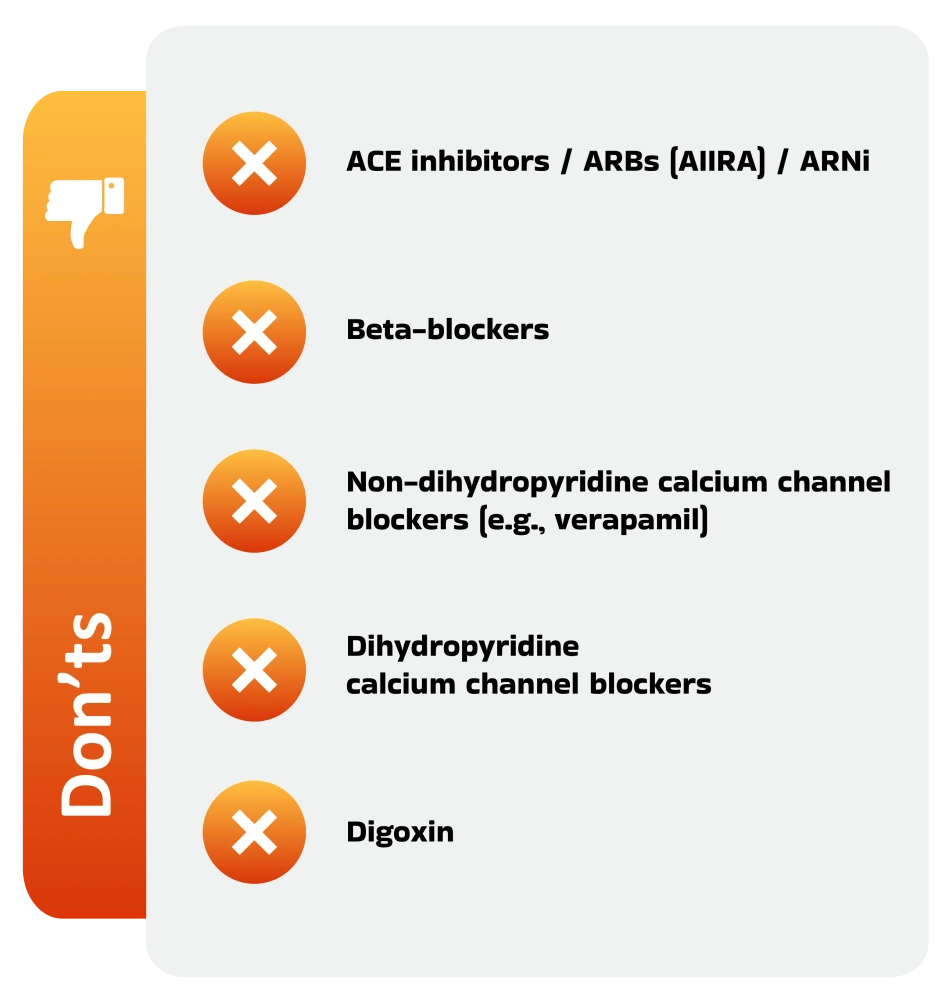
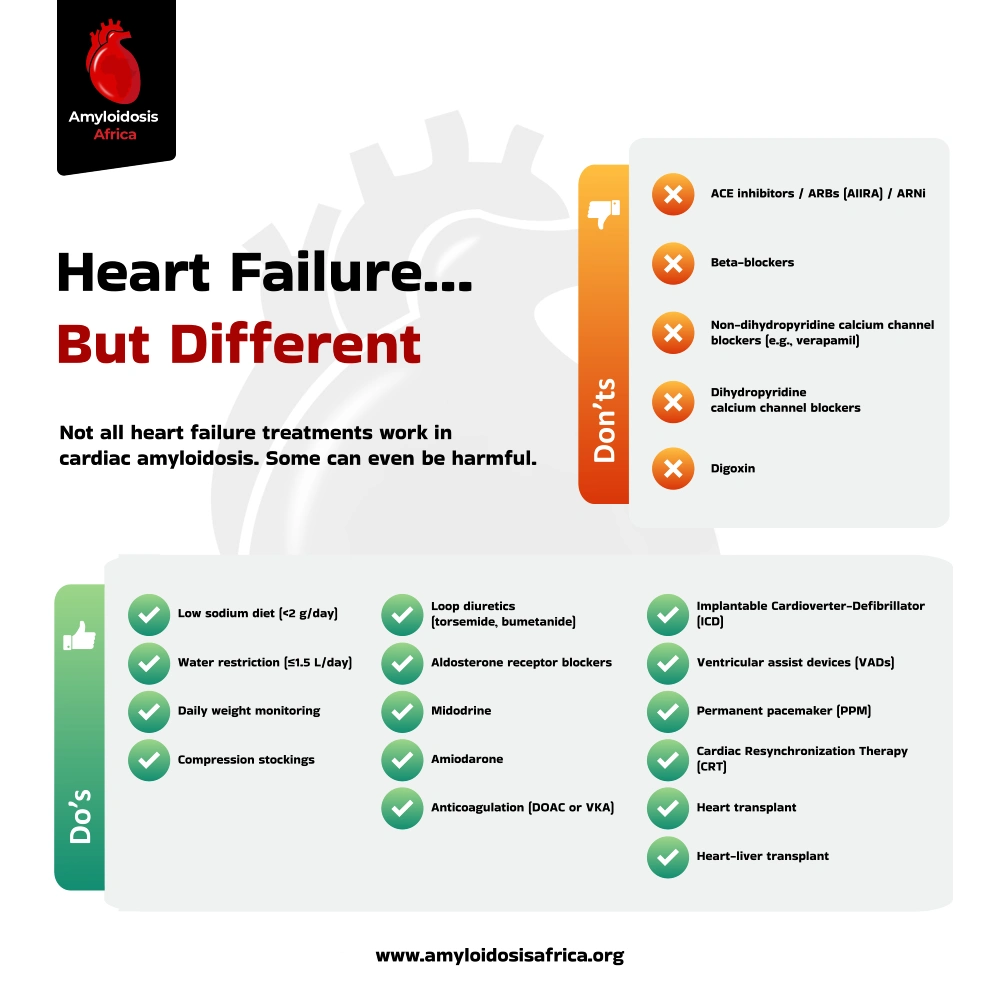
ACE inhibitors and angiotensin receptor blockers are widely used to reduce blood pressure and decrease the workload on the heart. However, patients with cardiac amyloidosis often have baseline low blood pressure due to autonomic dysfunction. Vasodilatory medications may therefore lead to severe hypotension and dizziness.
Beta blockers are another cornerstone therapy in heart failure with reduced ejection fraction. These medications slow the heart rate and reduce myocardial oxygen demand. In cardiac amyloidosis, however, patients often depend on higher heart rates to maintain adequate cardiac output. Slowing the heart rate may worsen fatigue and exercise intolerance.
Calcium channel blockers, particularly non-dihydropyridine agents such as verapamil, can have negative effects on myocardial contractility and may worsen symptoms in amyloidosis patients.
Digoxin should also be used with caution because the drug can bind to amyloid fibrils in the myocardium and increase the risk of toxicity.
Core Principles of Managing Cardiac Amyloidosis
Because many conventional heart failure therapies are poorly tolerated, treatment of cardiac amyloidosis focuses on symptom control and careful management of complications.
Volume Management
Fluid overload is one of the most common problems in patients with cardiac amyloidosis. Managing fluid balance is therefore central to treatment.
Typical strategies include reducing dietary sodium intake to less than two grams per day and limiting daily fluid intake. Daily weight monitoring can help detect early fluid accumulation.
Loop diuretics such as torsemide or bumetanide are commonly used to relieve congestion and improve symptoms of swelling and shortness of breath.
Management of Arrhythmias
Cardiac amyloidosis frequently affects the heart’s electrical conduction system. Many patients develop atrial fibrillation or other arrhythmias.
Amiodarone is often used to control rhythm disturbances.
Anticoagulation therapy may also be necessary because patients with cardiac amyloidosis have an increased risk of thromboembolic events.
Device Therapy
In some patients, conduction abnormalities may require device therapy. Implantable cardioverter defibrillators may be considered in selected cases to prevent sudden cardiac death. Permanent pacemakers are frequently required in patients who develop a significant conduction block.
Cardiac resynchronization therapy may also be beneficial in certain situations where ventricular dyssynchrony is present.
Advanced Therapies
In advanced cases, specialized therapies may be considered. These may include ventricular assist devices or heart transplantation in carefully selected patients.
Recent advances in disease-modifying therapies for transthyretin amyloidosis have significantly improved the treatment landscape. Medications that stabilize the transthyretin protein can slow disease progression and improve survival.
Why Awareness Matters in Africa
Cardiac amyloidosis remains significantly underdiagnosed worldwide, and this challenge is even greater in many African healthcare systems. Limited awareness among healthcare providers and restricted access to advanced diagnostic technologies contribute to delayed recognition of the disease.
Because symptoms often resemble common forms of heart failure, many patients are treated for years before the correct diagnosis is established.
Improving awareness among clinicians can help promote earlier recognition of cardiac amyloidosis and prevent inappropriate treatment.
The Mission of Amyloidosis Africa
Amyloidosis Africa is dedicated to raising awareness about amyloidosis across the African continent. The initiative focuses on education, research collaboration, earlier diagnosis, and improving access to care for patients affected by this often-overlooked disease.
Through partnerships with healthcare professionals, academic institutions, and international organizations, Amyloidosis Africa aims to strengthen knowledge about amyloidosis and support healthcare systems in recognizing and diagnosing the disease earlier.
In addition to education and research, the initiative also advocates for improving access to appropriate treatment options for patients in Africa, including disease-modifying therapies for transthyretin amyloidosis and specialized cardiac care. Expanding access to treatment is essential for reducing the burden of delayed diagnosis and improving patient outcomes.
Understanding that heart failure in amyloidosis requires a different treatment approach is an important step toward improving outcomes for patients across Africa.


















Leave a Reply