



Medical Education


Education improves early detection of amyloidosis.
Amyloidosis Africa
Building Clinical Capacity Through Medical Education
Amyloidosis Africa delivers evidence-based, CPD-accredited medical education to healthcare professionals across Africa, with a strong focus on the early recognition of amyloidosis, standardized diagnostic pathways, and multidisciplinary clinical management. Through targeted education, we aim to close critical knowledge gaps that contribute to delayed diagnosis and inconsistent care for patients with amyloidosis, particularly cardiac amyloidosis.
Medical education represents one of the most effective tools for improving outcomes in rare diseases. By equipping clinicians with practical, context-appropriate knowledge, we strengthen diagnostic confidence and promote earlier, more accurate identification of amyloidosis across diverse healthcare settings.
Why Medical Education Matters in Africa
Across many African countries, clinicians receive little or no formal training on amyloidosis during undergraduate or postgraduate education. As a result, healthcare providers may encounter patients with unexplained heart failure, neuropathy, or multisystem symptoms without considering amyloidosis as a potential diagnosis.
Moreover, limited access to subspecialty services and diagnostic tools further compounds this challenge. Without structured and continuous professional development, even experienced clinicians may struggle to recognize early red flags or follow appropriate diagnostic algorithms.
For these reasons, CPD-accredited medical education in Africa plays a critical role in strengthening clinical suspicion, improving diagnostic accuracy, and supporting consistent standards of care across different health systems. Importantly, education must reflect local realities, available resources, and regulatory frameworks to achieve lasting impact.
Our Educational Approach
Amyloidosis Africa designs medical education programs that are practical, clinically relevant, and aligned with African healthcare contexts. Rather than focusing solely on theoretical knowledge, our approach emphasizes real-world application and decision-making.
We align all educational activities with:
-
Local regulatory and professional requirements
-
National CPD accreditation bodies
-
Regional clinical practice needs
-
International best-practice guidelines
As a result, healthcare professionals not only gain valuable skills but also earn recognized CPD credits that support career development and licensure requirements.
What We Teach
Our medical education content covers the full clinical spectrum of amyloidosis, with particular attention to conditions that are commonly underdiagnosed in Africa. Core topics include:
-
Fundamentals of amyloidosis and disease mechanisms
-
Cardiac amyloidosis and ATTR-CM recognition
-
Differentiating amyloidosis from common heart failure causes
-
Diagnostic pathways, including laboratory and imaging approaches
-
Multidisciplinary management and referral strategies
-
Red flags for hereditary amyloidosis
-
Patient-centered communication and follow-up
By addressing both knowledge and practice gaps, we help clinicians translate learning into improved patient care.
Modes of Delivery
To ensure accessibility and scalability across the continent, Amyloidosis Africa offers multiple modes of medical education delivery, allowing clinicians to learn regardless of location or resource constraints.
Online Self-Paced Courses
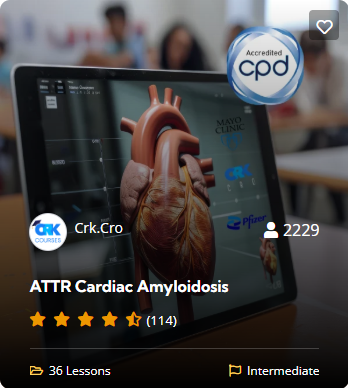
We provide online, self-paced courses accessible across African countries. These modules allow healthcare professionals to learn at their own pace while earning CPD credits. Content is designed to accommodate varying levels of clinical experience.
Live Webinars
We host live webinars led by African and international experts. These sessions encourage interaction, case discussion, and real-time engagement, helping clinicians apply knowledge to everyday practice.
Hands-On Practical Training
Where feasible, we deliver hands-on training focused on real-world diagnostic skills. These sessions emphasize clinical reasoning, interpretation of diagnostic tests, and multidisciplinary collaboration.
In-Person and Physical Workshops
We organize in-person workshops integrated within hospitals, academic institutions, and scientific conferences. These events foster peer learning and local capacity building.
Blended Learning Models
In addition, we combine digital and face-to-face learning through blended models. This approach reinforces learning outcomes while maximizing reach and sustainability.
Supporting Sustainable Clinical Capacity
All Amyloidosis Africa education programs aim to build long-term clinical capacity, not one-time knowledge transfer. Therefore, we prioritize:
-
Training local clinical champions
-
Encouraging multidisciplinary participation
-
Reinforcing learning through repeated exposure
-
Linking education with quality improvement and research initiatives
By embedding education within broader health system efforts, we support sustained improvements in amyloidosis recognition and care.
Who Our Medical Education Serves
Our programs are designed for a wide range of healthcare professionals, including:
-
Cardiologists
-
Internists and general physicians
-
Clinical officers and nurses
-
Radiologists and nuclear medicine specialists
-
Neurologists
-
Pharmacists and allied health professionals
We tailor content to different professional roles to ensure relevance and practical application.
Advancing Equitable Education Across Africa
Amyloidosis Africa remains committed to equitable access to high-quality medical education. By leveraging digital platforms and regional partnerships, we reduce geographic and financial barriers to learning.
Through CPD-accredited education, we empower clinicians across Africa to recognize amyloidosis earlier, refer patients appropriately, and contribute to improved outcomes.
Moving Forward
Strengthening medical education is essential to improving amyloidosis care across Africa. Through structured, accredited, and context-aware training, Amyloidosis Africa helps transform awareness into action.
If you are a healthcare professional seeking CPD-accredited education, or an institution interested in hosting or collaborating on training programs, we invite you to connect with us.
Together, we can build stronger clinical capacity and improve the future of amyloidosis care across the continent.






Leave a Reply