25 Aug
Organ transplantation can be an important treatment option for carefully selected patients with amyloidosis and advanced organ dysfunction. This article explains when heart, kidney, liver, or combined transplantation may be considered in AL, ATTR, and AA amyloidosis, and why disease control and multidisciplinary assessment are essential.
READ MORE21 Aug
Biopsy remains important when cardiac amyloidosis cannot be diagnosed confidently by non-invasive testing. Learn when tissue sampling is needed, how Congo red confirms amyloid, and why accurate amyloid typing is essential.
READ MORE21 Aug
Genetic testing helps distinguish hereditary ATTR amyloidosis from wild-type disease. Learn when to test, how TTR variants are interpreted, and what results mean for patients and their families.
READ MORE21 Aug
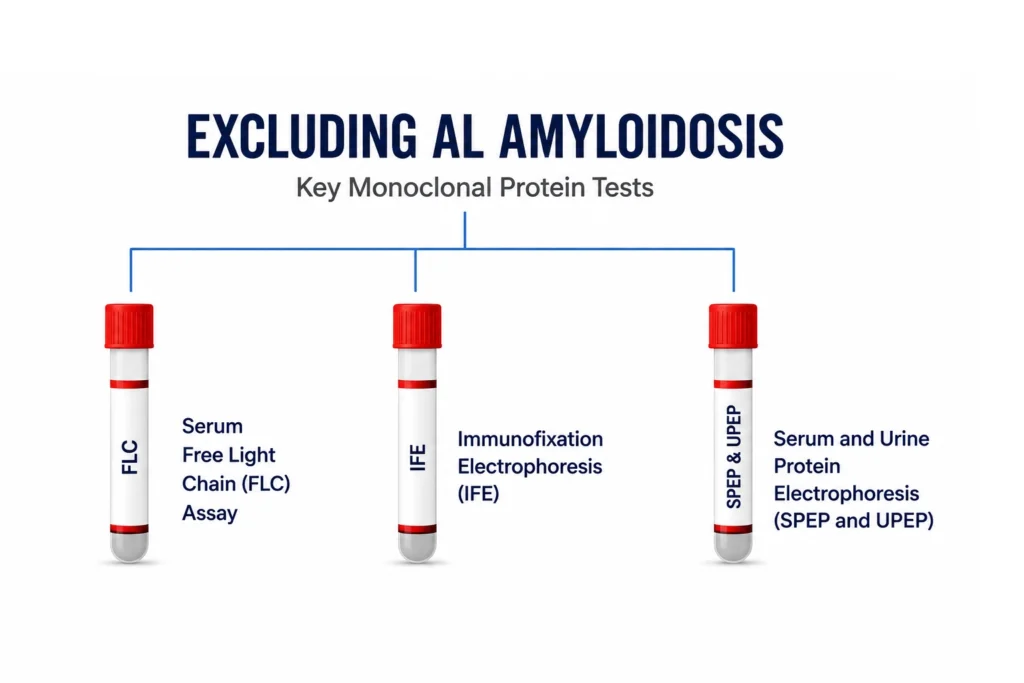
Monoclonal protein testing is a critical step in the evaluation of suspected cardiac amyloidosis. Learn how serum free light chains and serum and urine immunofixation help identify possible AL amyloidosis and guide the diagnostic pathway toward an accurate amyloid subtype diagnosis.
READ MORE19 Aug
Cardiac magnetic resonance imaging provides detailed tissue characterization in cardiac amyloidosis. Learn how late gadolinium enhancement, native T1 mapping, extracellular volume and abnormal myocardial nulling support diagnosis and assessment.
READ MORE19 Aug
Bone scintigraphy is central to the non-invasive diagnosis of transthyretin cardiac amyloidosis. This article explains PYP, DPD and HMDP imaging, Perugini grading, SPECT, the H/CL ratio, monoclonal protein testing and when biopsy is still required.
READ MORE
We advance cardiac amyloidosis care across Africa through collaboration, training, and research. Join us to change the future of heart health and empower local clinicians with knowledge and tools.