



Gene Silencers in Cardiac Amyloidosis: How They Work & When They’re Used
Gene silencers in cardiac amyloidosis are disease-modifying treatments that reduce production of transthyretin (TTR), the protein responsible for transthyretin amyloidosis. By lowering the amount of circulating TTR available to misfold and form amyloid fibrils, these treatments can slow progression of ATTR amyloidosis and reduce further injury to affected organs.
Gene silencing is relevant specifically to transthyretin amyloidosis (ATTR), including hereditary ATTR amyloidosis and wild-type ATTR amyloidosis. It is not a treatment for AL amyloidosis, in which the amyloid precursor is an abnormal immunoglobulin light chain produced by a plasma-cell or B-cell clone.
The strongest cardiovascular evidence for gene silencers in cardiac amyloidosis currently comes from vutrisiran. In the phase 3 HELIOS-B trial, vutrisiran reduced the risk of all-cause death and recurrent cardiovascular events and preserved functional capacity and health status in adults with ATTR cardiomyopathy (ATTR-CM) (1). Vutrisiran is now approved for ATTR-CM in adults in several jurisdictions, including the United States and European Union.
Key principle: Gene silencers do not remove amyloid deposits that are already present in the heart. They reduce production of transthyretin, limiting the supply of protein available to form additional amyloid.
What Is Transthyretin?
Transthyretin is a transport protein produced predominantly by the liver. It circulates mainly as a tetramer made of four TTR subunits and contributes to transport of thyroxine and retinol-binding protein.
In ATTR amyloidosis, the TTR tetramer becomes unstable, dissociates into individual subunits, misfolds and eventually forms amyloid fibrils that accumulate in tissues.
When amyloid accumulates in the myocardium, the ventricular walls become progressively infiltrated and stiff. This can lead to restrictive cardiomyopathy, heart failure, atrial arrhythmias, conduction disease, and other manifestations of cardiac amyloidosis.
What Does “Gene Silencing” Mean?
The term gene silencing can be confusing. These medicines generally do not permanently switch off or remove the TTR gene from a patient’s DNA.
Instead, currently available TTR silencers interfere with the messenger RNA (mRNA) that carries instructions from the TTR gene to the cellular machinery responsible for making transthyretin.
By targeting this messenger RNA, the liver produces substantially less TTR protein. This RNA-targeting mechanism is the basis of currently available gene silencers in cardiac amyloidosis.
TTR gene in liver cell
↓
TTR messenger RNA is produced
↓
Gene silencer targets TTR mRNA
↓
Less TTR protein is produced
↓
Less circulating TTR is available to misfold and form amyloid
↓
TTR messenger RNA is produced
↓
Gene silencer targets TTR mRNA
↓
Less TTR protein is produced
↓
Less circulating TTR is available to misfold and form amyloid
This mechanism is fundamentally different from permanent gene editing. Gene-editing therapies aim to alter DNA itself, whereas currently approved gene-silencing drugs act downstream at the RNA level.
Why Can TTR Silencing Help the Heart?
Both wild-type and variant transthyretin can contribute to cardiac amyloid deposition.
Reducing hepatic TTR production lowers the concentration of circulating TTR available to participate in the amyloid-forming process. The goal is therefore to slow continued disease progression rather than to mechanically remove established deposits.
In ATTR-CM, slowing additional deposition may help preserve functional capacity, quality of life and cardiovascular outcomes over time. This is the therapeutic rationale for using gene silencers in cardiac amyloidosis.
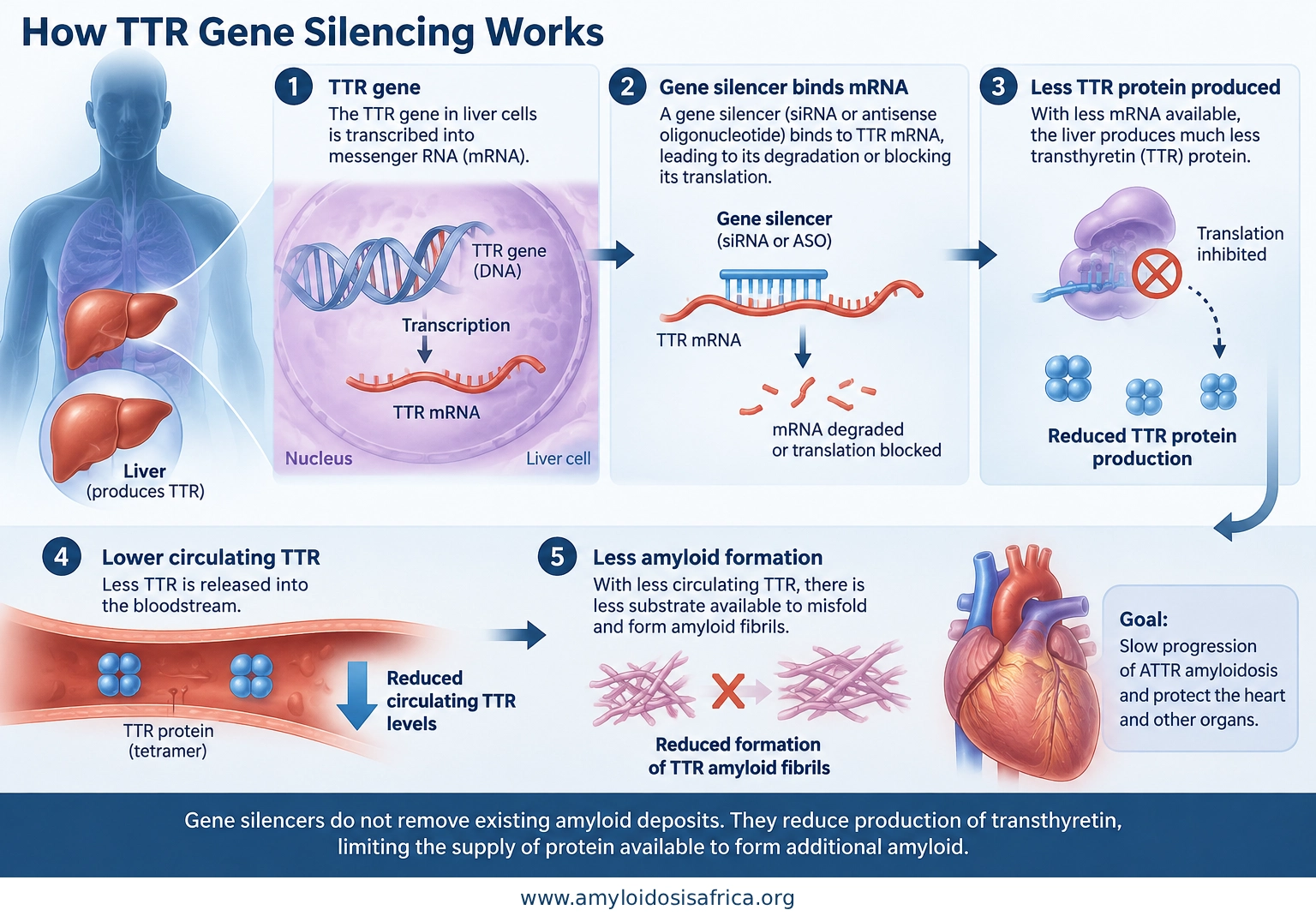
Figure 1. How TTR Gene Silencing Works. TTR gene silencers target messenger RNA in liver cells to reduce transthyretin production. Lower circulating TTR reduces the amount of precursor protein available to misfold and form additional amyloid fibrils, helping slow progression of ATTR amyloidosis.
What Types of Gene Silencers Are There?
Two major RNA-targeting approaches have been developed for transthyretin amyloidosis:
- Small interfering RNA (siRNA) therapies, which use the RNA interference pathway to promote degradation of TTR messenger RNA.
- Antisense oligonucleotides (ASOs), which bind complementary sequences in TTR messenger RNA and reduce production of the TTR protein.
Although both strategies lower transthyretin production, they use different molecular mechanisms and should not be considered interchangeable.
Which Gene Silencers Are Used in ATTR Amyloidosis?
Several TTR-lowering therapies have been developed, but their regulatory indications and evidence for cardiomyopathy differ. When considering gene silencers in cardiac amyloidosis, it is therefore important to distinguish evidence in ATTR-CM from evidence in hereditary ATTR polyneuropathy.
| Therapy | Type | Administration | Current Relevance to ATTR-CM |
|---|---|---|---|
| Vutrisiran | Small interfering RNA | Subcutaneous injection | Phase 3 cardiovascular outcome evidence from HELIOS-B; approved for ATTR-CM in adults in the United States and European Union |
| Patisiran | Small interfering RNA | Intravenous infusion | APOLLO-B demonstrated preservation of functional capacity and health status, but the U.S. indication remains hereditary ATTR polyneuropathy rather than ATTR-CM |
| Eplontersen | Antisense oligonucleotide | Subcutaneous injection | Approved in the United States for hereditary ATTR polyneuropathy; CARDIO-TTRansform did not meet its primary efficacy endpoint in ATTR-CM |
| Inotersen | Antisense oligonucleotide | Subcutaneous injection | Developed primarily for hereditary ATTR polyneuropathy; it is not an established ATTR-CM treatment |
Important: Regulatory approval differs between countries and changes over time. The approved indication and prescribing information for a specific drug should always be checked in the country where treatment is being considered.
Vutrisiran and ATTR Cardiomyopathy
Vutrisiran is a subcutaneously administered small interfering RNA therapy that reduces hepatic production of transthyretin.
The major cardiovascular evidence comes from the phase 3 HELIOS-B trial, which randomized 655 patients with ATTR-CM to vutrisiran or placebo (1). The full HELIOS-B publication is available through the New England Journal of Medicine.
The trial included patients with wild-type or hereditary ATTR cardiomyopathy and evaluated a primary composite endpoint of death from any cause and recurrent cardiovascular events.
Vutrisiran reduced the risk of the primary endpoint compared with placebo. The hazard ratio was 0.72 in the overall population. It also reduced all-cause mortality through 42 months and resulted in less deterioration in six-minute walk distance and Kansas City Cardiomyopathy Questionnaire overall summary score (1).
These findings established the strongest cardiovascular outcomes evidence to date for gene silencers in cardiac amyloidosis.
Importantly, HELIOS-B was conducted during an era in which TTR stabilizer therapy was already available. Some participants received background stabilizer treatment, allowing the trial to evaluate vutrisiran in a contemporary ATTR-CM population.
However, this does not mean that every patient should automatically receive both a stabilizer and a silencer. Treatment strategy should be individualized because direct evidence defining the optimal sequencing or combination of different disease-modifying therapies remains limited.
How Is Vutrisiran Given?
For ATTR-CM, the approved U.S. regimen is 25 mg administered by subcutaneous injection once every three months.
The exact prescribing instructions and who may administer the treatment can differ according to national regulatory labeling. Clinicians can consult the current U.S. FDA prescribing information for vutrisiran for the approved U.S. indication, dosing and safety information.
What Did APOLLO-B Show With Patisiran?
Patisiran was the first approved RNA-interference therapy for hereditary ATTR amyloidosis with polyneuropathy. It is delivered intravenously and reduces hepatic transthyretin production.
The phase 3 APOLLO-B trial evaluated patisiran in 360 patients with hereditary or wild-type ATTR cardiac amyloidosis (2). The peer-reviewed trial report can be read in the New England Journal of Medicine APOLLO-B publication.
At 12 months, patients treated with patisiran had less deterioration in six-minute walk distance than those receiving placebo. Health status measured using the Kansas City Cardiomyopathy Questionnaire also favored patisiran.
However, significant benefit was not demonstrated for a secondary composite endpoint that included mortality and cardiovascular events. The duration and design of APOLLO-B were not primarily intended to establish a mortality benefit.
Although APOLLO-B provided important proof that TTR silencing could influence functional outcomes in ATTR-CM, patisiran is not currently approved in the United States specifically for ATTR cardiomyopathy.
What Happened With Eplontersen in ATTR-CM?
Eplontersen is a ligand-conjugated antisense oligonucleotide designed to reduce hepatic production of transthyretin.
It is approved in the United States for treatment of polyneuropathy in adults with hereditary ATTR amyloidosis.
The large phase 3 CARDIO-TTRansform trial evaluated eplontersen in 1,432 treated patients with ATTR cardiomyopathy receiving contemporary standard therapy (3).
The primary endpoint was a cumulative composite of cardiovascular death and recurrent cardiovascular clinical events through 140 weeks.
The rate ratio for the primary endpoint was 0.89 compared with placebo, with a 95% confidence interval of 0.73 to 1.09 and a P value of 0.28. The trial therefore did not demonstrate a statistically significant reduction in the primary cardiovascular endpoint (3).
Evidence distinction: “Gene silencer” describes a mechanism, not a guarantee of identical clinical benefit across drugs. Each therapy requires its own evidence from adequately designed clinical trials.
How Are Gene Silencers Different From TTR Stabilizers?
Understanding gene silencers in cardiac amyloidosis also requires distinguishing them from TTR stabilizers. The two approaches intervene at different stages of the amyloid-forming pathway.
| Feature | TTR Gene Silencers | TTR Stabilizers |
|---|---|---|
| Main mechanism | Reduce production of transthyretin by targeting TTR messenger RNA | Bind circulating TTR tetramers and make them more resistant to dissociation |
| Effect on circulating TTR | Markedly lowers TTR production | Does not primarily reduce TTR production |
| Examples | Vutrisiran, patisiran, eplontersen | Tafamidis, acoramidis |
| Main biological target | TTR synthesis | TTR tetramer stability |
| Removes existing cardiac amyloid? | No | No |
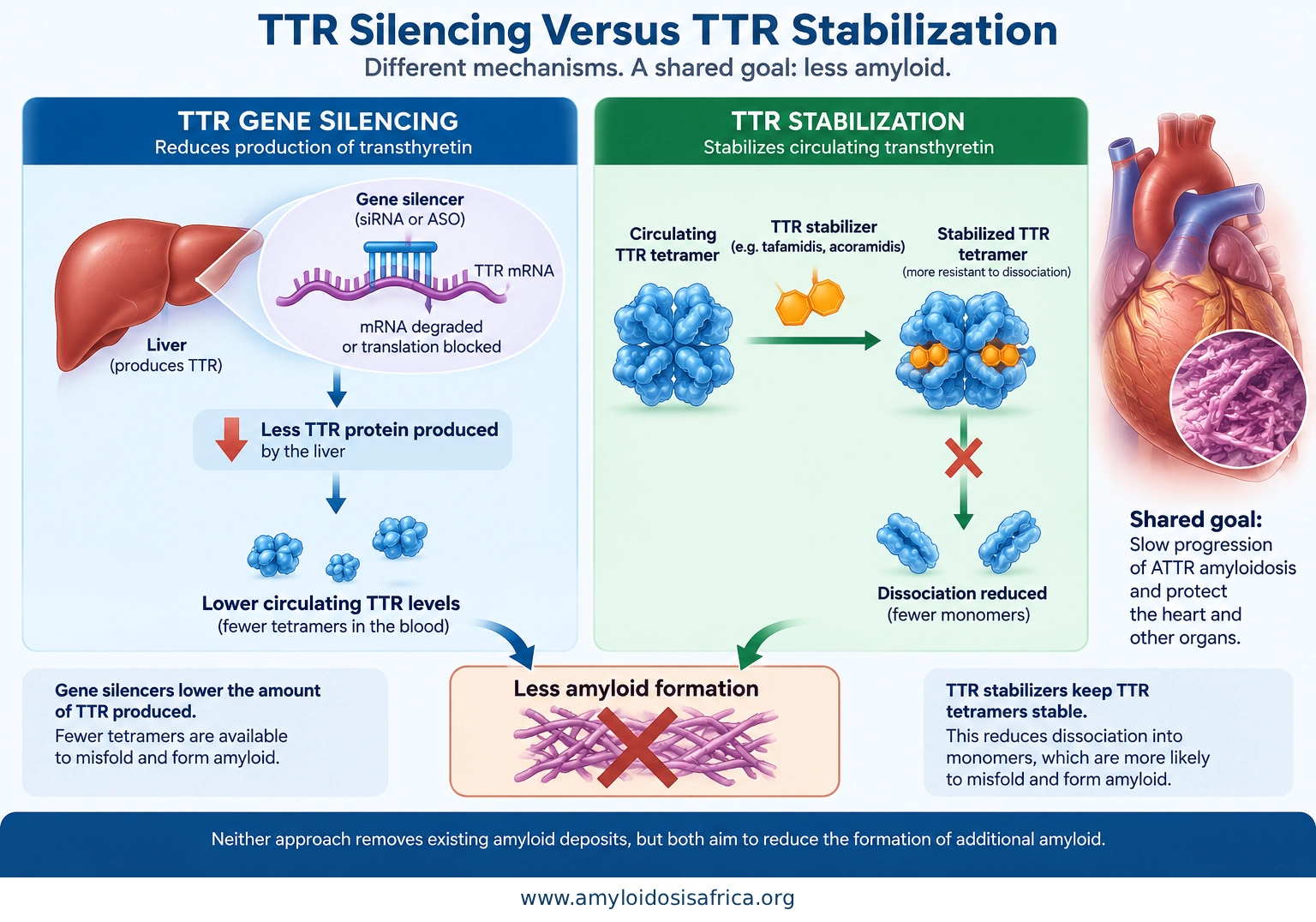
Figure 2. TTR Silencing Versus TTR Stabilization. TTR gene silencers reduce production of transthyretin in the liver, whereas TTR stabilizers bind circulating TTR tetramers and reduce their tendency to dissociate. Both approaches aim to reduce formation of additional amyloid but act at different points in the disease pathway.
Can Gene Silencers Be Used in Both Hereditary and Wild-Type ATTR?
Yes, depending on the individual drug’s approved indication.
This is because TTR silencers suppress production of both variant and wild-type transthyretin.
In hereditary ATTR amyloidosis, the liver produces both the variant protein and normal wild-type TTR.
In wild-type ATTR amyloidosis, there is no pathogenic TTR variant, but normal wild-type transthyretin becomes unstable and forms amyloid, usually later in life.
For this reason, lowering total hepatic TTR production can be biologically relevant to both forms of ATTR-CM.
Is Genetic Testing Required Before Gene-Silencing Treatment?
Every patient with confirmed ATTR-CM should undergo evaluation to determine whether the disease is hereditary or wild-type.
TTR genetic testing can identify a pathogenic TTR variant and distinguish hereditary ATTR from wild-type disease.
This distinction matters even when a treatment can be used for both forms, because identifying hereditary disease has implications for the patient’s phenotype, family counseling, and potential cascade testing of adult relatives.
Diagnosis Must Be Correct Before Treatment
Before gene silencers in cardiac amyloidosis are considered, clinicians must establish that the patient has ATTR rather than another form of cardiac amyloidosis. TTR-directed therapy should not be started simply because cardiac amyloidosis is suspected.
Contemporary assessment may involve:
- echocardiography;
- cardiac MRI;
- serum and urine monoclonal protein testing;
- bone scintigraphy;
- tissue biopsy and amyloid typing when required; and
- TTR genetic testing once ATTR is established.
One particularly important step is excluding AL amyloidosis appropriately before relying on a non-biopsy ATTR diagnostic pathway.
Clinical priority: Disease-modifying treatment depends on correct amyloid typing. TTR silencers do not treat AL cardiac amyloidosis.
Do Gene Silencers Reverse Existing Cardiac Amyloid?
Gene silencers are primarily precursor-reduction therapies. They reduce the production of protein that can contribute to further amyloid formation.
They do not directly dissolve myocardial amyloid deposits.
Nevertheless, suppressing precursor production may alter the balance between continued deposition and natural clearance mechanisms. Changes in cardiac structure or biomarkers over time are an active area of research, but treatment should not be described to patients as physically removing all existing cardiac amyloid.
When Is a Gene Silencer Considered?
For an adult with confirmed ATTR-CM, disease-modifying therapy should be considered as part of specialist amyloidosis management. The choice of gene silencers in cardiac amyloidosis should be individualized rather than based solely on the molecular class of the drug.
The choice of therapy may depend on:
- whether the diagnosis is confirmed ATTR-CM;
- wild-type versus hereditary ATTR;
- cardiac disease severity;
- presence and severity of polyneuropathy;
- renal and hepatic function;
- functional status and frailty;
- other medical conditions;
- previous and current ATTR-directed therapy;
- route and frequency of administration;
- local regulatory approval;
- drug availability;
- cost and reimbursement; and
- patient preferences.
Can a Gene Silencer Be Combined With a TTR Stabilizer?
This is an important and evolving clinical question.
Because stabilizers and silencers target different stages of TTR amyloid formation, there is a biological rationale for combining the approaches. HELIOS-B included a contemporary population in which some participants were receiving background TTR stabilizer therapy.
However, the available evidence does not establish that routine combination therapy is superior for every patient, nor does it define the most cost-effective sequence or combination of treatments.
Decisions about combination therapy should therefore be individualized by an experienced amyloidosis team and take into account clinical evidence, regulatory labeling, tolerability, cost, and treatment access.
Why Does Vitamin A Matter?
Transthyretin normally circulates in a complex involved in transport of retinol-binding protein. Substantially lowering TTR therefore lowers measured serum vitamin A concentrations.
For vutrisiran, current prescribing information recommends vitamin A supplementation at the recommended daily allowance, rather than giving excessive doses simply to normalize measured serum vitamin A levels (4). The current FDA label provides the relevant U.S. prescribing guidance.
Patients who develop symptoms suggestive of vitamin A deficiency, such as night blindness, should undergo appropriate clinical assessment and may require ophthalmologic evaluation.
Safety point: Patients should not independently take high-dose vitamin A because serum vitamin A concentrations during TTR silencing do not necessarily reflect total body vitamin A stores. Supplementation should follow the relevant prescribing guidance.
What Are the Potential Side Effects?
The safety profile differs between individual gene silencers and should always be assessed using the current prescribing information for the specific treatment.
Vutrisiran
Current prescribing information emphasizes reduction in serum vitamin A levels and recommended vitamin A supplementation. Reported adverse reactions have included pain in an extremity, arthralgia, dyspnea and decreased vitamin A levels. Injection-site reactions can also occur (4).
Patisiran
Patisiran is administered intravenously and can cause infusion-related reactions. Premedication is used to reduce this risk. It also lowers serum vitamin A, and appropriate supplementation is recommended (5).
Antisense Therapies
Safety considerations vary between individual antisense oligonucleotides. Their monitoring requirements and contraindications should therefore not be generalized from one drug to another.
How Is Treatment Response Monitored?
There is no single measurement that completely captures response to ATTR-CM therapy.
Follow-up may include:
- symptoms and functional status;
- NYHA functional class;
- heart-failure admissions and urgent visits;
- NT-proBNP or BNP;
- cardiac troponin;
- renal function;
- six-minute walk distance where appropriate;
- quality-of-life assessment;
- ECG and rhythm monitoring;
- serial echocardiography;
- selected cardiac MRI assessments;
- neurologic assessment in patients with polyneuropathy; and
- treatment-specific safety monitoring.
A patient can still experience clinical progression despite biochemical suppression of TTR, particularly when substantial amyloid burden or advanced organ damage was already present before treatment.
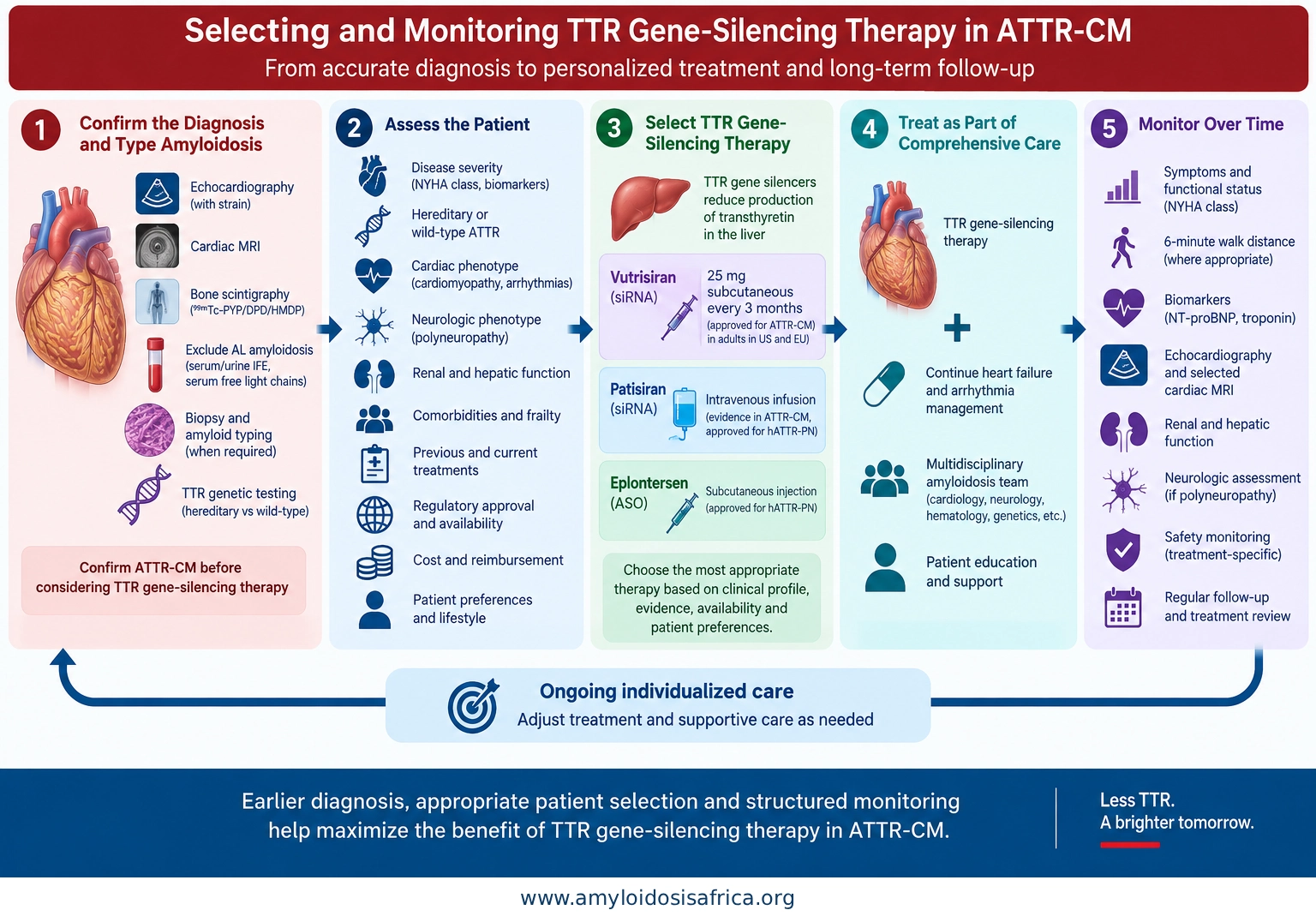
Figure 3. Selecting and Monitoring TTR Gene-Silencing Therapy in ATTR-CM. Treatment begins with accurate confirmation and typing of cardiac amyloidosis. Clinicians then assess disease severity, hereditary status, cardiac and neurologic phenotype, comorbidities, previous treatment, regulatory availability and patient preferences before selecting therapy and monitoring clinical outcomes over time.
Gene Silencing Does Not Replace Heart-Failure Management
TTR-directed treatment addresses the underlying amyloid precursor but does not replace management of the cardiac consequences of ATTR-CM.
Patients may continue to require individualized management of:
- volume overload with diuretics;
- atrial fibrillation;
- anticoagulation where indicated;
- conduction disease and pacemaker therapy when required;
- ventricular arrhythmias in selected circumstances;
- renal dysfunction;
- autonomic dysfunction;
- polyneuropathy; and
- other systemic manifestations of amyloidosis.
For a broader overview, see Cardiac Amyloidosis Treatment: ATTR, AL and Heart-Failure Management.
Why Earlier Diagnosis Matters
Disease-modifying therapy is most useful when started before irreversible organ injury becomes advanced.
Gene silencers can reduce the supply of new amyloid precursor, but they cannot reliably reverse severe established myocardial damage.
This makes early recognition of ATTR-CM particularly important and may allow eligible patients to be considered for gene silencers in cardiac amyloidosis before advanced organ dysfunction develops.
Patients with unexplained increased ventricular wall thickness, heart failure with preserved ejection fraction, characteristic strain abnormalities, conduction disease, atrial arrhythmias or extracardiac ATTR red flags should undergo appropriate evaluation rather than waiting for advanced heart failure to develop.
Gene Silencers and Cardiac Amyloidosis in Africa
The emergence of effective TTR-silencing therapy creates important opportunities but also major implementation challenges for cardiac amyloidosis care in Africa.
Access to disease-modifying therapy can only have its intended impact if patients first reach an accurate diagnosis.
A functional treatment pathway requires:
- clinical awareness of cardiac amyloidosis red flags;
- access to echocardiography and appropriate cardiac imaging;
- serum free light-chain testing and serum/urine immunofixation to assess for AL amyloidosis;
- bone scintigraphy where available;
- biopsy and reliable amyloid typing when needed;
- TTR genetic testing for confirmed ATTR;
- multidisciplinary specialist review;
- access to approved disease-modifying therapy;
- long-term clinical monitoring; and
- sustainable financing and reimbursement pathways.
Availability of TTR silencers currently varies widely between countries. Regulatory approval in the United States or Europe should therefore not be interpreted as equivalent to availability, reimbursement or routine clinical access in an African country.
There is also a need for African real-world evidence describing ATTR-CM phenotype, genetic variation, treatment eligibility, access barriers, treatment patterns and outcomes. Registries and coordinated research platforms can help define these gaps while avoiding extrapolation from populations that may not adequately represent African patients.
Africa-focused priority: Expanding access to TTR gene silencers must occur alongside stronger diagnostic pathways. A highly effective disease-modifying treatment has limited population impact if ATTR-CM remains undiagnosed or incorrectly typed.
What Is Coming Next?
The ATTR treatment landscape is evolving rapidly. Research into gene silencers in cardiac amyloidosis is increasingly being considered alongside stabilizers, next-generation RNA therapies, gene editing and approaches intended to promote amyloid clearance.
Important areas of continued research include:
- earlier initiation of TTR-lowering therapy;
- optimal sequencing of silencers and stabilizers;
- whether selected patients benefit from combination therapy;
- long-term effects on cardiac remodeling and amyloid burden;
- treatment of patients with more advanced heart failure;
- comparative effectiveness of different ATTR therapies;
- next-generation RNA-silencing approaches;
- in-vivo gene editing designed to produce long-lasting TTR suppression; and
- therapies intended to remove or accelerate clearance of existing amyloid deposits.
These approaches should not be assumed to have equivalent efficacy or safety simply because they target the same disease pathway. Each requires appropriate clinical evidence.
Key Takeaways
- Gene silencers in cardiac amyloidosis reduce production of transthyretin in the liver.
- They are relevant to ATTR amyloidosis, not AL amyloidosis.
- Current RNA-targeting approaches include small interfering RNA and antisense oligonucleotide therapies.
- Vutrisiran has phase 3 cardiovascular outcome evidence from HELIOS-B and is approved for adult ATTR-CM in the United States and European Union.
- Patisiran demonstrated preservation of functional capacity and health status in APOLLO-B but is not currently approved for ATTR-CM in the United States.
- Eplontersen did not significantly reduce the primary cardiovascular endpoint in CARDIO-TTRansform.
- Gene silencers lower both variant and wild-type transthyretin.
- They do not directly remove existing cardiac amyloid deposits.
- Gene silencing is different from TTR stabilization and from permanent gene editing.
- Vitamin A management is an important treatment-specific consideration for TTR-lowering therapies.
- Accurate diagnosis and amyloid typing are essential before treatment.
- Heart-failure and arrhythmia management remain necessary alongside disease-modifying therapy.
Frequently Asked Questions
What Is a Gene Silencer in ATTR Amyloidosis?
A gene silencer is a medicine that reduces transthyretin production by targeting the messenger RNA used by liver cells to make TTR protein.
Do Gene Silencers Change a Patient’s DNA?
No. Currently approved TTR gene silencers act on RNA rather than permanently altering the TTR gene in DNA. Permanent gene editing is a separate therapeutic approach.
Which Gene Silencer Is Approved for ATTR Cardiomyopathy?
Vutrisiran is approved for ATTR cardiomyopathy in adults in the United States and European Union. Regulatory status should always be confirmed locally because approvals differ by country.
Can Gene Silencers Treat Wild-Type ATTR?
Yes. TTR silencers reduce production of wild-type as well as variant transthyretin. Vutrisiran is approved for both wild-type and hereditary ATTR-CM.
Can Gene Silencers Treat AL Amyloidosis?
No. AL amyloidosis results from abnormal immunoglobulin light chains produced by a plasma-cell or B-cell clone. Treatment must target that underlying clone rather than transthyretin.
Do Gene Silencers Remove Amyloid Already in the Heart?
No. Their primary action is reducing production of new TTR precursor protein. They do not directly dissolve existing myocardial amyloid deposits.
What Is the Difference Between a Gene Silencer and Tafamidis?
A gene silencer reduces production of transthyretin. Tafamidis is a TTR stabilizer that binds circulating TTR tetramers and makes them less likely to dissociate and misfold.
Can Vutrisiran and a TTR Stabilizer Be Used Together?
Some patients in HELIOS-B received background stabilizer therapy, but the optimal role of routine combination therapy has not been fully established. Treatment should be individualized by an amyloidosis specialist.
Why Is Vitamin A Supplementation Recommended?
TTR participates in transport of retinol-binding protein, so substantial TTR reduction lowers measured serum vitamin A. For vutrisiran, supplementation at the recommended daily allowance is advised according to current prescribing information.
Is Gene-Silencing Therapy a Cure?
No. Gene silencing is disease-modifying therapy. It can reduce production of the amyloid precursor and slow disease progression, but it does not guarantee reversal of established organ damage or eliminate the need for continued monitoring and cardiac care.
References
- Fontana M, Berk JL, Gillmore JD, et al. Vutrisiran in patients with transthyretin amyloidosis with cardiomyopathy. N Engl J Med. 2025;392(1):33–44. doi:10.1056/NEJMoa2409134. View publication.
- Maurer MS, Kale P, Fontana M, et al. Patisiran treatment in patients with transthyretin cardiac amyloidosis. N Engl J Med. 2023;389:1553–1565. doi:10.1056/NEJMoa2300757. View publication.
- Eplontersen for transthyretin amyloid cardiomyopathy. N Engl J Med. Published online August 28, 2026. doi:10.1056/NEJMoa2608510.
- U.S. Food and Drug Administration. AMVUTTRA (vutrisiran) prescribing information. Revised 2025. View FDA prescribing information.
- U.S. Food and Drug Administration. ONPATTRO (patisiran) prescribing information. Revised 2025.
- Kittleson MM, Ruberg FL, Ambardekar AV, et al. 2023 ACC Expert Consensus Decision Pathway on Comprehensive Multidisciplinary Care for the Patient With Cardiac Amyloidosis. J Am Coll Cardiol. 2023;81(11):1076–1126. doi:10.1016/j.jacc.2022.11.022.
- Garcia-Pavia P, Rapezzi C, Adler Y, et al. Diagnosis and treatment of cardiac amyloidosis: a position statement of the ESC Working Group on Myocardial and Pericardial Diseases. Eur Heart J. 2021;42(16):1554–1568. doi:10.1093/eurheartj/ehab072.
- Ruberg FL, Grogan M, Hanna M, Kelly JW, Maurer MS. Transthyretin amyloid cardiomyopathy: JACC State-of-the-Art Review. J Am Coll Cardiol. 2019;73(22):2872–2891. doi:10.1016/j.jacc.2019.04.003.
Medical Disclaimer
This article provides general educational information and does not replace individualized medical advice, diagnosis or treatment. Regulatory approvals, indications, availability and prescribing information for TTR-directed therapies vary between countries and may change over time. Decisions regarding gene-silencing therapy should be made by qualified clinicians experienced in amyloidosis after confirmation of amyloid type, assessment of disease severity, review of treatment options and discussion of the individual patient’s potential benefits and risks.





Leave a Reply