



Cardiac Amyloidosis in Africa: Current Challenges and Opportunities
Cardiac amyloidosis is increasingly recognized as an important and treatable cause of heart failure, yet major gaps remain in its recognition, diagnosis and management across Africa. The condition results from deposition of misfolded amyloid proteins within the myocardium, most commonly transthyretin in ATTR cardiac amyloidosis or immunoglobulin light chains in AL cardiac amyloidosis (1).
Although diagnostic and therapeutic advances have transformed cardiac amyloidosis care internationally, many African healthcare systems face barriers to implementing these advances. These barriers include limited epidemiological data, low disease awareness, shortages of trained personnel, restricted diagnostic infrastructure, high costs, limited access to disease-modifying therapy and weak referral pathways (2).
However, the same gaps also create an important opportunity. Greater awareness, simpler diagnostic pathways, regional collaboration, improved access to testing and treatment, and generation of African data could substantially improve the recognition and management of cardiac amyloidosis across the continent.
Key message: A lack of diagnosed cases should not be interpreted as evidence that cardiac amyloidosis is rare in Africa. Reliable continent-wide epidemiological data remain limited, and under-recognition may contribute substantially to the apparent low disease burden.
Why Cardiac Amyloidosis Matters in Africa
Heart failure is a major cardiovascular challenge across African populations. In clinical practice, clinicians commonly encounter hypertensive heart disease, cardiomyopathies, valvular disease and ischemic heart disease. However, cardiac amyloidosis may remain outside the initial differential diagnosis, particularly when awareness and access to confirmatory investigations are limited.
This matters because modern diagnostic algorithms can identify ATTR cardiac amyloidosis without endomyocardial biopsy in appropriately selected patients. Furthermore, disease-modifying therapies are now available for ATTR-CM, while AL amyloidosis requires rapid hematologic diagnosis and treatment (1).
Therefore, delayed recognition has practical consequences. A patient may spend years receiving treatment for nonspecific heart failure before clinicians identify the underlying amyloid cardiomyopathy. By that stage, the disease may be more advanced and therapeutic opportunities may be reduced.
The African Evidence Gap
One of the greatest challenges is the absence of robust epidemiological data from many African countries. Published commentary has highlighted the lack of rigorous disease registries and systematic documentation as major obstacles to understanding the burden of transthyretin cardiac amyloidosis in populations of African descent (2).
Consequently, clinicians and health planners often lack reliable answers to basic questions: How common is ATTR-CM in African heart-failure populations? Which TTR variants occur in different regions? How frequently does AL cardiac amyloidosis present? How long does diagnosis take? And how many patients can access disease-specific treatment?
Without registries and prospective cohorts, it is difficult to distinguish truly low disease prevalence from low diagnostic detection. For this reason, establishing African cardiac amyloidosis registries and incorporating amyloidosis into broader heart-failure and cardiomyopathy research could provide essential data.
Genetic Relevance and African Ancestry
The relationship between African ancestry and hereditary transthyretin amyloidosis makes this evidence gap particularly important. The TTR p.Val142Ile variant, historically called V122I, is strongly associated with African ancestry and is one of the most important genetic causes of ATTR cardiomyopathy worldwide (3).
Large studies of populations of African descent outside Africa have reported carrier frequencies around 3% to 4%. For example, a systematic review found that larger studies involving more than 1,000 participants generally reported p.Val142Ile prevalence of approximately 3% to 3.5% among people of African descent (3).
Moreover, a large cohort study of Black individuals found that carriers of the Val142Ile variant had a higher risk of incident heart failure and heart-failure mortality than noncarriers (4).
However, data from African populations themselves remain much more limited. Therefore, carrier frequencies derived from African-American or Afro-Caribbean cohorts should not simply be assumed to represent every African population. Africa has extensive genetic diversity, and continent-specific studies are needed.
Important distinction: African ancestry is relevant to hereditary ATTR, particularly p.Val142Ile, but ancestry alone does not establish a diagnosis. Clinical evaluation, appropriate imaging, monoclonal protein testing and genetic testing remain necessary.
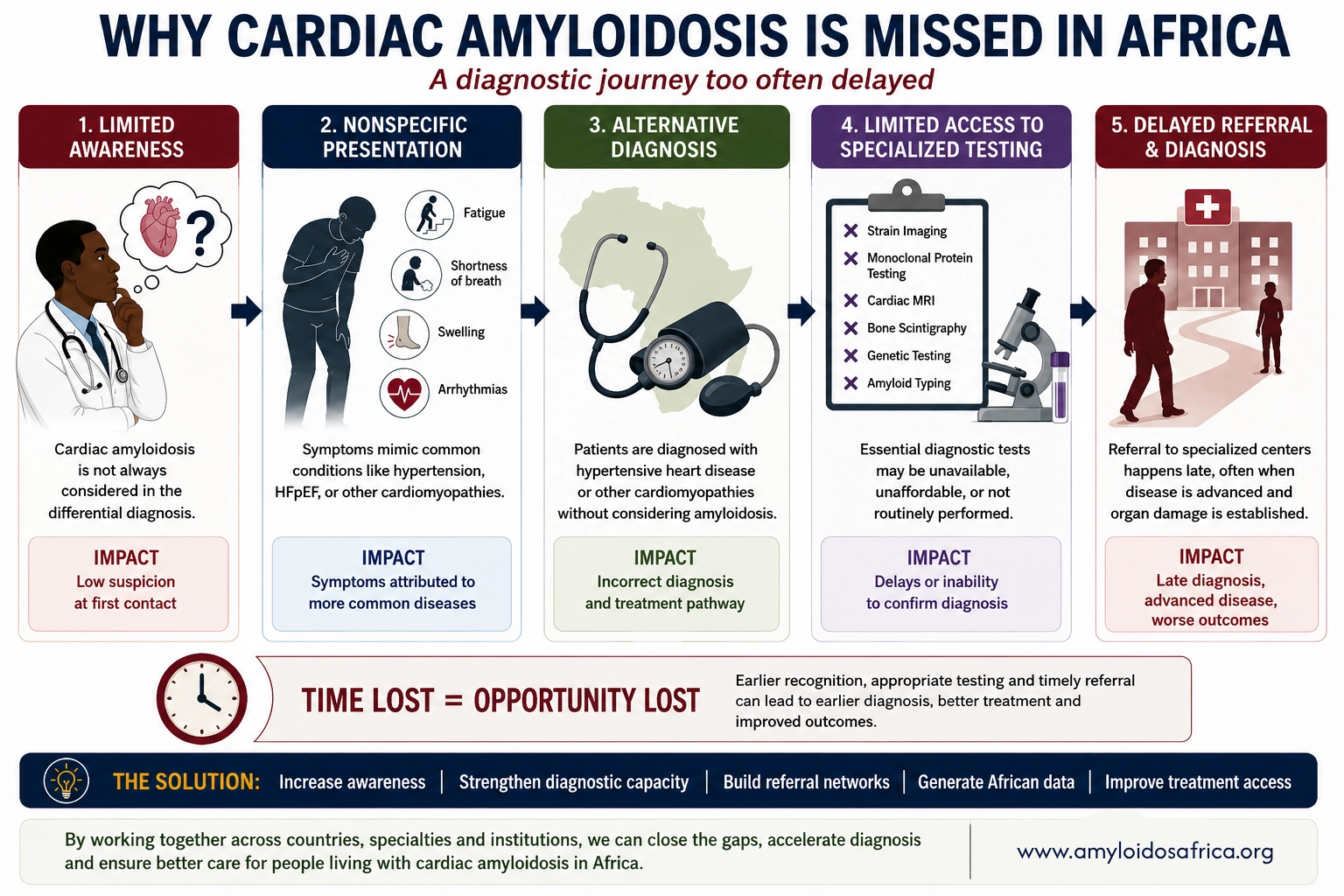
Why Is Cardiac Amyloidosis Often Missed?
Several barriers can interact before a patient reaches the correct diagnosis. In many settings, the first challenge is simply considering cardiac amyloidosis in the differential diagnosis.
Limited Disease Awareness
Cardiac amyloidosis has historically received limited emphasis in many general medical and cardiology training programmes. Consequently, clinicians may recognize heart failure but not suspect amyloid as the underlying cause. Published analyses of the African context have identified limited awareness and shortages of trained personnel as major barriers (2).
Nonspecific Clinical Presentation
Patients may present with fatigue, dyspnea, exercise intolerance, peripheral oedema, atrial fibrillation or conduction disease. Because these features overlap with common cardiovascular conditions, clinicians may initially attribute them to hypertensive heart disease, conventional HFpEF or another cardiomyopathy.
Therefore, red-flag recognition matters. Unexplained ventricular wall thickening, discordance between wall thickness and ECG voltage, reduced longitudinal strain with relative apical sparing, carpal tunnel syndrome, spinal stenosis, neuropathy, proteinuria, macroglossia or periorbital purpura should prompt consideration of amyloidosis in the appropriate clinical context (1).
Competing Cardiovascular Diagnoses
Hypertension is common across many African populations, and increased left ventricular wall thickness often leads clinicians toward a diagnosis of hypertensive heart disease. However, hypertension and cardiac amyloidosis can coexist. Therefore, clinicians should reconsider the diagnosis when the degree of wall thickening, restrictive physiology, biomarkers or extracardiac findings appear disproportionate.
Limited Access to Diagnostic Testing
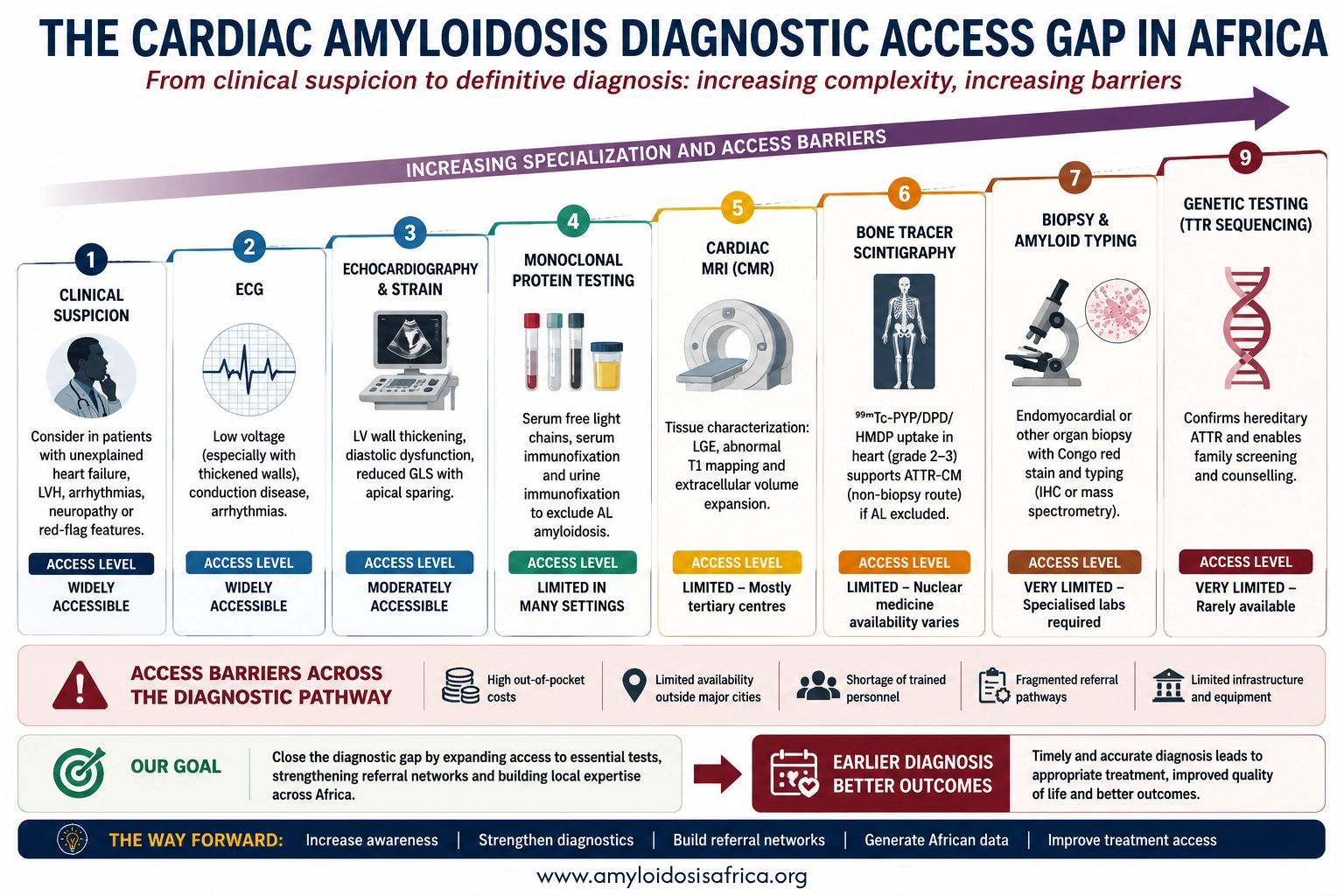
Even when clinicians suspect cardiac amyloidosis, diagnosis may stall if essential investigations are unavailable or unaffordable. The challenge is not limited to one test; rather, it affects several levels of the diagnostic pathway (2).
Echocardiography and Strain Imaging
Standard echocardiography is more widely available than many advanced tests and could become an important entry point for case detection. However, global longitudinal strain analysis may not be available at every centre, and image acquisition and interpretation require appropriate expertise.
For this reason, strengthening echocardiography capacity and training clinicians to recognize amyloid red flags may provide one of the most scalable diagnostic opportunities in Africa (2).
Monoclonal Protein Testing
A complete monoclonal protein screen is essential when evaluating suspected cardiac amyloidosis because clinicians must exclude AL amyloidosis before using the non-biopsy ATTR pathway. The recommended screen includes serum free light chains, serum immunofixation and urine immunofixation (1).
Unfortunately, some centres may have access only to basic protein electrophoresis. However, serum protein electrophoresis alone should not be used to exclude AL amyloidosis. This laboratory gap can therefore become a critical bottleneck.
Bone-Tracer Scintigraphy
Technetium-labelled bone-tracer scintigraphy can enable non-biopsy diagnosis of ATTR-CM when imaging shows appropriate myocardial uptake and clinicians have excluded a monoclonal light-chain process (1).
Yet nuclear medicine infrastructure remains unevenly distributed. In addition, correct interpretation requires appropriate protocols and confirmation that apparent myocardial activity represents true cardiac uptake rather than blood pool or another artifact.
Cardiac Magnetic Resonance
CMR can support the diagnosis of cardiac amyloidosis by demonstrating characteristic tissue abnormalities, including diffuse late gadolinium enhancement and extracellular volume expansion. However, scanners, cardiac protocols and trained specialists may remain concentrated in major urban or tertiary centres (5).
Biopsy and Amyloid Typing
Selected patients require tissue biopsy and definitive amyloid typing. This creates another challenge because Congo red staining, expert histopathology, immunohistochemistry and mass-spectrometry-based amyloid typing may not all be available locally.
Consequently, regional pathology referral systems could have substantial value. Rather than requiring every centre to provide every advanced technique, countries or regions could develop reliable sample referral pathways to designated expert laboratories.
Genetic Testing
Once clinicians diagnose ATTR-CM, genetic testing can distinguish hereditary ATTR from wild-type ATTR (1).
This distinction is particularly important in African populations because hereditary disease may have implications for relatives. However, access to TTR sequencing and genetic counselling remains limited in many settings.
Limited Access to Disease-Modifying Treatment
Diagnosis alone does not solve the problem if patients cannot access treatment. Published analyses of cardiac amyloidosis in populations of African descent identify affordability and access to newer therapies as major global-equity challenges (2).
ATTR-CM treatment has advanced considerably, with therapies that stabilize transthyretin or reduce its production. However, regulatory approval, reimbursement, availability and affordability vary by country. Therefore, an evidence-based therapy may remain functionally inaccessible to many patients.
Similarly, patients with AL amyloidosis need rapid access to hematology, plasma-cell-directed therapy and appropriate supportive care. In low-resource settings, delays in diagnostic confirmation, drug procurement or referral may be especially harmful because AL amyloidosis can progress rapidly.
Shortage of Expertise and Referral Pathways
Cardiac amyloidosis care is inherently multidisciplinary. Patients may need cardiology, hematology, neurology, nephrology, nuclear medicine, genetics, pathology and advanced imaging expertise (1).
However, specialist shortages remain a major challenge in many African health systems. Furthermore, even when expertise exists within a country, clinicians may not know where to refer a suspected patient.
Therefore, referral pathways may be as important as new technology. A practical national or regional pathway could identify which facilities provide echocardiographic expertise, monoclonal testing, CMR, scintigraphy, biopsy, hematology assessment and genetic testing.
Research Underrepresentation
Another challenge is the limited representation of African patients and healthcare settings in much of the published cardiac amyloidosis literature. As a result, clinicians often extrapolate evidence from North American or European populations.
This evidence remains clinically valuable. Nevertheless, African data are needed to answer questions about local phenotypes, TTR variant distribution, diagnostic pathways, healthcare access, treatment patterns and outcomes.
Multicountry observational research could also help identify which diagnostic strategies are feasible in different resource settings and where targeted investment would produce the greatest impact.
Opportunities to Transform Cardiac Amyloidosis Care in Africa
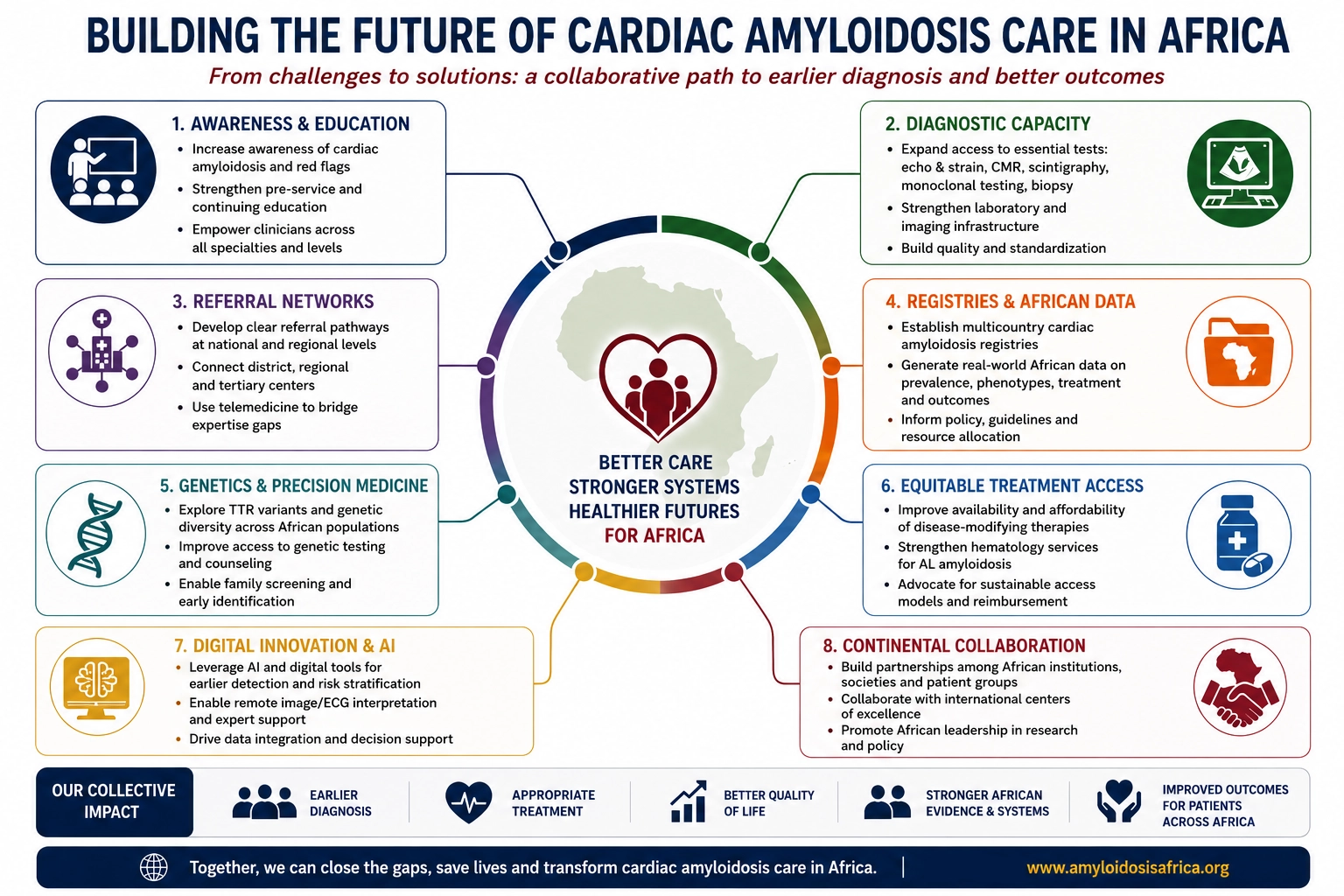
Despite these barriers, Africa does not need to reproduce every component of highly specialized amyloidosis systems immediately. Instead, countries can build practical, staged pathways that use available resources efficiently while progressively expanding advanced capacity.
1. Healthcare Professional Education
Education may provide one of the fastest opportunities for improvement. Clinicians who recognize amyloidosis red flags are more likely to initiate appropriate testing or referral. Therefore, continuing medical education should target cardiologists, internists, hematologists, neurologists, nephrologists, imaging specialists, sonographers and primary-care clinicians.
2. Practical Diagnostic Algorithms
Diagnostic pathways should reflect the resources that clinicians actually have. For example, a centre without CMR may still identify high-risk patients using history, ECG, echocardiography, biomarkers and monoclonal protein testing before referring selected patients for advanced investigations.
Therefore, resource-adapted algorithms may have greater impact than assuming universal access to every advanced modality.
3. Regional Centres and Referral Networks
Not every hospital needs to become an amyloidosis referral centre. Instead, countries can identify centres with appropriate expertise and connect them through clear referral systems. Regional collaboration may also allow smaller countries or institutions to share advanced services.
4. African Registries and Real-World Data
Registries can address one of the continent’s most important gaps: the lack of systematic data. They can document patient characteristics, diagnostic pathways, disease type, genetic findings, access to investigations, treatment and outcomes (2).
Moreover, multicountry registries can reveal differences between healthcare systems and help identify priorities for investment.
5. Genetic Research
The known relationship between p.Val142Ile and African ancestry creates a compelling rationale for African genetic studies. However, research should not focus on a single variant alone. The continent’s genetic diversity means that broader TTR sequencing may identify additional variants and regional patterns.
6. Digital Health and Artificial Intelligence
Digital technologies may eventually support screening and referral, particularly where specialist expertise is concentrated in a small number of centres. Potential approaches include remote echocardiography review, teleconsultation, standardized digital referral pathways and AI-supported ECG or imaging interpretation.
However, these tools require prospective evaluation in African populations before clinicians rely on them for clinical decision-making. Local validation, data governance and equitable access should remain central.
7. Equitable Treatment Access
Improved diagnosis must ultimately connect patients to treatment. Therefore, governments, healthcare systems, scientific societies, patient organizations, philanthropic organizations and pharmaceutical companies should explore sustainable models for access to disease-modifying therapy (2).
8. Continental and International Collaboration
Partnerships between African institutions and established amyloidosis centres can support training, research, diagnostic mentorship, pathology review and development of locally appropriate care pathways. Published global-health commentary specifically identifies collaboration with international centres of excellence as one possible mechanism for strengthening capacity (2).
At the same time, African-led scientific leadership should remain central so that research priorities reflect local clinical needs rather than external assumptions.
Building an African Cardiac Amyloidosis Research Network
A continental research network could connect clinicians who currently see only small numbers of suspected or confirmed cases at individual institutions. By combining data across countries, researchers could build sufficiently large cohorts to characterize disease patterns and healthcare gaps more reliably.
Such a network could support:
- Multicountry cardiac amyloidosis registries
- Standardized case definitions and datasets
- Genetic studies of hereditary ATTR
- Diagnostic-access and referral-pathway research
- Treatment-access and outcome studies
- Education and quality-improvement programmes
- Evaluation of AI and digital diagnostic approaches
- Preparation of centres for future clinical research and trials
The Role of Amyloidosis Africa
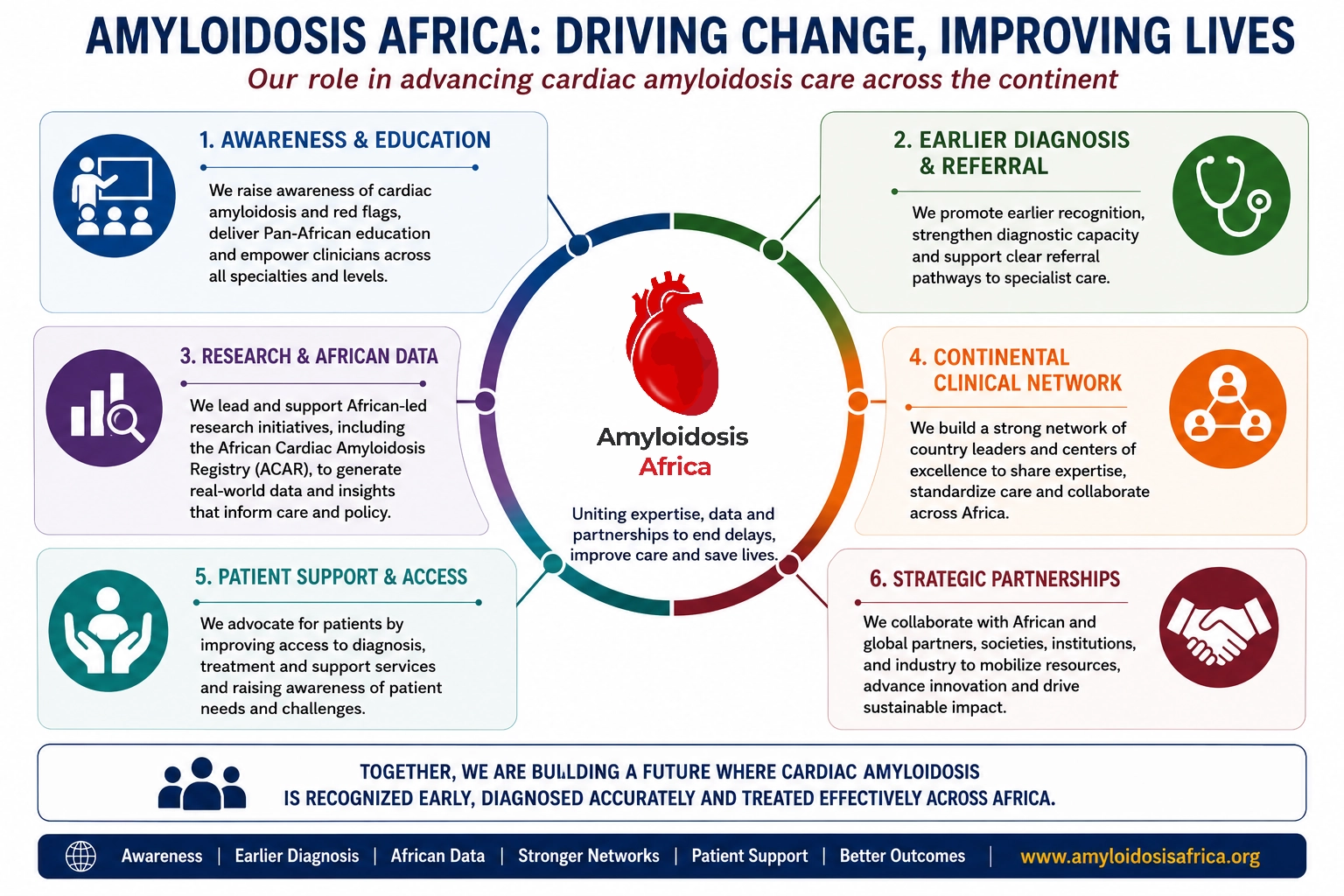
Amyloidosis Africa aims to contribute to this emerging ecosystem through awareness, healthcare-professional education, research collaboration, development of African data, support for diagnostic pathways and connection of clinicians across countries.
The goal is not to create isolated parallel systems. Rather, sustainable progress will require collaboration with African cardiovascular and hematology societies, universities, referral hospitals, patient organizations, international scientific institutions, governments and other stakeholders.
Ultimately, the most important measure of success will be whether patients receive an accurate diagnosis earlier and gain access to appropriate care.
What Needs to Happen Next?
Progress will require coordinated action rather than a single intervention. Education without diagnostics will leave clinicians unable to confirm disease. Diagnostics without treatment will identify patients without changing outcomes. Research without local capacity will remain difficult to sustain.
Therefore, priority actions should include:
- Increase healthcare-professional awareness of cardiac amyloidosis red flags
- Develop resource-adapted diagnostic pathways
- Expand access to monoclonal protein testing, echocardiographic strain, scintigraphy and genetic testing
- Create national and regional referral networks
- Establish African registries and prospective cohorts
- Strengthen amyloid pathology and typing capacity
- Expand genetic and phenotype research in diverse African populations
- Develop equitable pathways to disease-modifying treatment
- Support African-led multicountry scientific collaboration
Key Takeaways
- The true burden of cardiac amyloidosis in Africa remains uncertain because systematic epidemiological data are limited.
- Underdiagnosis should not be interpreted as evidence that the disease is rare.
- The TTR p.Val142Ile variant is strongly associated with African ancestry and provides a major rationale for African genetic and clinical research.
- Major barriers include limited awareness, diagnostic infrastructure, trained personnel, referral systems, research data and treatment access.
- A complete cardiac amyloidosis diagnostic pathway requires reliable differentiation between AL and ATTR disease.
- Echocardiography and clinician education may provide scalable opportunities for earlier case recognition.
- Regional referral networks can help concentrate advanced diagnostics without requiring every hospital to provide every specialized test.
- African registries are essential to define disease burden, phenotypes, access gaps and outcomes.
- Genetic studies should reflect Africa’s diversity rather than extrapolate exclusively from populations of African descent outside the continent.
- Digital and AI approaches are promising but require prospective evaluation in African populations.
- The long-term goal should be equitable access to earlier diagnosis, specialist care and effective treatment.
References
- Kittleson MM, Ruberg FL, Ambardekar AV, Brannagan TH 3rd, Cheng RK, Clarke JO, et al. 2023 ACC Expert Consensus Decision Pathway on comprehensive multidisciplinary care for the patient with cardiac amyloidosis. J Am Coll Cardiol. 2023;81(11):1076-1126. doi:10.1016/j.jacc.2022.11.022.
- Uneven burden of cardiac amyloidosis in people of African descent: global imbalance in resources and access. Published perspective addressing data gaps, workforce shortages, diagnostic infrastructure, treatment access and opportunities for capacity building in populations of African descent.
- Chandrashekar P, et al. Prevalence and outcomes of p.Val142Ile TTR amyloidosis cardiomyopathy: a systematic review. Circ Genom Precis Med. 2021. PMID: 34461737.
- Association of transthyretin Val122Ile variant with incident heart failure among Black individuals. JAMA. 2022. PMID: 35377943.
- Garcia-Pavia P, Rapezzi C, Adler Y, Arad M, Basso C, Brucato A, et al. Diagnosis and treatment of cardiac amyloidosis: a position statement of the ESC Working Group on Myocardial and Pericardial Diseases. Eur Heart J. 2021;42(16):1554-1568. doi:10.1093/eurheartj/ehab072.
Medical Disclaimer
This article provides educational and informational content only and does not replace individualized medical advice, diagnosis or treatment. Diagnostic pathways, test availability, regulatory approvals and treatment access vary between countries and healthcare systems. Qualified healthcare professionals should make clinical decisions according to each patient’s presentation, amyloid type, organ involvement, locally applicable guidance and available resources.

[…] Learn more about cardiac amyloidosis in Africa. […]