



Wild-Type ATTR Amyloidosis: Symptoms, Diagnosis & Treatment
Wild-type ATTR amyloidosis is a progressive disorder in which normal transthyretin protein becomes unstable, misfolds and forms amyloid fibrils that accumulate in tissues. The disease most commonly affects the heart and is therefore often recognized as wild-type transthyretin amyloid cardiomyopathy, or ATTRwt-CM.
Unlike hereditary ATTR amyloidosis, wild-type ATTR does not result from a pathogenic variant in the TTR gene. Instead, structurally normal transthyretin gradually becomes prone to misfolding, particularly with advancing age.
Although cardiac disease dominates the clinical picture, musculoskeletal manifestations such as bilateral carpal tunnel syndrome and lumbar spinal stenosis can precede heart failure by years. Therefore, recognizing these earlier clues can help shorten the diagnostic delay (1, 2).
Key principle: Wild-type ATTR amyloidosis is not inherited. It results from misfolding of normal transthyretin and primarily affects older adults, especially through cardiac and musculoskeletal manifestations.
What Is Transthyretin?
Transthyretin, abbreviated TTR, is a transport protein produced mainly by the liver. It normally circulates in the bloodstream as a tetramer composed of four protein subunits.
This tetramer carries thyroxine and retinol-binding protein. However, the structure can become less stable over time.
When the tetramer dissociates, individual TTR monomers can misfold and aggregate. These aggregates can then form amyloid fibrils that deposit in tissues.
Normal TTR tetramer
↓
Age-related loss of stability
↓
Tetramer dissociation
↓
TTR monomer misfolding
↓
Amyloid fibril formation
↓
Progressive tissue and organ dysfunction
↓
Age-related loss of stability
↓
Tetramer dissociation
↓
TTR monomer misfolding
↓
Amyloid fibril formation
↓
Progressive tissue and organ dysfunction
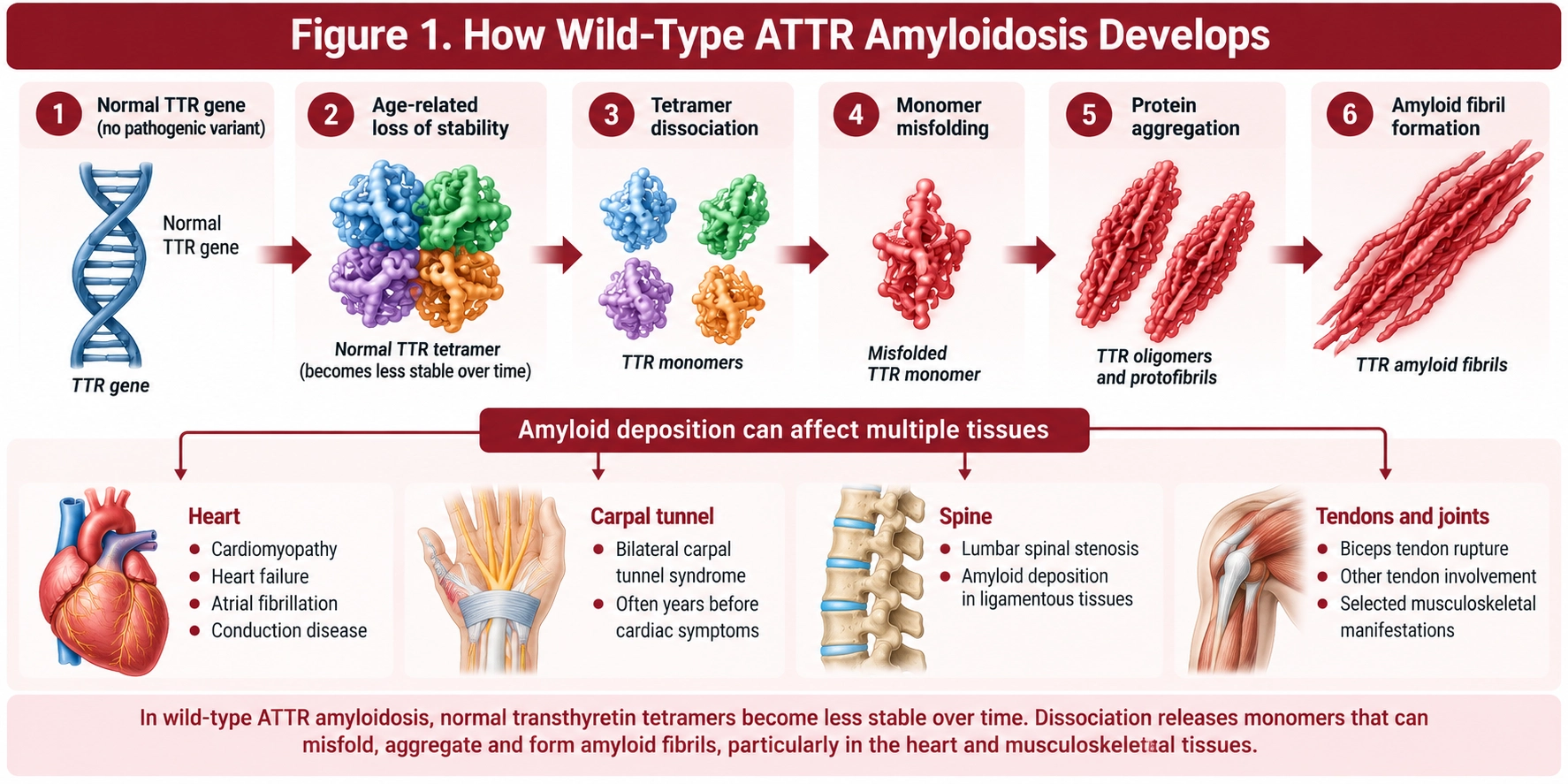
Figure 1. How Wild-Type ATTR Amyloidosis Develops. In wild-type ATTR amyloidosis, normal transthyretin tetramers become less stable over time. Dissociation releases monomers that can misfold, aggregate and form amyloid fibrils, particularly in the heart and musculoskeletal tissues.
Why Is It Called Wild-Type ATTR?
The term wild-type means that the patient does not carry a pathogenic disease-causing variant in the TTR gene.
Therefore, the transthyretin protein has the usual genetic sequence. Nevertheless, normal TTR can still become unstable and form amyloid.
This distinguishes wild-type ATTR from hereditary ATTR, in which a pathogenic TTR variant contributes to protein instability.
| Feature | Wild-Type ATTR | Hereditary ATTR |
|---|---|---|
| TTR gene variant | No pathogenic inherited TTR variant | Pathogenic TTR variant present |
| Inheritance | Not inherited | Usually autosomal dominant |
| Typical phenotype | Predominantly cardiomyopathy | Cardiomyopathy, polyneuropathy or mixed disease |
| Typical age | Usually later adulthood | Variable depending on genotype and penetrance |
| Family implications | No familial TTR mutation to transmit | Biologic relatives may be at genetic risk |
Who Develops Wild-Type ATTR Amyloidosis?
Wild-type ATTR amyloidosis predominantly affects older adults. Historically, many diagnosed patients have been men in their seventies or eighties, although women can also develop the disease. :contentReference[oaicite:1]{index=1}
Importantly, diagnosis often occurs late because symptoms may initially resemble common age-related conditions such as hypertension, atrial fibrillation, degenerative spine disease, or ordinary heart failure.
As awareness and noninvasive diagnosis have improved, clinicians increasingly recognize ATTRwt-CM as an important cause of heart failure in older populations.
Is Wild-Type ATTR Amyloidosis Rare?
Wild-type ATTR amyloidosis was historically considered rare. However, contemporary evidence suggests that it is substantially underdiagnosed.
The disease can be found in selected populations of older adults with:
- heart failure with preserved ejection fraction;
- unexplained increased ventricular wall thickness;
- aortic stenosis;
- atrial fibrillation;
- conduction disease; or
- multiple musculoskeletal red flags.
Therefore, the apparent rarity of wild-type ATTR partly reflects under-recognition and previous dependence on invasive diagnostic procedures. :contentReference[oaicite:2]{index=2}
Which Organs Does Wild-Type ATTR Affect?
The heart is the dominant organ involved in wild-type ATTR amyloidosis. Nevertheless, amyloid can also accumulate in musculoskeletal and other tissues.
| Organ or Tissue | Common Manifestations |
|---|---|
| Heart | Cardiomyopathy, heart failure, atrial fibrillation, conduction disease and reduced exercise capacity |
| Carpal tunnel | Bilateral carpal tunnel syndrome, often years before cardiac diagnosis |
| Spine | Lumbar spinal stenosis related to amyloid deposition in ligamentous tissues |
| Tendons | Biceps tendon rupture and other tendon involvement |
| Joints and soft tissues | Selected amyloid-associated musculoskeletal manifestations |
What Is Wild-Type ATTR Cardiomyopathy?
When transthyretin amyloid accumulates in the myocardium, it causes wild-type ATTR cardiomyopathy.
Amyloid expands the myocardial extracellular space and progressively increases ventricular stiffness. Consequently, the heart has increasing difficulty relaxing and filling normally.
Patients may initially have a preserved left ventricular ejection fraction. However, preserved ejection fraction does not mean that cardiac function is normal.
As disease progresses, stroke volume can fall, filling pressures increase, and heart failure becomes more clinically apparent.
What Are the Symptoms of Wild-Type ATTR-CM?
Symptoms often develop gradually. Therefore, patients may initially attribute them to aging or reduced fitness.
Common symptoms include:
- shortness of breath during activity;
- fatigue;
- reduced exercise tolerance;
- leg swelling;
- abdominal swelling or congestion;
- orthopnea;
- dizziness;
- low blood pressure;
- palpitations;
- progressive weakness; and
- reduced ability to perform daily activities.
In addition, atrial fibrillation and conduction abnormalities are common and may contribute to symptoms.
What Are the Musculoskeletal Red Flags?
Musculoskeletal manifestations are particularly important because they may precede cardiac disease by several years.
Important red flags include:
- bilateral carpal tunnel syndrome;
- lumbar spinal stenosis;
- atraumatic biceps tendon rupture;
- recurrent orthopedic procedures involving amyloid-prone tissues; and
- multiple musculoskeletal manifestations in combination with later cardiac disease.
Among these, bilateral carpal tunnel syndrome is one of the best recognized early clues. Recent patient-journey research also shows that clinicians frequently overlook early musculoskeletal manifestations before severe cardiac symptoms emerge. :contentReference[oaicite:3]{index=3}
Clinical clue: In an older adult, a history of bilateral carpal tunnel syndrome or lumbar spinal stenosis combined with unexplained heart failure or increased ventricular wall thickness should increase suspicion for wild-type ATTR cardiomyopathy.
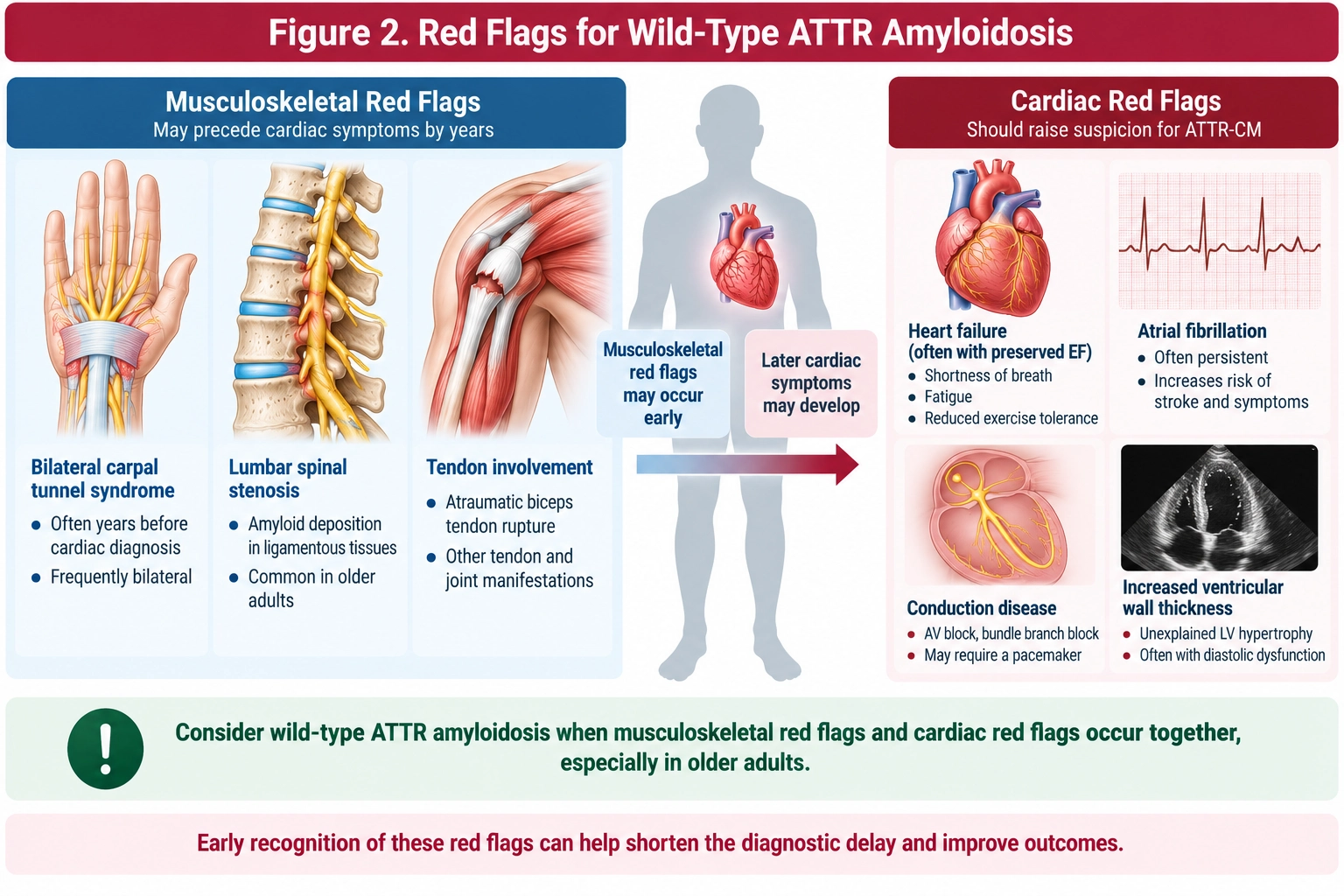
Figure 2. Red Flags for Wild-Type ATTR Amyloidosis. Musculoskeletal manifestations such as bilateral carpal tunnel syndrome, spinal stenosis and tendon involvement may precede cardiac symptoms. When these findings occur together with heart failure, atrial fibrillation, conduction disease or increased ventricular wall thickness, clinicians should consider ATTR-CM.
What Are the Cardiac Red Flags?
No single cardiac finding proves wild-type ATTR amyloidosis. However, a characteristic pattern can strongly increase suspicion.
Important cardiac red flags include:
- heart failure with preserved or mildly reduced ejection fraction;
- otherwise unexplained increased left ventricular wall thickness;
- diastolic dysfunction;
- atrial fibrillation;
- conduction disease;
- need for a pacemaker;
- low blood pressure despite a history of previous hypertension;
- disproportionately elevated cardiac biomarkers;
- relative apical sparing on longitudinal strain imaging;
- cardiac MRI findings consistent with amyloid infiltration; and
- coexisting musculoskeletal red flags.
How Is Wild-Type ATTR Amyloidosis Diagnosed?
Diagnosis usually begins when clinical history, ECG, echocardiography or cardiac MRI raises suspicion for cardiac amyloidosis.
Importantly, clinicians must distinguish ATTR from AL amyloidosis, because the two diseases require very different treatments.
Step 1: Evaluate for a Monoclonal Protein
Clinicians should perform:
- serum free light chains;
- serum immunofixation; and
- urine immunofixation.
These tests help identify a monoclonal gammopathy that could indicate or complicate evaluation for AL amyloidosis.
Read more about monoclonal protein testing in cardiac amyloidosis.
Step 2: Bone Scintigraphy
Bone scintigraphy using technetium-99m PYP, DPD, or HMDP is central to modern noninvasive diagnosis.
In the appropriate clinical setting, strong cardiac tracer uptake combined with a negative monoclonal protein evaluation can establish ATTR-CM without an endomyocardial biopsy (3).
Current ACC guidance continues to emphasize this noninvasive pathway. :contentReference[oaicite:4]{index=4}
Step 3: Biopsy When Needed
Biopsy remains important when the noninvasive pathway is inconclusive or conflicting.
For example, tissue confirmation may be needed when a monoclonal protein is present, imaging findings are atypical or the amyloid type remains uncertain.
Step 4: Genetic Testing
After ATTR amyloidosis is confirmed, clinicians should perform TTR genetic testing to distinguish wild-type from hereditary ATTR.
If no pathogenic TTR variant is detected in a patient with confirmed ATTR, the disease is classified as wild-type ATTR.
Suspect cardiac amyloidosis
↓
Serum free light chains + serum/urine immunofixation
↓
Bone scintigraphy when appropriate
↓
Biopsy if required
↓
Confirm ATTR
↓
TTR genetic testing
↓
No pathogenic variant → Wild-type ATTR
↓
Serum free light chains + serum/urine immunofixation
↓
Bone scintigraphy when appropriate
↓
Biopsy if required
↓
Confirm ATTR
↓
TTR genetic testing
↓
No pathogenic variant → Wild-type ATTR
What Does Echocardiography Show?
Echocardiography often provides the first major imaging clue.
Possible findings include:
- increased ventricular wall thickness;
- biatrial enlargement;
- diastolic dysfunction;
- reduced global longitudinal strain;
- relative apical sparing;
- valvular thickening;
- small pericardial effusion;
- reduced stroke volume; and
- progressive systolic dysfunction in advanced disease.
However, echocardiography cannot reliably distinguish wild-type ATTR from hereditary ATTR or AL amyloidosis by itself.
What Does Cardiac MRI Show?
Cardiac MRI can demonstrate myocardial infiltration and quantify changes in the extracellular space.
Common features include:
- diffuse subendocardial or transmural late gadolinium enhancement;
- abnormal gadolinium kinetics;
- elevated native T1;
- increased extracellular volume; and
- features of restrictive physiology.
Nevertheless, MRI usually identifies cardiac amyloid infiltration rather than proving the precursor protein.
Why Is Genetic Testing Needed if Wild-Type ATTR Is Not Inherited?
Genetic testing is necessary because clinicians cannot reliably distinguish hereditary from wild-type ATTR based on age, ancestry, or cardiac phenotype alone.
A patient who appears clinically typical for wild-type ATTR can still carry a pathogenic TTR variant.
Therefore, once ATTR is confirmed, genetic testing establishes whether the disease is hereditary or wild-type.
If testing shows no pathogenic TTR variant, the disease is considered wild-type ATTR and relatives do not require cascade testing for a familial TTR mutation.
How Is Wild-Type ATTR Amyloidosis Treated?
Modern treatment aims to slow the production of additional amyloid and manage the cardiovascular consequences of established disease.
Current disease-modifying strategies include:
- TTR stabilization with tafamidis or acoramidis; and
- TTR silencing with vutrisiran in jurisdictions where it is approved for ATTR-CM.
Current ACC guidance specifically recognizes tafamidis, acoramidis, and vutrisiran as disease-modifying therapies in ATTR cardiomyopathy. :contentReference[oaicite:5]{index=5}
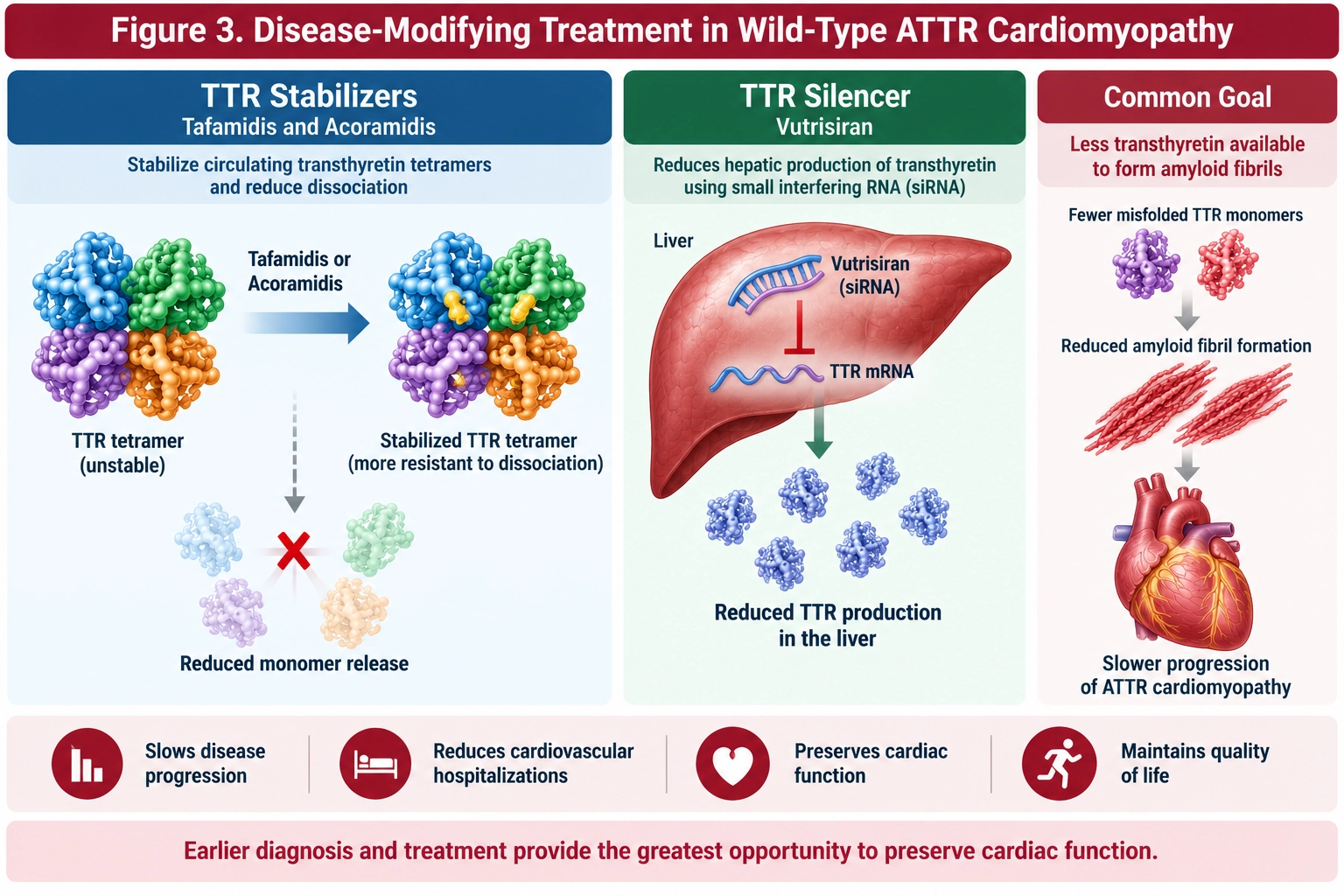
Figure 3. Disease-Modifying Treatment in Wild-Type ATTR Cardiomyopathy. TTR stabilizers such as tafamidis and acoramidis make circulating transthyretin tetramers more resistant to dissociation, while vutrisiran reduces hepatic TTR production. Both strategies aim to reduce formation of additional amyloid and slow progression of ATTR-CM.
Tafamidis
Tafamidis is an oral TTR stabilizer that binds circulating transthyretin and makes the tetramer less likely to dissociate.
In the ATTR-ACT trial, tafamidis reduced all-cause mortality and cardiovascular-related hospitalization compared with placebo in patients with ATTR-CM (4).
The trial included both wild-type and hereditary ATTR cardiomyopathy.
Read the ATTR-ACT publication in the New England Journal of Medicine.
Acoramidis
Acoramidis is another oral TTR stabilizer designed to achieve strong tetramer stabilization.
In ATTRibute-CM, acoramidis significantly improved the hierarchical primary clinical outcome compared with placebo. The trial included patients with wild-type and variant ATTR cardiomyopathy (5).
The FDA approved acoramidis for adults with cardiomyopathy of wild-type or variant ATTR to reduce cardiovascular death and cardiovascular-related hospitalization. :contentReference[oaicite:6]{index=6}
For more detail, see TTR Stabilization in Cardiac Amyloidosis.
Vutrisiran
Vutrisiran is a small interfering RNA therapy that reduces TTR production in the liver.
HELIOS-B evaluated vutrisiran in patients with wild-type or hereditary ATTR cardiomyopathy and demonstrated benefit on cardiovascular outcomes.
The current FDA label includes adults with cardiomyopathy of wild-type or hereditary transthyretin-mediated amyloidosis. In HELIOS-B, vutrisiran produced substantial reductions in serum TTR across the wild-type and hereditary subgroups. :contentReference[oaicite:7]{index=7}
For a detailed explanation, see Gene Silencers in Cardiac Amyloidosis.
Can TTR Stabilizers and Silencers Be Combined?
The two approaches act at different points in the amyloid pathway.
Stabilizers reduce TTR tetramer dissociation, whereas silencers reduce production of TTR in the liver.
However, complementary mechanisms do not automatically prove that routine combination therapy provides additional clinical benefit for every patient.
Therefore, treatment choice, switching, or combination should remain individualized according to evidence, disease stage, regulatory labeling, access, and patient characteristics.
Do Current Treatments Remove Existing Amyloid?
Current established stabilizers and silencers primarily slow the formation of additional amyloid.
They do not directly remove large amounts of established myocardial amyloid.
Consequently, patients with advanced structural heart disease may continue to experience symptoms even when treatment successfully slows the underlying disease process.
This makes early diagnosis particularly important.
How Is Heart Failure Managed?
Disease-modifying therapy does not replace heart-failure management.
Treatment commonly includes careful volume control with diuretics. In addition, current guidance supports individualized use of broader heart-failure therapies, including mineralocorticoid receptor antagonists and SGLT2 inhibitors in appropriate patients. :contentReference[oaicite:8]{index=8}
However, some patients tolerate conventional therapies poorly because ATTR-CM may cause low blood pressure, reduced stroke volume, or autonomic dysfunction.
Therefore, clinicians should individualize treatment rather than automatically applying standard heart-failure regimens.
Atrial Fibrillation and Anticoagulation
Atrial fibrillation is common in wild-type ATTR-CM.
Amyloid infiltration causes atrial structural and functional abnormalities that can increase thromboembolic risk.
Therefore, anticoagulation should receive careful consideration when atrial fibrillation is present, according to current clinical guidance and individual bleeding risk.
Conduction Disease and Pacemakers
Wild-type ATTR can infiltrate the cardiac conduction system.
As a result, patients may develop:
- atrioventricular block;
- bundle branch block;
- sinus-node dysfunction;
- bradycardia; or
- a need for permanent pacing.
For more information, see Pacemaker in Cardiac Amyloidosis.
How Is Wild-Type ATTR Monitored?
No single test fully measures treatment response or disease progression.
Therefore, clinicians usually combine several measures, including:
- symptoms and NYHA functional class;
- body weight and volume status;
- heart-failure hospitalizations;
- NT-proBNP or BNP;
- cardiac troponin;
- renal function;
- ECG and rhythm assessment;
- six-minute walk distance;
- health-status or quality-of-life measures;
- serial echocardiography;
- selected cardiac MRI assessment;
- treatment adherence; and
- adverse effects.
Why Does Early Diagnosis Matter?
Wild-type ATTR amyloidosis progresses over time. However, the disease may remain unrecognized for years before the final diagnosis.
Several factors contribute to delay:
- symptoms may be attributed to aging;
- carpal tunnel syndrome may appear unrelated to later heart disease;
- different specialists may treat different manifestations;
- heart failure may initially be labeled as ordinary HFpEF;
- atrial fibrillation may dominate the clinical picture; and
- clinicians may not recognize the combination of red flags.
Recent patient-journey research confirms that ATTRwt patients often receive multiple diagnoses and procedures before clinicians recognize the underlying disease. :contentReference[oaicite:9]{index=9}
Therefore, earlier recognition of musculoskeletal and cardiac red flags can provide an opportunity to diagnose ATTR-CM before severe myocardial dysfunction develops.
Wild-Type ATTR Amyloidosis in Africa
Wild-type ATTR amyloidosis is likely under-recognized in many African healthcare systems.
Most published ATTRwt cohorts come from Europe, North America, and selected Asian centers. Consequently, the true burden, diagnostic patterns, and clinical characteristics across African populations remain incompletely defined.
Potential barriers include:
- limited awareness of ATTR-CM;
- restricted access to serum free light-chain testing and immunofixation;
- limited access to bone scintigraphy;
- variable cardiac MRI availability;
- limited specialist amyloidosis services;
- difficulty obtaining TTR genetic testing;
- fragmented referral pathways;
- high cost of disease-modifying therapy; and
- limited prospective African registry data.
Furthermore, older adults with heart failure may receive diagnoses such as hypertensive heart disease or HFpEF without investigation for amyloidosis.
For this reason, improving cardiac amyloidosis care in Africa requires better recognition of ATTR-CM red flags alongside stronger diagnostic and referral pathways.
Africa-focused priority: Wild-type ATTR amyloidosis should be considered in older African patients with unexplained cardiac wall thickening, HFpEF, atrial fibrillation, or conduction disease, especially when musculoskeletal red flags such as bilateral carpal tunnel syndrome are also present.
Can Family Members Inherit Wild-Type ATTR?
No. Wild-type ATTR amyloidosis does not result from a pathogenic inherited TTR variant.
Therefore, children and siblings do not inherit wild-type ATTR in the same way they may inherit hereditary ATTR amyloidosis.
Nevertheless, genetic testing remains important in the diagnosed patient because clinicians must first establish that a pathogenic TTR variant is absent.
Is Wild-Type ATTR Amyloidosis Curable?
Current therapies can substantially slow disease progression, but wild-type ATTR amyloidosis is not yet considered universally curable.
TTR stabilizers and silencers reduce the formation of additional amyloid through different mechanisms.
However, established myocardial injury may persist. Therefore, patients require ongoing cardiac follow-up and management of heart failure, arrhythmias, and conduction disease.
What Is Changing in Wild-Type ATTR Treatment?
The ATTR-CM treatment landscape has changed rapidly.
Patients now have multiple disease-modifying approaches rather than a single available therapy. In addition, researchers continue to study:
- optimal sequencing of stabilizers and silencers;
- combination treatment;
- earlier therapy;
- amyloid-depleting antibodies;
- gene-editing strategies;
- improved biomarkers of treatment response;
- management of advanced disease; and
- comparative effectiveness in real-world populations.
Recent reviews describe ATTR-CM as a rapidly evolving therapeutic field in which earlier diagnosis and individualized treatment are becoming increasingly important. :contentReference[oaicite:10]{index=10}
Key Takeaways
- Wild-type ATTR amyloidosis results from misfolding of normal transthyretin rather than an inherited TTR variant.
- It predominantly affects older adults and most commonly presents as ATTR cardiomyopathy.
- The disease is not inherited.
- Bilateral carpal tunnel syndrome, lumbar spinal stenosis and tendon involvement may precede cardiac symptoms by years.
- Common cardiac features include HFpEF, increased ventricular wall thickness, atrial fibrillation and conduction disease.
- Clinicians must exclude a monoclonal gammopathy when evaluating suspected cardiac amyloidosis.
- Bone scintigraphy can establish a non-biopsy diagnosis of ATTR-CM under appropriate conditions.
- TTR genetic testing distinguishes wild-type ATTR from hereditary ATTR.
- Tafamidis and acoramidis stabilize circulating TTR tetramers.
- Vutrisiran reduces hepatic TTR production and is approved for ATTR-CM in relevant jurisdictions.
- Current therapies mainly slow additional amyloid formation rather than directly removing established myocardial deposits.
- Heart-failure, arrhythmia and conduction management remain essential.
- Earlier diagnosis offers a greater opportunity to preserve cardiac function.
- Wild-type ATTR is likely under-recognized across many African healthcare settings.
Frequently Asked Questions
What Is Wild-Type ATTR Amyloidosis?
Wild-type ATTR amyloidosis is a disease in which normal transthyretin protein becomes unstable and forms amyloid deposits without a pathogenic inherited TTR variant.
Is Wild-Type ATTR Hereditary?
No. Wild-type ATTR does not result from an inherited pathogenic TTR variant.
Who Usually Develops Wild-Type ATTR?
It primarily affects older adults and has historically been diagnosed more often in men. However, women can also develop ATTRwt-CM.
Does Wild-Type ATTR Mainly Affect the Heart?
Yes. Cardiomyopathy is the dominant clinical manifestation, although musculoskeletal tissues can also contain amyloid.
Can Carpal Tunnel Syndrome Be an Early Sign?
Yes. Bilateral carpal tunnel syndrome can precede cardiac manifestations by several years and is an important red flag when combined with later heart failure or ventricular wall thickening.
Can Wild-Type ATTR Cause Neuropathy?
Clinically important progressive polyneuropathy is much more characteristic of hereditary ATTR. Wild-type ATTR primarily causes cardiac and musculoskeletal disease, although patients may have other neurologic conditions for unrelated reasons.
Can Wild-Type ATTR Be Diagnosed Without a Heart Biopsy?
Yes. In the appropriate clinical setting, strong cardiac uptake on validated bone scintigraphy combined with a negative monoclonal protein evaluation can establish ATTR-CM noninvasively.
Why Is Genetic Testing Necessary?
Genetic testing confirms whether a pathogenic TTR variant is present. If ATTR is confirmed and no pathogenic variant is found, the disease is classified as wild-type ATTR.
What Treatments Are Available?
Current disease-modifying options for ATTR-CM include tafamidis, acoramidis and vutrisiran in relevant jurisdictions. Treatment availability and regulatory approval vary between countries.
Can Treatment Remove Existing Amyloid?
Current established therapies primarily reduce formation of additional amyloid. They do not directly remove large amounts of existing myocardial amyloid.
Do My Children Need Genetic Testing?
If genetic testing confirms wild-type ATTR and no pathogenic TTR variant is present, children do not require cascade testing for a familial TTR mutation.
Why Is Early Diagnosis Important?
ATTRwt-CM progressively damages the heart. Disease-modifying treatment can slow progression, but it may not reverse advanced structural damage that has already occurred.
References
- Zeldin L, Brailovsky Y, Maurer MS. Transthyretin amyloid cardiomyopathy: a rapidly evolving landscape. Annu Rev Med. 2026;77:59–74. doi:10.1146/annurev-med-050124-030735.
- Suspicion, screening, and diagnosis of wild-type transthyretin amyloid cardiomyopathy: a systematic literature review. ESC Heart Fail. 2022.
- Gillmore JD, Maurer MS, Falk RH, et al. Nonbiopsy diagnosis of cardiac transthyretin amyloidosis. Circulation. 2016;133(24):2404–2412. doi:10.1161/CIRCULATIONAHA.116.021612.
- Maurer MS, Schwartz JH, Gundapaneni B, et al. Tafamidis treatment for patients with transthyretin amyloid cardiomyopathy. N Engl J Med. 2018;379(11):1007–1016. doi:10.1056/NEJMoa1805689. View publication.
- Gillmore JD, Judge DP, Cappelli F, et al. Efficacy and safety of acoramidis in transthyretin amyloid cardiomyopathy. N Engl J Med. 2024;390(2):132–142. doi:10.1056/NEJMoa2305434. View publication.
- Fontana M, Berk JL, Gillmore JD, et al. Vutrisiran in patients with transthyretin amyloidosis with cardiomyopathy. N Engl J Med. 2025;392(1):33–44. doi:10.1056/NEJMoa2409134. View publication.
- Kittleson MM, Ambardekar AV, Cheng RK, et al. Transthyretin Cardiac Amyloidosis Evaluation and Management: 2025 ACC Concise Clinical Guidance. J Am Coll Cardiol. 2026;87(5):549–565. doi:10.1016/j.jacc.2025.09.004. View publication.
- Bianchi G, Sanchorawala V, Wechalekar A, Grogan M, Cuddy SAM, Merlini G. Systemic light chain and transthyretin amyloidosis—treatment advancements and future directions. Lancet. 2026;408(10553):471–487. doi:10.1016/S0140-6736(26)00302-8.
Medical Disclaimer
This article provides general educational information and does not replace individualized medical advice, diagnosis or treatment. Wild-type ATTR amyloidosis is a progressive multisystem condition that most commonly affects the heart. Diagnostic pathways, regulatory approvals, treatment availability and reimbursement vary between countries and may change over time. Patients with suspected or confirmed ATTR amyloidosis should receive evaluation and management from clinicians experienced in amyloidosis and relevant organ-specific care.

Leave a Reply