



TTR Stabilization in Cardiac Amyloidosis: How It Works & When It’s Used
TTR stabilization in cardiac amyloidosis is a disease-modifying treatment strategy for transthyretin amyloid cardiomyopathy (ATTR-CM). TTR stabilizers bind circulating transthyretin tetramers and make them less likely to dissociate into individual monomers, which represents an important early step in transthyretin amyloid formation.
By stabilizing the TTR tetramer, these medicines reduce the amount of unstable transthyretin available to misfold, aggregate, and form additional amyloid fibrils. Therefore, treatment aims to slow disease progression rather than directly remove amyloid that has already accumulated in the heart.
The two principal approved TTR stabilizers for ATTR-CM are tafamidis and acoramidis. Large randomized phase 3 trials have demonstrated clinical benefit with both therapies. However, no head-to-head randomized trial has directly compared them (1, 2, 3).
Key principle: TTR stabilizers do not reduce transthyretin production. Instead, they bind circulating TTR tetramers and make them more resistant to dissociation, thereby helping to reduce formation of additional amyloid.
What Is Transthyretin?
Transthyretin, usually abbreviated as TTR, is a transport protein produced predominantly by the liver. In the bloodstream, it circulates mainly as a tetramer composed of four TTR subunits.
Normally, this tetramer remains sufficiently stable and intact. In ATTR amyloidosis, however, the tetramer can become unstable and dissociate into monomers. These monomers may subsequently misfold, aggregate, and form amyloid fibrils.
Amyloid can accumulate in several organs. When it infiltrates the myocardium, it can cause cardiac amyloidosis. Consequently, patients may develop progressive myocardial stiffness, heart failure, atrial arrhythmias, and conduction disease.
How Does TTR Stabilization Work?
TTR stabilization in cardiac amyloidosis targets one of the earliest steps in the amyloid-forming pathway: dissociation of the circulating TTR tetramer.
Tafamidis and acoramidis bind to sites on the TTR tetramer and increase its kinetic stability. As a result, the tetramer becomes less likely to separate into amyloid-prone monomers.
Stable TTR tetramer
↓
TTR stabilizer binds the tetramer
↓
Tetramer becomes more resistant to dissociation
↓
Fewer unstable monomers are released
↓
Less TTR is available to misfold and form new amyloid
↓
TTR stabilizer binds the tetramer
↓
Tetramer becomes more resistant to dissociation
↓
Fewer unstable monomers are released
↓
Less TTR is available to misfold and form new amyloid
In contrast, gene-silencing therapies reduce hepatic production of transthyretin itself. Stabilizers act on TTR protein that the liver has already produced and released into the bloodstream.
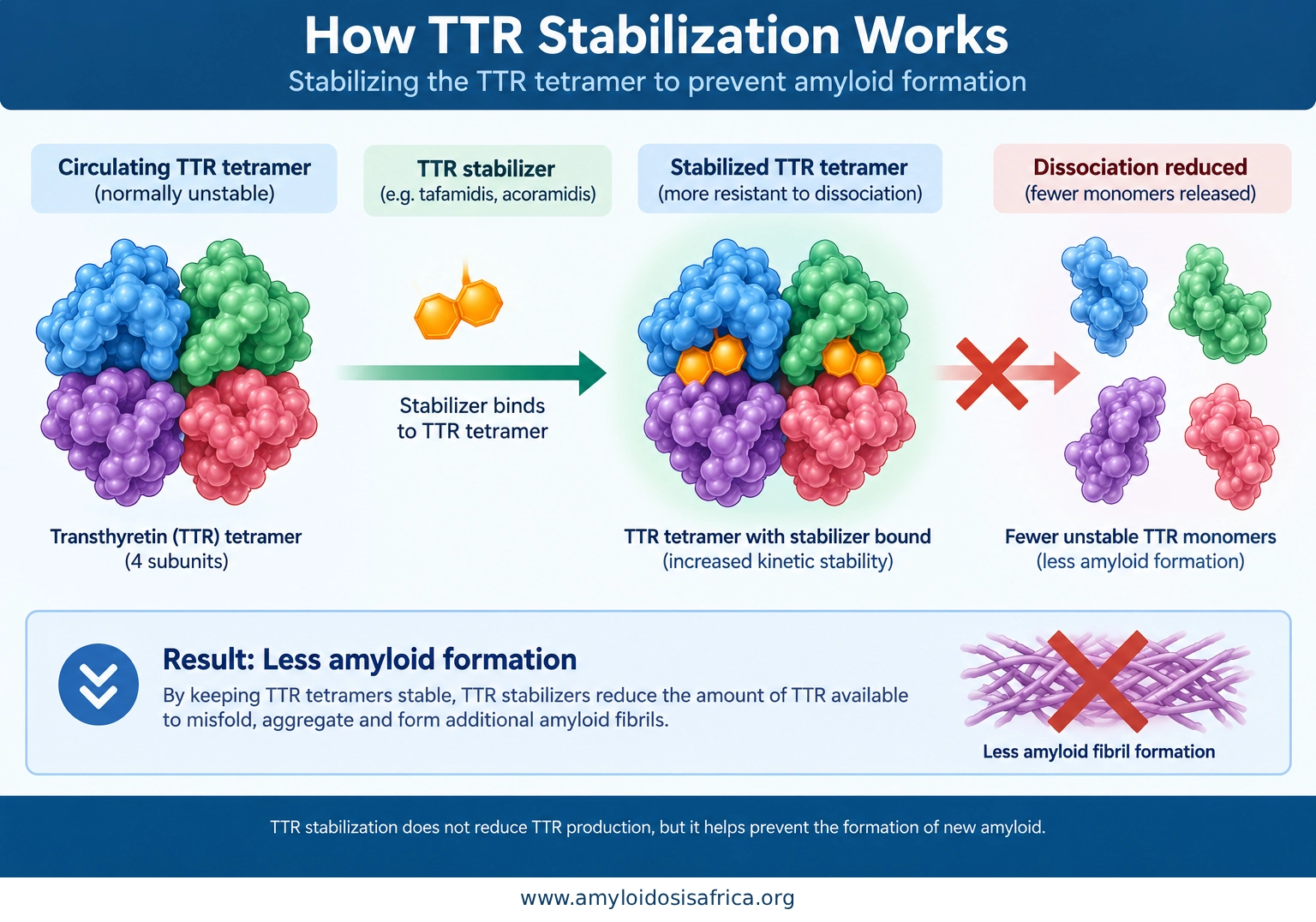
Figure 1. How TTR Stabilization Works. TTR stabilizers bind circulating transthyretin tetramers and increase their resistance to dissociation. Consequently, fewer unstable monomers become available to misfold, aggregate, and form additional amyloid fibrils.
Why Is Tetramer Dissociation Important?
Tetramer dissociation into monomers represents a critical rate-limiting step in transthyretin amyloid formation.
After the tetramer releases individual monomers, these proteins can undergo structural changes that promote misfolding. Subsequently, misfolded TTR can aggregate into oligomers and amyloid fibrils.
Therefore, stabilizing the native tetramer can slow the amyloid-forming process even without substantially reducing the concentration of circulating transthyretin.
Which TTR Stabilizers Are Used in ATTR-CM?
| Therapy | Mechanism | Administration | ATTR-CM Evidence |
|---|---|---|---|
| Tafamidis | Binds and stabilizes circulating TTR tetramers | Oral, once daily | ATTR-ACT demonstrated reduced mortality and cardiovascular-related hospitalization compared with placebo |
| Acoramidis | High-affinity TTR tetramer stabilizer | Oral, twice daily | ATTRibute-CM demonstrated significant benefit on a hierarchical outcome incorporating mortality, cardiovascular hospitalization, NT-proBNP and functional capacity |
| Diflunisal | Non-selective TTR stabilization | Oral | Clinicians have historically used it off-label in some ATTR settings; it is not approved specifically for ATTR-CM, and NSAID-related safety concerns limit its use |
Important: Tafamidis and acoramidis are the principal approved pharmacologic TTR stabilizers for ATTR cardiomyopathy. Although other compounds can stabilize TTR, clinicians should not consider them equivalent to approved ATTR-CM therapies.
Tafamidis and ATTR Cardiomyopathy
Tafamidis was the first disease-modifying therapy to demonstrate improved outcomes in a large randomized trial specifically involving patients with ATTR cardiomyopathy.
The phase 3 ATTR-ACT trial enrolled 441 patients with wild-type or hereditary ATTR-CM and followed them for 30 months (1).
Compared with placebo, tafamidis reduced all-cause mortality and cardiovascular-related hospitalizations. Moreover, treatment slowed deterioration in six-minute walk distance and health status measured with the Kansas City Cardiomyopathy Questionnaire.
The full ATTR-ACT publication is available through the New England Journal of Medicine.
Therefore, ATTR-ACT established TTR stabilization in cardiac amyloidosis as a clinically meaningful disease-modifying strategy rather than simply a biochemical concept.
How Is Tafamidis Given?
In the United States, tafamidis is available as Vyndaqel and Vyndamax. The approved indication covers adults with cardiomyopathy caused by wild-type or hereditary transthyretin-mediated amyloidosis, with treatment intended to reduce cardiovascular mortality and cardiovascular-related hospitalization.
Current U.S. prescribing information recommends either Vyndaqel 80 mg once daily or Vyndamax 61 mg once daily. Importantly, the two formulations are not interchangeable on a milligram-for-milligram basis.
Clinicians can review the current FDA tafamidis prescribing information for official dosing and safety details.
Acoramidis and ATTR Cardiomyopathy
Acoramidis is another oral TTR stabilizer developed to achieve high levels of tetramer stabilization.
Its development drew, in part, on the naturally occurring protective TTR variant p.Thr139Met, historically called Thr119Met, which strongly stabilizes the transthyretin tetramer.
In the phase 3 ATTRibute-CM trial, investigators randomized 632 patients with ATTR-CM to acoramidis or placebo and followed them for 30 months (2).
The investigators evaluated a hierarchical primary outcome that incorporated all-cause mortality, cardiovascular-related hospitalization, change in NT-proBNP, and change in six-minute walk distance.
Overall, the primary analysis significantly favored acoramidis over placebo, with a win ratio of 1.8. Importantly, mortality and cardiovascular hospitalization contributed more than half of the pairwise comparisons in the hierarchical analysis (2).
The peer-reviewed ATTRibute-CM results are available in the New England Journal of Medicine.
Regulatory Approval of Acoramidis
In November 2024, the U.S. Food and Drug Administration approved acoramidis, marketed as Attruby, for adults with wild-type or variant ATTR-CM to reduce cardiovascular death and cardiovascular-related hospitalization.
According to the approved prescribing information, patients take acoramidis orally twice daily. Clinicians can find additional regulatory information on the FDA acoramidis approval page.
In addition, the European Union has authorized acoramidis under the trade name Beyonttra for adults with wild-type or variant ATTR-CM.
Is One TTR Stabilizer Better Than the Other?
Currently, no randomized head-to-head clinical trial has directly compared tafamidis with acoramidis.
Moreover, ATTR-ACT and ATTRibute-CM differed in trial design, endpoint construction, patient characteristics, background therapy, and timing within the evolving ATTR-CM treatment landscape.
Therefore, clinicians cannot establish superiority by simply comparing numerical results across the two trials.
Evidence caution: Cross-trial numerical comparisons between tafamidis and acoramidis cannot establish superiority. Instead, treatment choice should consider the totality of clinical evidence, regulatory labeling, individual patient characteristics, availability, cost, and patient preference.
How Does Stabilization Differ From Gene Silencing?
TTR stabilizers and gene silencers target different stages of the transthyretin amyloid pathway. Specifically, stabilizers act on the circulating TTR protein, whereas silencers reduce production of TTR in the liver.
| Feature | TTR Stabilizers | TTR Gene Silencers |
|---|---|---|
| Main action | Stabilize circulating TTR tetramers | Reduce hepatic production of TTR |
| Primary molecular target | TTR protein | TTR messenger RNA |
| Effect on tetramer dissociation | Directly reduces dissociation | Reduces the amount of tetramer produced |
| Effect on circulating TTR concentration | Does not primarily lower production | Markedly lowers circulating TTR |
| Examples | Tafamidis, acoramidis | Vutrisiran, patisiran, eplontersen |
| Removes existing amyloid? | No | No |
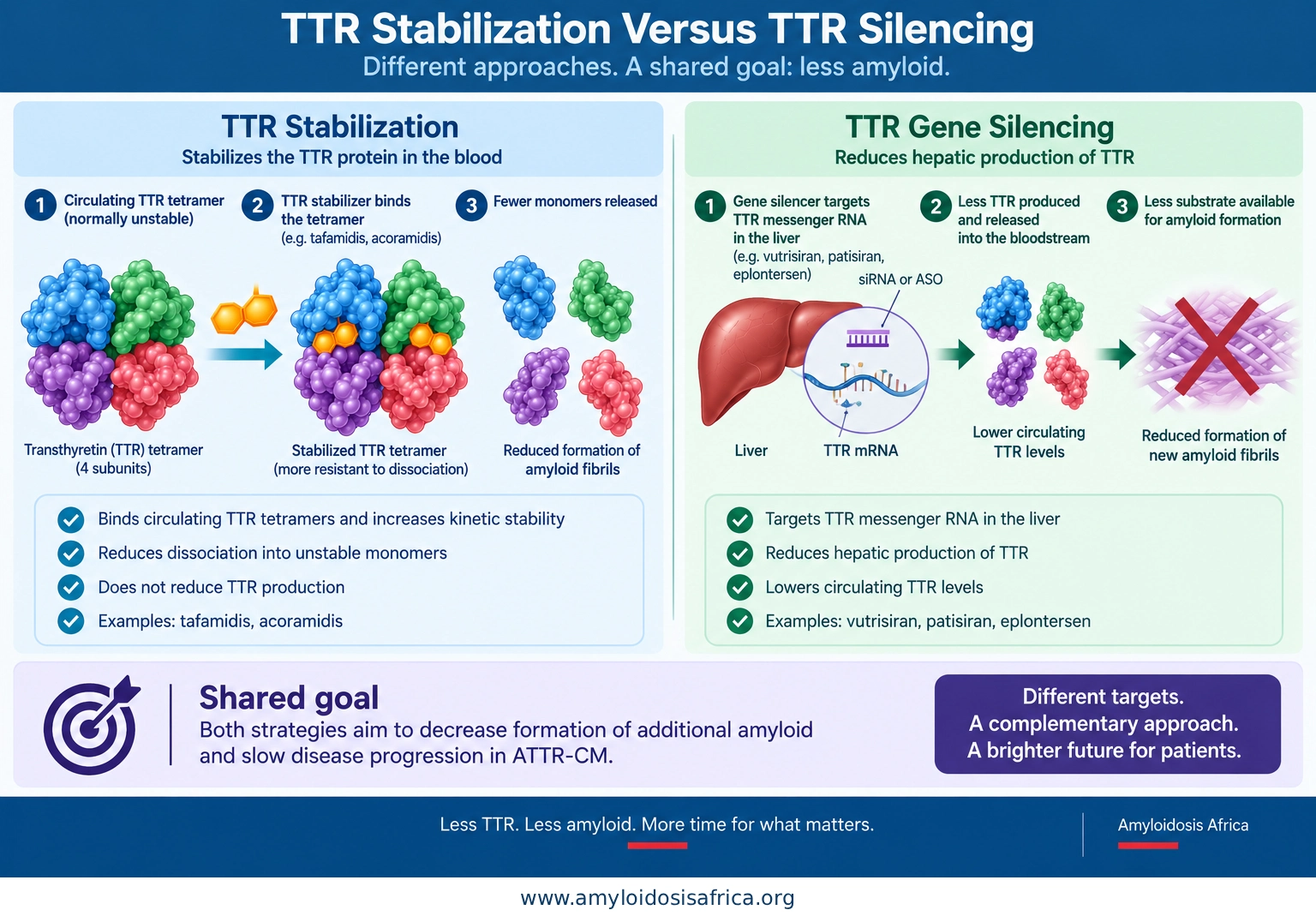
Figure 2. TTR Stabilization Versus TTR Silencing. TTR stabilizers act on circulating transthyretin tetramers and reduce their tendency to dissociate. In contrast, gene silencers reduce TTR production in the liver. Both approaches aim to decrease formation of additional amyloid, although they intervene at different stages of the disease pathway.
Can TTR Stabilizers Treat Both Wild-Type and Hereditary ATTR?
Yes. According to their approved indications, tafamidis and acoramidis can treat ATTR cardiomyopathy caused by either wild-type or variant transthyretin.
In wild-type ATTR amyloidosis, patients do not carry a pathogenic TTR variant. Nevertheless, normal transthyretin can become unstable and form amyloid, usually later in life.
By contrast, in hereditary ATTR amyloidosis, a pathogenic variant can destabilize TTR and increase its tendency to misfold.
Because tetramer dissociation contributes to both disease forms, stabilization can benefit the disease pathway in both hereditary and wild-type ATTR-CM.
Why Is Genetic Testing Still Important?
Even when clinicians can use the selected treatment for either hereditary or wild-type ATTR-CM, determining the underlying type remains important.
TTR genetic testing can distinguish hereditary ATTR from wild-type disease and identify a pathogenic variant when present.
Consequently, genetic testing can influence family counseling, cascade testing of adult relatives, and interpretation of the patient’s broader phenotype.
Diagnosis Must Be Confirmed Before Treatment
Clinicians should consider TTR stabilization in cardiac amyloidosis only after appropriately establishing ATTR-CM.
In particular, they must distinguish ATTR from AL amyloidosis. AL cardiac amyloidosis requires urgent treatment directed at the underlying plasma-cell or B-cell clone rather than TTR stabilization.
Therefore, the diagnostic pathway may include:
- echocardiography;
- cardiac MRI;
- serum free light chains and serum/urine immunofixation;
- bone scintigraphy;
- biopsy and amyloid typing when required; and
- TTR genetic testing.
Clinical priority: TTR stabilizers do not treat AL amyloidosis. Therefore, clinicians must establish the correct amyloid type before starting ATTR-directed therapy.
When Is a TTR Stabilizer Considered?
For adults with confirmed ATTR-CM, clinicians should consider disease-modifying therapy as part of specialist amyloidosis management.
When selecting TTR stabilization in cardiac amyloidosis, the clinical team may consider:
- confirmation of ATTR-CM;
- hereditary versus wild-type disease;
- NYHA functional class and heart-failure severity;
- degree of myocardial involvement;
- functional status and frailty;
- renal and hepatic function;
- presence of polyneuropathy or other extracardiac manifestations;
- previous ATTR-directed therapy;
- availability of stabilizers and silencers;
- regulatory approval;
- cost and reimbursement;
- pill burden and dosing preference; and
- patient goals and preferences.
In addition, patients with very advanced disease require particularly careful assessment. Clinicians must weigh the potential benefit of slowing future amyloid deposition against existing irreversible organ damage, prognosis, and treatment burden.
Why Earlier Treatment Matters
TTR stabilizers primarily reduce formation of additional amyloid rather than directly clearing substantial deposits already present in the myocardium.
Consequently, earlier diagnosis can provide an important opportunity for treatment. Starting therapy before advanced structural and functional deterioration may preserve more myocardial function and functional capacity.
Furthermore, the benefits of disease modification may become more apparent over time. Therefore, clinicians should not assess treatment effectiveness solely by looking for an immediate symptomatic response.
Do TTR Stabilizers Remove Existing Amyloid?
No. Tafamidis and acoramidis do not directly function as amyloid-depleting therapies.
Instead, they stabilize TTR tetramers and thereby reduce the formation of additional amyloid.
Over time, some patients may show stabilization or changes in cardiac biomarkers, functional measures, or cardiac structure. However, clinicians should not describe these effects as direct pharmacologic removal of myocardial amyloid.
How Is Treatment Response Monitored?
No single test can completely define response to TTR stabilization in cardiac amyloidosis. Therefore, clinicians usually combine clinical, biochemical, functional, and imaging measures during follow-up.
Monitoring may include:
- symptoms and NYHA functional class;
- heart-failure admissions and urgent visits;
- body weight and volume status;
- NT-proBNP or BNP;
- cardiac troponin;
- renal function;
- six-minute walk distance where appropriate;
- health-status or quality-of-life measures;
- ECG and rhythm assessment;
- serial echocardiography;
- selected cardiac MRI assessment;
- neurologic assessment in hereditary disease when relevant; and
- treatment adherence and adverse effects.
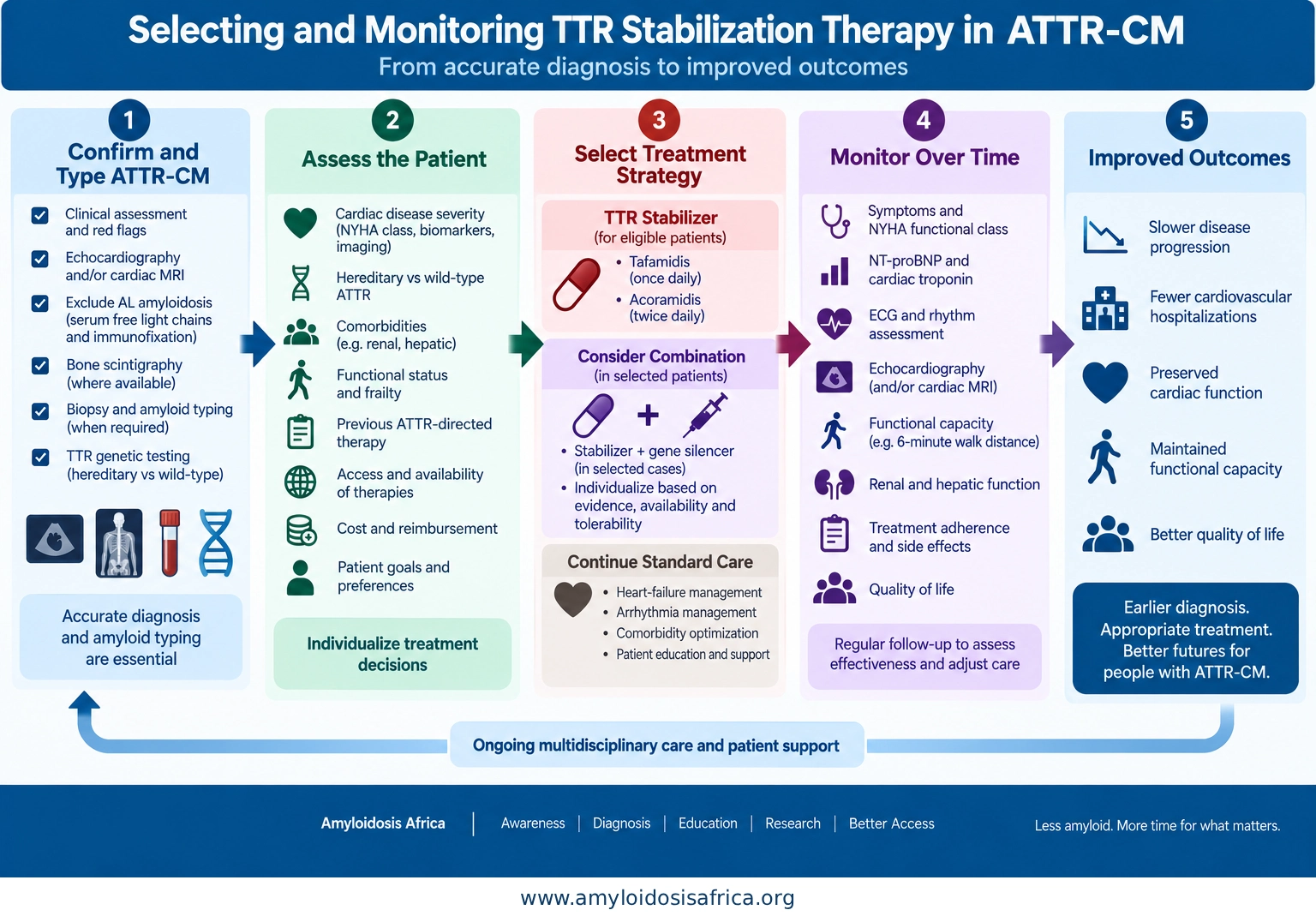
Figure 3. Selecting and Monitoring TTR Stabilization Therapy in ATTR-CM. The pathway begins with accurate confirmation and typing of ATTR-CM. Clinicians then assess cardiac disease severity, hereditary status, comorbidities, functional status, previous treatment, access and patient preferences. Finally, they select an appropriate treatment strategy and monitor clinical outcomes over time.
Can a TTR Stabilizer Be Combined With a Gene Silencer?
This question remains an evolving area of clinical practice and research.
There is a biological rationale for combining the two approaches because stabilizers and silencers act at different points in the TTR pathway. Specifically, one reduces tetramer dissociation, whereas the other reduces protein production.
However, complementary mechanisms do not automatically prove that routine combination therapy provides additional clinical benefit for every patient.
Currently, definitive randomized evidence has not established that a specific stabilizer-plus-silencer combination should routinely replace monotherapy in all patients with ATTR-CM.
Therefore, clinicians should individualize treatment sequencing or combination according to clinical evidence, disease trajectory, regulatory labeling, tolerability, availability, and cost.
What About Diflunisal?
Diflunisal is a nonsteroidal anti-inflammatory drug that can bind and stabilize transthyretin. Historically, clinicians have used it off-label in some patients with hereditary ATTR amyloidosis.
However, regulators have not approved diflunisal specifically as an ATTR-CM treatment. Moreover, NSAID-related risks can limit its use, particularly in patients with heart failure, renal dysfunction, fluid retention, or gastrointestinal bleeding risk.
Because ATTR-CM commonly affects older adults with heart failure and renal vulnerability, clinicians should not consider diflunisal equivalent to tafamidis or acoramidis.
TTR Stabilizers Do Not Replace Heart-Failure Management
Disease-modifying therapy addresses the underlying amyloid-forming process. However, patients still require appropriate management of the cardiovascular consequences of ATTR-CM.
Depending on the clinical situation, management may include:
- volume overload and diuretic management;
- atrial fibrillation;
- anticoagulation where indicated;
- conduction disease and pacemaker therapy;
- ventricular arrhythmias and selected device therapy;
- renal dysfunction;
- orthostatic hypotension;
- autonomic or peripheral neuropathy; and
- advanced heart failure.
For a broader overview, see Cardiac Amyloidosis Treatment: ATTR, AL and Heart-Failure Management.
TTR Stabilization and Cardiac Amyloidosis in Africa
The availability of effective TTR stabilizers creates important opportunities for cardiac amyloidosis care in Africa. Nevertheless, access to treatment represents only one part of an effective ATTR-CM pathway.
First, healthcare systems must recognize patients with possible cardiac amyloidosis and provide access to accurate diagnosis and amyloid typing.
Therefore, a functional ATTR-CM pathway requires:
- awareness of cardiac amyloidosis red flags;
- access to echocardiography and ECG;
- serum free light-chain testing and serum/urine immunofixation;
- bone scintigraphy where available;
- biopsy and reliable amyloid typing where required;
- TTR genetic testing;
- specialist interpretation;
- access to disease-modifying therapy;
- long-term follow-up; and
- sustainable reimbursement and referral systems.
Importantly, regulatory approval in the United States or European Union does not mean that tafamidis or acoramidis is routinely available or reimbursed in every African country.
Furthermore, cost, drug supply, diagnostic infrastructure, and fragmented referral systems may remain major barriers to effective treatment.
Africa-focused priority: Expanding access to TTR stabilizers should occur alongside stronger diagnostic and referral pathways. Ultimately, treatment can only benefit patients whom healthcare systems recognize, accurately type, and connect with specialist care.
What Is Coming Next?
The ATTR-CM treatment landscape continues to evolve rapidly. TTR stabilization now sits alongside gene silencing and emerging therapies that target other stages of amyloid biology.
However, several important questions remain unanswered:
- the optimal timing of treatment initiation;
- whether some patients should switch from stabilization to silencing;
- which patients may benefit from combination therapy;
- comparative effectiveness of tafamidis and acoramidis in routine practice;
- long-term treatment effects beyond the original phase 3 trial periods;
- treatment strategies in advanced ATTR-CM;
- effects in genetically diverse populations;
- cost-effectiveness in different health systems; and
- how stabilization should integrate with future amyloid-clearance strategies.
Key Takeaways
- TTR stabilization in cardiac amyloidosis reduces tetramer dissociation rather than TTR production.
- TTR stabilizers bind circulating transthyretin and make the tetramer more resistant to separation into amyloid-prone monomers.
- Tafamidis and acoramidis are approved disease-modifying treatments for adult ATTR-CM.
- ATTR-ACT demonstrated improved survival and fewer cardiovascular hospitalizations with tafamidis.
- ATTRibute-CM demonstrated significant benefit with acoramidis using its hierarchical primary outcome.
- No randomized head-to-head trial has established superiority of tafamidis or acoramidis over the other.
- Both treatments can address wild-type and hereditary ATTR-CM according to their approved indications.
- In contrast, TTR stabilizers do not treat AL amyloidosis.
- Furthermore, they do not directly remove existing myocardial amyloid deposits.
- Gene silencers and stabilizers act at different stages of the ATTR disease pathway.
- Therefore, accurate diagnosis and amyloid typing remain essential before treatment.
- Finally, heart-failure, rhythm and supportive management remain necessary alongside disease-modifying therapy.
Frequently Asked Questions
What Is TTR Stabilization?
TTR stabilization is a treatment strategy that binds circulating transthyretin tetramers and makes them less likely to dissociate into monomers that can misfold and form amyloid.
Which TTR Stabilizers Are Approved for ATTR-CM?
Tafamidis and acoramidis are approved for treatment of ATTR cardiomyopathy in adults in multiple jurisdictions, including the United States and European Union. However, clinicians should always check the current regulatory status in the country where they practice.
Is Tafamidis a Gene Silencer?
No. Tafamidis is a TTR stabilizer. Therefore, it acts on circulating transthyretin protein rather than reducing TTR messenger RNA or hepatic TTR production.
Is Acoramidis the Same as Tafamidis?
No. Although both drugs stabilize TTR, they are different medicines with distinct pharmacologic properties, clinical-trial programs and regulatory approvals.
Is Acoramidis Better Than Tafamidis?
No randomized head-to-head trial has directly compared the two drugs. Therefore, comparing results from separate trials cannot establish superiority.
Can TTR Stabilizers Treat Wild-Type ATTR?
Yes. Tafamidis and acoramidis can treat ATTR-CM caused by wild-type as well as hereditary or variant transthyretin according to their approved indications.
Do TTR Stabilizers Remove Amyloid From the Heart?
No. Instead, their main effect is to reduce formation of additional amyloid by stabilizing TTR tetramers. They do not directly dissolve existing cardiac amyloid deposits.
Can TTR Stabilizers Treat AL Amyloidosis?
No. AL amyloidosis results from abnormal immunoglobulin light chains. Therefore, treatment must target the underlying plasma-cell or B-cell clone rather than transthyretin.
Can a Stabilizer Be Combined With a Gene Silencer?
Combination therapy has a biological rationale because the two approaches target different parts of the TTR pathway. However, definitive randomized evidence has not established routine combination treatment for every patient with ATTR-CM.
Is TTR Stabilization a Cure?
No. TTR stabilization is disease-modifying treatment. Although it can slow ATTR-CM progression, it does not guarantee reversal of established cardiac damage.





Leave a Reply