



Organ transplantation in amyloidosis can provide a life-extending treatment option for carefully selected patients who develop advanced and irreversible heart, kidney, or other organ dysfunction. Historically, systemic amyloidosis often discouraged transplantation because clinicians were concerned about multisystem disease, amyloid recurrence, and poor long-term outcomes. However, advances in amyloidosis treatment, organ transplantation, and patient selection have substantially changed this approach (1) (2).
Today, heart and kidney transplantation can achieve favorable outcomes in appropriately selected patients with AL, ATTR, or AA amyloidosis. Liver transplantation also has an important historical and more selective contemporary role in hereditary transthyretin amyloidosis (ATTRv). In addition, some patients with severe disease affecting more than one organ may undergo combined-organ transplantation (1) (3) (4).
Nevertheless, transplantation does not simply depend on how severely one organ has failed. Clinicians must identify the amyloid type, determine the extent of disease elsewhere in the body, evaluate whether the underlying amyloid-producing process can be controlled, and estimate whether transplantation is likely to provide meaningful long-term benefit. Therefore, transplant decisions should ideally take place within an experienced multidisciplinary amyloidosis and transplant program (1) (2).
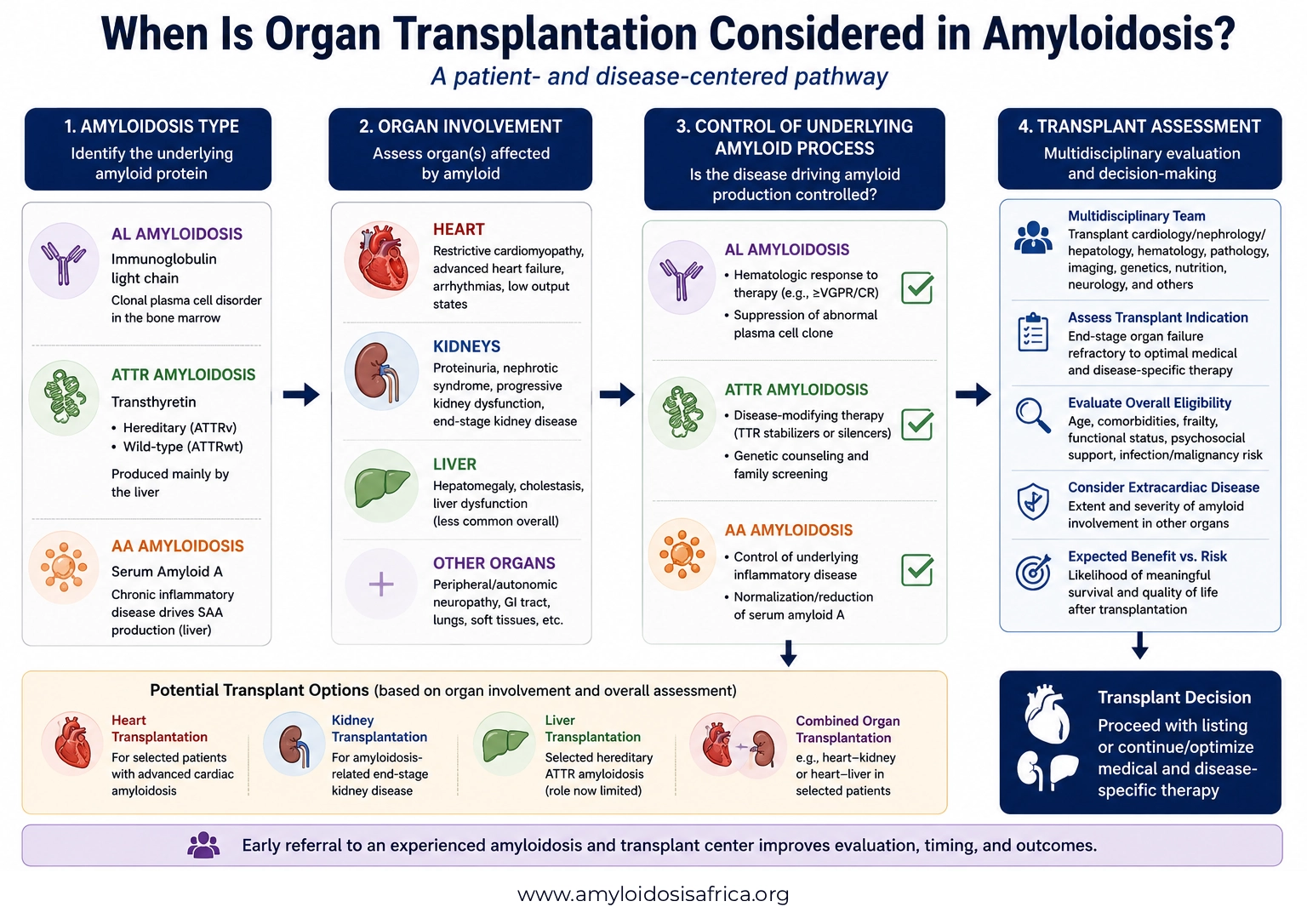
Figure 1. When Is Organ Transplantation Considered in Amyloidosis? The decision to consider organ transplantation begins with accurate identification of the amyloid type and assessment of the organs affected. Clinicians must also evaluate control of the underlying amyloid-producing process, the extent of extracardiac disease, comorbidities, frailty, and expected benefit. Depending on the clinical situation, selected patients may be considered for heart, kidney, liver, or combined-organ transplantation. Multidisciplinary evaluation at an experienced amyloidosis and transplant center is essential.
Why Is Organ Transplantation Different in Amyloidosis?
Amyloidosis is not a single disease. It represents a group of disorders in which misfolded proteins form amyloid fibrils that accumulate in tissues and progressively impair organ function. The heart, kidneys, peripheral nerves, gastrointestinal tract, liver, and other organs may be affected depending on the amyloid type.
This systemic nature creates a fundamental challenge for transplantation. Replacing a failing organ does not necessarily stop production of the protein responsible for amyloid formation. Unless clinicians also address the underlying disease, amyloid deposition may continue in other organs and, in some circumstances, may eventually affect the transplanted organ (3) (4).
For this reason, modern transplant assessment asks two related questions: Can transplantation rescue the failing organ? and Can the underlying amyloid-producing process be adequately controlled? Both questions are central to long-term success.
How Does Amyloid Type Influence Transplantation?
The strategy differs substantially among AL, ATTR, and AA amyloidosis because each form has a different source of the amyloid precursor protein.
AL Amyloidosis
In AL amyloidosis, a clonal plasma-cell disorder produces abnormal immunoglobulin light chains. These light chains can deposit as amyloid and directly damage organs, particularly the heart and kidneys. Consequently, organ transplantation alone does not treat the underlying hematologic disease.
Successful transplantation therefore requires close coordination between transplant specialists and hematologists. Plasma-cell–directed therapy must achieve adequate control of light-chain production, either before transplantation or as part of a carefully planned peri- and post-transplant strategy (1) (5) (6).
ATTR Amyloidosis
In transthyretin amyloidosis (ATTR), transthyretin produced predominantly by the liver forms amyloid deposits. ATTR may result from a pathogenic TTR gene variant (ATTRv) or occur without a pathogenic variant as wild-type ATTR (ATTRwt).
Heart transplantation may be considered for selected patients with advanced ATTR cardiomyopathy. In hereditary ATTR, however, clinicians must also consider neurologic, gastrointestinal, autonomic, renal, and other manifestations because these may continue after an isolated heart transplant (1) (2).
AA Amyloidosis
In AA amyloidosis, persistent inflammation drives production of serum amyloid A protein. Kidney involvement is particularly important and may progress to kidney failure.
Kidney transplantation can provide good outcomes in selected patients. However, clinicians should achieve the best possible control of the underlying inflammatory or autoinflammatory disease because persistent elevation of serum amyloid A can promote recurrent amyloid deposition (7) (8).
Which Organ Transplants May Be Considered in Amyloidosis?
| Transplant | Amyloid type | When it may be considered | Major considerations |
|---|---|---|---|
| Heart | AL, ATTRv, ATTRwt | Advanced cardiac amyloidosis with severe heart failure in carefully selected candidates | Extracardiac disease, frailty, age, kidney function, neurologic involvement, and control of the underlying amyloid process |
| Kidney | AL, AA and selected other systemic amyloidoses | Kidney failure when systemic disease is sufficiently controlled and expected survival is acceptable | Hematologic response in AL, inflammatory control in AA, cardiac involvement, recurrence risk, and overall systemic disease |
| Liver | Selected ATTRv | Historically used to remove the major source of variant transthyretin; now reserved for selected clinical situations | TTR variant, phenotype, age, disease duration, cardiac involvement, existing neuropathy, and availability of modern TTR-targeted therapies |
| Heart–Kidney | Selected systemic amyloidosis | Irreversible advanced cardiac and kidney dysfunction in carefully selected patients | Multiorgan disease burden, reversibility of renal dysfunction, systemic disease control, frailty, and transplant eligibility |
| Heart–Liver | Selected ATTRv | Highly selected hereditary ATTR patients in whom both cardiac replacement and replacement of the variant-TTR-producing liver may be appropriate | TTR genotype, extracardiac phenotype, liver indication, disease-modifying treatment options, age, and overall transplant benefit |
Heart Transplantation in Cardiac Amyloidosis
Cardiac involvement is one of the most serious manifestations of systemic amyloidosis. Progressive amyloid infiltration can cause restrictive cardiomyopathy, severe diastolic dysfunction, low cardiac output, arrhythmias, conduction disease, and ultimately advanced heart failure.
Historically, heart transplantation in amyloidosis produced poorer outcomes than transplantation for many other cardiomyopathies. Several factors contributed, including uncontrolled systemic disease, recurrence, extracardiac amyloid involvement, and limited treatment options for the underlying amyloidosis.
The situation has changed substantially. Better amyloid typing, more effective plasma-cell therapy for AL amyloidosis, ATTR-specific treatments, improved transplant management, and much stricter candidate selection have improved outcomes (9) (10) (11).
Consequently, contemporary expert guidance supports consideration of heart transplantation in carefully selected patients with advanced cardiac amyloidosis rather than treating amyloidosis itself as an absolute contraindication (1) (2).
What Do Contemporary Heart-Transplant Outcomes Show?
Modern observational data are encouraging. Kristen and colleagues evaluated patients with AL and hereditary ATTR amyloidosis who underwent heart transplantation and found that survival in the more contemporary treatment era approached outcomes seen in patients transplanted for non-amyloid cardiomyopathy (9).
A Cedars-Sinai series subsequently reported an overall three-year survival of 81.6% among cardiac amyloidosis transplant recipients. Three-year survival was 69.2% in AL and 86% in ATTR, and overall survival did not differ significantly from patients transplanted for non-amyloid restrictive cardiomyopathy (10).
Large registry analyses have also demonstrated improving results. In an analysis of more than 41,000 heart-transplant recipients, contemporary one- and five-year survival among patients transplanted for amyloid restrictive cardiomyopathy approached outcomes in other transplant recipients, although longer-term differences remained (11).
Heart Transplantation in AL Amyloidosis
AL amyloidosis requires particularly careful planning because the abnormal plasma-cell clone remains capable of producing amyloidogenic light chains after the heart has been replaced. Therefore, transplant success depends on both cardiac replacement and effective hematologic control.
Ideally, the transplant team and hematology team establish a strategy for achieving a deep hematologic response. The exact sequence depends on disease severity, cardiac stability, treatment response, and individual transplant circumstances (1) (2).
In some patients, severe cardiac dysfunction prevents intensive hematologic treatment before transplantation. Selected centers have therefore used sequential approaches in which heart transplantation restores hemodynamic stability, followed by additional plasma-cell–directed therapy or autologous stem-cell transplantation when appropriate (10).
Because AL amyloidosis can affect the kidneys, peripheral and autonomic nervous systems, gastrointestinal tract, and other organs, careful assessment of extracardiac disease remains essential before listing a patient for heart transplantation (1).
Heart Transplantation in ATTR Amyloidosis
Heart transplantation may also be appropriate for selected patients with advanced ATTR cardiomyopathy. Candidate selection differs somewhat between wild-type and hereditary disease because ATTRv can produce substantial extracardiac manifestations.
For example, patients with ATTRv may have progressive peripheral neuropathy, autonomic dysfunction, gastrointestinal disease, or other systemic manifestations. An isolated heart transplant does not eliminate production of variant transthyretin by the native liver. Therefore, clinicians must consider both current disease burden and the likelihood of extracardiac progression (1) (2).
In ATTRwt, disease predominantly affects older adults and is often strongly cardiac-predominant. Age, frailty, kidney function, functional status, and comorbidities consequently become major determinants of transplant suitability.
Kidney Transplantation in Amyloidosis
Kidney involvement is common in systemic amyloidosis, particularly AL and AA disease. Amyloid deposition within the kidneys can cause proteinuria, nephrotic syndrome, progressive loss of filtration, and eventually kidney failure.
Historically, clinicians worried that systemic disease would lead to poor survival or rapid recurrence in the transplanted kidney. Modern studies, however, demonstrate that carefully selected patients can achieve favorable graft and patient outcomes (5) (6) (7).
Kidney Transplantation in AL Amyloidosis
The depth of hematologic response is one of the most important considerations when evaluating kidney transplantation in AL amyloidosis. Patients who achieve a complete response or very good partial response before transplantation generally have better outcomes than patients with inadequately controlled plasma-cell disease (5) (6).
The Mayo Clinic reported long-term outcomes in 60 patients with AL amyloidosis who underwent kidney transplantation. Outcomes were particularly favorable among patients who had achieved deep hematologic responses (5).
Similarly, an international collaboration examining renal transplantation in AL amyloidosis found superior outcomes among patients who achieved complete response or very good partial response before transplantation (6).
Cardiac assessment is also critical. Even when kidney disease dominates the presentation, significant cardiac amyloidosis can strongly influence perioperative risk and long-term survival (8).
Kidney Transplantation in AA Amyloidosis
Kidney transplantation is an established treatment option for selected patients with kidney failure caused by AA amyloidosis. The central therapeutic principle is sustained suppression of the inflammatory process responsible for excessive serum amyloid A production.
Contemporary outcomes are encouraging. A French multicenter study evaluated 86 patients who received kidney transplants for AA amyloidosis across 26 centers. Patient survival reached 94.0% at one year and 85.5% at five years. Histologically confirmed AA recurrence occurred in only five transplants, corresponding to 5.8% of the cohort (7).
Another cohort examining both AA and AL amyloidosis reported one-, five-, and ten-year death-censored graft survival of 94%, 91%, and 78%, respectively, for AA amyloidosis. Importantly, recurrent AA amyloid was associated with higher serum amyloid A concentrations (8).
Therefore, successful kidney transplantation in AA amyloidosis depends not only on transplant surgery but also on durable control of the inflammatory disease before and after transplantation.
Liver Transplantation in Hereditary ATTR Amyloidosis
Liver transplantation occupies a unique place in the history of ATTR amyloidosis treatment. Because the liver produces most circulating transthyretin, replacing a liver that produces variant TTR dramatically reduces circulating variant transthyretin. For many years, this represented the principal disease-modifying treatment for hereditary ATTR amyloidosis (12) (13).
However, liver transplantation does not remove amyloid already deposited in tissues. Furthermore, disease may continue to progress after transplantation because wild-type transthyretin produced by the transplanted liver can continue depositing on existing amyloid fibrils, particularly in the heart (12) (13).
Which ATTR Patients Historically Benefited Most?
Long-term registry data demonstrated that outcomes after liver transplantation vary substantially according to TTR variant, age at disease onset, nutritional status, disease duration, and cardiac involvement.
The Familial Amyloidotic Polyneuropathy World Transplant Registry reported data from 1,940 transplanted patients and demonstrated an overall 20-year survival of 55.3%. Outcomes were particularly favorable among patients with early-onset Val30Met disease, whereas later-onset disease and non-Val30Met variants generally produced less favorable results (13).
Therefore, liver transplantation should not be described as a universal treatment for hereditary ATTR. Its benefits have always depended strongly on genotype and phenotype.
Has Modern ATTR Therapy Changed the Role of Liver Transplantation?
Yes. The development of TTR stabilizers and therapies that reduce hepatic TTR production has fundamentally changed management of ATTR amyloidosis. As a result, liver transplantation is no longer the default disease-modifying strategy for most patients with ATTRv.
Nevertheless, transplantation remains relevant when reviewing the history of ATTR therapy and may still be considered in selected clinical circumstances. Decisions should account for the patient’s TTR variant, phenotype, age, neurologic and cardiac involvement, disease stage, availability of modern therapy, and expected transplant benefit.
What Is Domino Liver Transplantation?
Hereditary ATTR also led to the development of an unusual transplant strategy known as domino liver transplantation. The liver removed from a patient with ATTRv may be structurally and functionally normal apart from its production of variant transthyretin. Historically, such livers have sometimes been transplanted into carefully selected recipients who required liver transplantation for another condition (14).
The major limitation is that the recipient can eventually develop acquired ATTR amyloidosis because the transplanted liver continues producing variant transthyretin. Reports have demonstrated de novo amyloid deposition and neuropathy years after domino transplantation (14) (15).
Consequently, domino liver transplantation requires careful recipient selection, informed discussion of long-term risk, and ongoing surveillance.
Combined-Organ Transplantation
Amyloidosis can cause severe irreversible dysfunction in more than one organ. In selected cases, replacing only one organ may therefore provide insufficient benefit. Multiorgan transplantation may be considered when dysfunction in two organs is advanced, irreversible, and compatible with acceptable overall transplant outcomes (1) (2).
Combined Heart–Kidney Transplantation
Combined heart–kidney transplantation may be considered when a patient has both advanced cardiac amyloidosis and irreversible kidney failure. However, determining whether renal dysfunction is truly irreversible can be difficult because severe heart failure itself can reduce kidney function.
For that reason, the transplant team evaluates chronic kidney disease history, proteinuria, structural kidney abnormalities, estimated filtration, dialysis requirement, hemodynamic status, and the likelihood that kidney function could recover after restoration of cardiac output.
Combined Heart–Liver Transplantation
Combined heart–liver transplantation has historically been considered in selected patients with hereditary ATTR amyloidosis, particularly when advanced cardiomyopathy coexists with a rationale for replacing the variant-TTR-producing liver (12) (13).
However, this is a highly specialized strategy. Modern ATTR therapies have changed the risk–benefit calculation, and the optimal choice between isolated heart transplantation and heart–liver transplantation is not defined by a simple universal rule. Individual assessment at an expert center is therefore essential (1) (2).
What Determines Eligibility for Organ Transplantation?
No single laboratory result, imaging test, amyloid subtype, or age threshold determines transplant eligibility. Instead, clinicians integrate multiple factors to estimate whether transplantation can provide durable benefit.
Important considerations include:
- the type of amyloidosis and certainty of amyloid typing;
- severity and reversibility of the failing organ;
- extent of amyloid involvement in other organs;
- availability and effectiveness of disease-modifying treatment;
- hematologic response in AL amyloidosis;
- control of inflammation in AA amyloidosis;
- TTR genotype and phenotype in hereditary ATTR;
- kidney function and degree of proteinuria;
- peripheral and autonomic neuropathy;
- gastrointestinal involvement and nutritional status;
- frailty and functional capacity;
- age and other significant comorbidities;
- infection and malignancy risk;
- psychosocial suitability and ability to adhere to post-transplant care; and
- expected overall survival and quality-of-life benefit.
Why Is Extracardiac Disease Assessment So Important?
A successful heart transplant cannot compensate for severe progressive disease elsewhere in the body. Therefore, extracardiac assessment is particularly important when clinicians evaluate patients with cardiac amyloidosis (1).
Severe autonomic neuropathy may contribute to disabling hypotension. Advanced peripheral neuropathy may limit rehabilitation. Significant gastrointestinal amyloidosis can contribute to malnutrition, diarrhea, impaired drug absorption, and frailty. Likewise, severe kidney disease may require combined heart–kidney rather than isolated heart transplantation.
Thus, transplant assessment focuses on the patient as a whole rather than simply measuring the severity of the failing heart or kidney.
Can Amyloidosis Recur After Transplantation?
Amyloid can recur in a transplanted organ if production of the responsible precursor protein continues. However, recurrence risk varies considerably according to amyloid type, organ transplanted, treatment response, and duration of follow-up.
Recurrence After Kidney Transplantation
In AL amyloidosis, sustained suppression of the plasma-cell clone reduces the production of amyloidogenic light chains. This explains why deep hematologic response before transplantation is associated with better kidney-transplant outcomes (5) (6).
For AA amyloidosis, recurrence risk is closely related to continued inflammatory activity. Modern control of inflammatory and autoinflammatory disorders appears to have improved transplant outcomes substantially (7) (8).
Recurrence After Heart Transplantation
Recurrence of clinically significant amyloid in a transplanted heart appears uncommon in carefully selected contemporary cohorts, particularly when clinicians adequately control the underlying disease (10) (16).
Nevertheless, heart transplantation does not cure systemic AL or ATTR amyloidosis. Continued disease-specific surveillance and treatment remain necessary after transplantation.
What Happens After Transplantation?
Post-transplant care has two simultaneous goals: protecting the transplanted organ and controlling the underlying amyloidosis. Patients therefore require conventional transplant surveillance together with disease-specific follow-up.
Follow-up may include:
- monitoring graft function;
- immunosuppressive therapy and toxicity monitoring;
- surveillance for rejection and infection;
- serum and urine assessment when clinically appropriate;
- free light-chain monitoring in AL amyloidosis;
- assessment of hematologic response;
- monitoring inflammatory disease activity and serum amyloid A in AA amyloidosis where appropriate;
- neurologic and functional assessment in hereditary ATTR;
- nutritional and rehabilitation support; and
- ongoing evaluation for progression or recurrence of systemic amyloidosis.
Why Is Multidisciplinary Care Essential?
Organ transplantation in amyloidosis lies at the intersection of several highly specialized fields. No single specialty can adequately evaluate every component of the disease.
Depending on the amyloid type and organs involved, the multidisciplinary team may include amyloidosis specialists, advanced heart-failure cardiologists, transplant cardiologists, nephrologists, hematologists, hepatologists, neurologists, genetic specialists, transplant surgeons, pathologists, pharmacists, dietitians, physiotherapists, and rehabilitation professionals (1) (2).
This coordinated approach helps the team choose the right candidate, the right organ or combination of organs, the right timing, and the appropriate disease-modifying strategy before and after transplantation.
When Should a Patient Be Referred for Transplant Assessment?
Referral should not necessarily wait until irreversible end-stage organ failure has developed. Patients with cardiac amyloidosis and symptoms of advanced heart failure should receive timely assessment by an advanced heart-failure team because amyloidosis can progress rapidly and some conventional mechanical circulatory-support strategies may be difficult in restrictive cardiomyopathy (1).
Similarly, patients with progressive amyloid kidney disease should receive nephrology and transplant assessment early enough to evaluate disease control, cardiac involvement, potential living-donor options, and transplant candidacy before complications of prolonged kidney failure develop.
Early referral does not mean that transplantation will necessarily occur. Instead, it allows specialists to evaluate options while there is still time to optimize amyloidosis treatment, nutritional status, functional capacity, and other potentially modifiable factors.
The Key Message
Amyloidosis itself should not automatically exclude a patient from organ transplantation. Modern evidence shows that carefully selected patients can achieve favorable outcomes after heart or kidney transplantation, while liver and combined-organ transplantation remain important options in specific clinical circumstances (1) (5) (7) (10).
At the same time, transplantation should never be viewed in isolation. Long-term success depends on accurate amyloid typing, appropriate patient selection, assessment of extracardiac disease, and effective control of the underlying amyloid-producing process.
For these reasons, patients who may require transplantation should ideally be referred to a center capable of integrating amyloidosis expertise with advanced organ-failure and transplant care.
References
- Lyle MA, Rosenthal JL, Nativi Nicolau JN, et al. Heart Transplantation for Cardiac Amyloidosis: Mayo Clinic Consensus Statement. Mayo Clin Proc. 2025;100(9):1578–1605. https://doi.org/10.1016/j.mayocp.2025.05.009
- Kittleson MM, Ruberg FL, Ambardekar AV, et al. 2023 ACC Expert Consensus Decision Pathway on Comprehensive Multidisciplinary Care for the Patient With Cardiac Amyloidosis. J Am Coll Cardiol. 2023;81(11):1076–1126. https://doi.org/10.1016/j.jacc.2022.11.022
- Kittleson MM, Maurer MS, Ambardekar AV, et al. Cardiac Amyloidosis: Evolving Diagnosis and Management: A Scientific Statement From the American Heart Association. Circulation. 2020;142:e7–e22. https://doi.org/10.1161/CIR.0000000000000792
- Garcia-Pavia P, Rapezzi C, Adler Y, et al. Diagnosis and treatment of cardiac amyloidosis: a position statement of the ESC Working Group on Myocardial and Pericardial Diseases. Eur Heart J. 2021;42(16):1554–1568. https://doi.org/10.1093/eurheartj/ehab072
- Heybeli C, Bentall A, Wen J, et al. Long-term outcomes of kidney transplantation in patients with AL amyloidosis from The Mayo Clinic. Kidney Int. 2021;99(3):707–715. https://doi.org/10.1016/j.kint.2020.06.036
- Havasi A, Heybeli C, Leung N, et al. Outcomes of renal transplantation in patients with AL amyloidosis: an international collaboration through The International Kidney and Monoclonal Gammopathy Research Group. Blood Cancer J. 2022;12:119. https://doi.org/10.1038/s41408-022-00714-5
- Schwarz C, Georgin-Lavialle S, Lombardi Y, et al. Kidney Transplantation in Patients With AA Amyloidosis: Outcomes in a French Multicenter Cohort. Am J Kidney Dis. 2024;83(3):329–339. https://doi.org/10.1053/j.ajkd.2023.07.020
- Law S, Cohen O, Lachmann HJ, et al. Renal transplant outcomes in amyloidosis. Nephrol Dial Transplant. 2021;36(2):355–365. https://doi.org/10.1093/ndt/gfaa293
- Kristen AV, Kreusser MM, Blum P, et al. Improved outcomes after heart transplantation for cardiac amyloidosis in the modern era. J Heart Lung Transplant. 2018;37(5):611–618. https://doi.org/10.1016/j.healun.2017.11.015
- Vaidya GN, Patel JK, Kittleson M, et al. Intermediate-term outcomes of heart transplantation for cardiac amyloidosis in the current era. Clin Transplant. 2021;35(6):e14308. https://doi.org/10.1111/ctr.14308
- Improving contemporary outcomes following heart transplantation for cardiac amyloidosis. Analysis of the Organ Procurement and Transplantation Network database. 2021.
- Said G, Grippon S, Kirkpatrick P. Tafamidis. Nat Rev Drug Discov. 2012;11:185–186.
- Ericzon BG, Wilczek HE, Larsson M, et al. Liver Transplantation for Hereditary Transthyretin Amyloidosis: After 20 Years Still the Best Therapeutic Alternative? Transplantation. 2015;99(9):1847–1854.
- Kitchens WH. Domino liver transplantation: indications, techniques, and outcomes. Transplant Rev (Orlando). 2011;25(4):167–177. https://doi.org/10.1016/j.trre.2011.04.002
- Yamamoto S, et al. Recipient aging accelerates acquired transthyretin amyloidosis after domino liver transplantation. Liver Transpl. 2016;22:656–664.
- Davis MK, Kale P, Liedtke M, et al. Outcomes after heart transplantation for amyloid cardiomyopathy in the modern era. Am J Transplant. 2015;15:650–658.
Medical disclaimer: This article is intended for educational purposes and does not replace individualized medical advice. Eligibility for organ transplantation and treatment of amyloidosis require assessment by an experienced multidisciplinary clinical and transplant team.

Leave a Reply