



Kidney Transplantation in Amyloidosis: Who Is a Candidate?
Kidney transplantation in amyloidosis can offer selected patients with irreversible kidney failure an opportunity to achieve long-term dialysis independence and improved quality of life. However, amyloidosis differs from many other causes of kidney failure because replacing the kidney does not eliminate the disease responsible for amyloid formation.
For this reason, successful transplantation depends on much more than kidney function alone. Clinicians must identify the amyloid type, determine whether the underlying disease is adequately controlled, evaluate cardiac and other extrarenal involvement, and estimate whether transplantation is likely to provide meaningful long-term benefit (2–6).
Kidney transplantation forms part of the broader role of organ transplantation in amyloidosis, which may also include heart, liver or combined-organ transplantation in carefully selected patients.
Key principle: Kidney transplantation treats irreversible kidney failure caused by amyloidosis, but it does not by itself stop amyloid production. Control of the underlying amyloid-forming process therefore remains central before and after transplantation.
How Does Amyloidosis Affect the Kidneys?
The kidneys are among the organs most frequently affected by systemic amyloidosis. Amyloid fibrils can accumulate within the glomeruli, blood vessels, interstitium and other renal structures. As deposition progresses, normal kidney architecture and function may become increasingly impaired (1, 5).
Patients may initially develop albuminuria or proteinuria. Some subsequently develop nephrotic syndrome, characterized by heavy urinary protein loss, low serum albumin and edema. Kidney function may then decline progressively, eventually leading to advanced chronic kidney disease or kidney failure requiring dialysis or transplantation.
The pattern and rate of progression vary considerably. Amyloid type, burden of renal deposition, control of precursor-protein production, cardiovascular status and other systemic manifestations all influence the clinical course.
Which Types of Amyloidosis May Lead to Kidney Transplantation?
Kidney transplantation is most frequently considered in patients with AL amyloidosis and AA amyloidosis who develop irreversible kidney failure. Selected patients with hereditary forms of amyloidosis may also require renal transplantation, although the strategy depends on the specific amyloid precursor and the extent of other organ involvement.
| Amyloidosis type | Why kidney disease occurs | Key issue before transplantation | Major post-transplant concern |
|---|---|---|---|
| AL amyloidosis | Deposition of amyloid derived from monoclonal immunoglobulin light chains produced by an abnormal plasma-cell or B-cell clone. | Achieve and maintain an adequate hematologic response and assess cardiac involvement carefully. | Hematologic relapse and recurrent AL amyloid deposition in the transplanted kidney. |
| AA amyloidosis | Persistent inflammation drives production of serum amyloid A (SAA), from which AA amyloid fibrils form. | Achieve sustained control of the underlying inflammatory disorder and suppress ongoing SAA production. | Recurrent AA deposition if inflammatory activity remains inadequately controlled. |
| Hereditary amyloidosis | Depends on the pathogenic protein and variant; some hereditary amyloidoses can produce substantial renal involvement. | Define the amyloid precursor genetically and assess systemic disease. | Continued production of the amyloidogenic precursor and progression in other organs. |
| ATTR amyloidosis | Clinically important renal failure directly attributable to ATTR is less common than cardiac or neurologic involvement. | Determine whether renal dysfunction is truly attributable to ATTR and assess cardiac and neurologic disease. | Progression of systemic ATTR manifestations despite restoration of kidney function. |
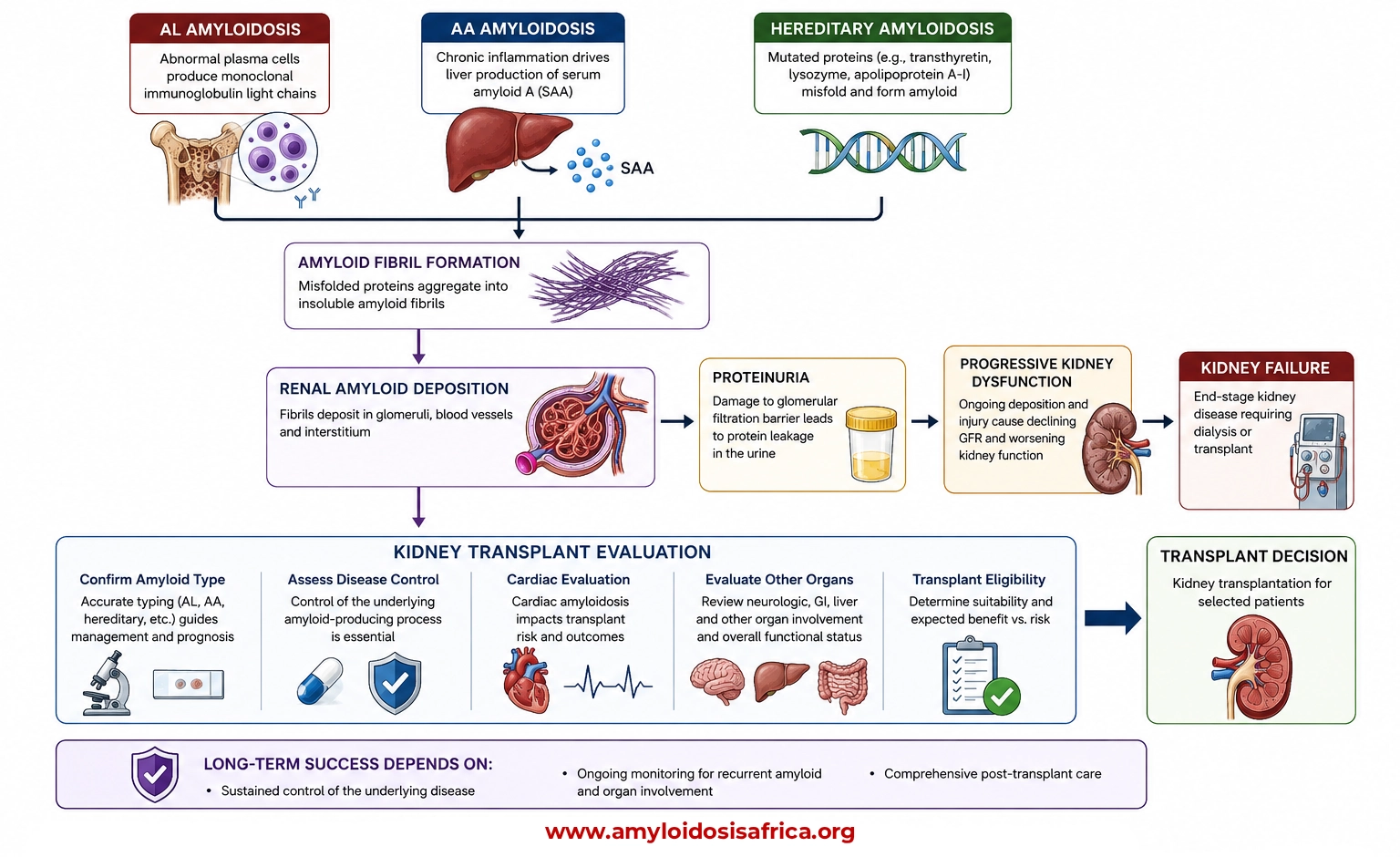
Figure 1. How Amyloidosis Can Lead to Kidney Failure and Transplantation. Amyloid deposition within the kidneys can cause proteinuria, nephrotic syndrome and progressive loss of kidney function. When kidney damage becomes irreversible, selected patients may undergo transplant evaluation. Successful transplantation requires assessment and control of the underlying amyloid-producing process as well as evaluation of cardiac and other systemic involvement.
When Is Kidney Transplantation Considered?
Transplant teams may consider kidney transplantation when amyloidosis has caused irreversible advanced kidney disease and the expected benefits of transplantation outweigh the risks.
However, kidney function represents only one part of the assessment. Because systemic amyloidosis may affect the heart, nervous system, gastrointestinal tract, liver and other organs, transplantation requires a broader disease-specific evaluation.
A typical assessment considers:
- Confirmation and accurate typing of the amyloid
- Severity and irreversibility of kidney disease
- Activity and control of the underlying amyloid-producing process
- Presence and severity of cardiac amyloidosis
- Neurologic and autonomic involvement
- Gastrointestinal disease and nutritional status
- Functional status and frailty
- Infection and malignancy risk
- General transplant eligibility
- Likelihood of meaningful long-term survival with a functioning graft
Importantly: Amyloidosis should not automatically exclude a patient from kidney transplantation. Modern studies show that carefully selected patients can achieve favorable patient and graft outcomes (2–4).
Why Does Control of the Underlying Disease Matter?
A transplanted kidney does not remove the source of amyloid precursor proteins. Consequently, uncontrolled amyloid production can continue after transplantation and may eventually damage the allograft or other organs.
This principle applies across amyloid types, although the biological mechanism differs.
In AL amyloidosis, treatment aims to suppress the abnormal clone producing amyloidogenic immunoglobulin light chains. In AA amyloidosis, therapy targets the inflammatory disease responsible for persistent SAA production. Therefore, transplant assessment must consider not only whether kidney failure is irreversible, but also whether the systemic amyloid process can remain adequately controlled.
Kidney Transplantation in AL Amyloidosis
AL amyloidosis historically presented a major challenge for kidney transplantation because uncontrolled plasma-cell disease could cause recurrent amyloid deposition, while cardiac amyloidosis could markedly limit survival.
Modern plasma-cell-directed therapies have changed this landscape. More patients now achieve deep hematologic responses and survive long enough to develop kidney failure as their dominant irreversible organ complication. As a result, kidney transplantation has become a realistic option for appropriately selected patients (2, 3).
How Important Is Hematologic Response?
Hematologic response is one of the most important determinants of transplant candidacy and outcome in AL amyloidosis.
A large international study involving 237 kidney transplant recipients with AL amyloidosis found substantially better outcomes among patients who had achieved a complete response (CR) or very good partial response (VGPR) before transplantation compared with patients with lesser responses (2).
Median overall survival after kidney transplantation was approximately 9 years in the CR/VGPR group compared with 6.8 years among patients with less than VGPR. Median graft survival was also longer, approximately 8.3 versus 5.7 years (2).
Furthermore, amyloid recurrence in the transplanted kidney occurred less frequently among patients with CR or VGPR than among those with weaker hematologic responses (2).
Clinical message: The strongest contemporary evidence supports considering kidney transplantation particularly in carefully selected patients with AL amyloidosis who have achieved a durable deep hematologic response, usually CR or VGPR (2).
Does a Patient Need Complete Response Before Transplantation?
The available evidence does not show that every transplant candidate must necessarily achieve a formal complete response. In the international cohort, outcomes did not differ significantly between patients transplanted in CR and those transplanted in VGPR (2).
Nevertheless, transplant decisions remain individualized. Clinicians must consider the depth and durability of response, characteristics of the underlying clone, available rescue therapies, cardiac involvement, age, functional status and other transplant-related factors.
Therefore, a hematologist experienced in AL amyloidosis should participate directly in the transplant evaluation.
Cardiac Assessment Is Critical in AL Amyloidosis
Cardiac amyloid involvement can strongly influence transplant eligibility because advanced amyloid cardiomyopathy may limit survival even if renal function is restored.
A study comparing renal transplantation outcomes in systemic AL and AA amyloidosis found that greater interventricular septal thickness was associated with mortality among AL transplant recipients, while deep hematologic response was associated with improved survival (3).
Accordingly, the pre-transplant assessment commonly includes detailed cardiovascular evaluation using clinical assessment, electrocardiography, echocardiography, cardiac biomarkers and, when appropriate, cardiac magnetic resonance or other imaging.
If both cardiac and renal disease are advanced and irreversible, an experienced multidisciplinary transplant team may evaluate whether combined heart–kidney transplantation is appropriate rather than kidney transplantation alone.
Kidney Transplantation in AA Amyloidosis
AA amyloidosis develops when chronic inflammatory disease causes persistent elevation of serum amyloid A. Over time, AA amyloid commonly accumulates in the kidneys and may cause severe proteinuria and progressive kidney failure (5).
The central therapeutic principle is therefore sustained suppression of the inflammatory process that drives SAA production.
Control of Inflammation Before Transplantation
Successful control of the underlying inflammatory disorder can substantially alter the natural history of AA amyloidosis.
Long-term observational data have demonstrated a strong relationship between SAA concentrations and renal outcomes, amyloid burden and survival. Patients with sustained low SAA concentrations were more likely to experience stabilization or regression of amyloid deposits than patients with persistently elevated concentrations (5).
For transplant candidates, this means that clinicians should identify the inflammatory disease responsible for AA amyloidosis and determine whether modern therapy can control it reliably.
What Do Current Guidelines Say?
KDIGO guidance states that candidates with AA amyloidosis should not automatically be excluded from kidney transplantation after adequate treatment of the underlying cause and in the absence of severe extrarenal organ involvement (6).
This is important because older transplant experience sometimes created the impression that systemic amyloidosis was itself a contraindication. Contemporary evidence supports a more individualized approach.
Modern Outcomes in AA Amyloidosis
A French multicenter cohort examined 86 patients with AA amyloidosis who underwent kidney transplantation at 26 centers. Patient survival was approximately 94% at one year and 85.5% at five years after transplantation (4).
Histologically confirmed recurrence of AA amyloidosis occurred in only 5.8% of transplanted kidneys in that contemporary cohort (4).
These findings suggest that kidney transplantation can produce favorable outcomes in appropriately selected patients with AA amyloidosis, particularly when the underlying inflammatory disease is effectively managed.
Can Amyloidosis Recur in the Transplanted Kidney?
Yes. Amyloid can recur in a transplanted kidney because transplantation replaces the damaged organ but does not necessarily eliminate production of the amyloid precursor.
However, recurrence does not occur uniformly, and modern disease-directed treatment has substantially changed its clinical significance.
Recurrence in AL Amyloidosis
In the international AL transplantation cohort, amyloid recurrence was less frequent among patients transplanted after achieving CR or VGPR than among those with less complete hematologic responses. The investigators also found that treatment of hematologic relapse prevented graft loss in most patients who developed recurrent amyloid in the graft (2).
Therefore, long-term hematologic surveillance remains essential even after successful transplantation.
Recurrence in AA Amyloidosis
Persistent inflammatory activity can maintain SAA production and promote recurrent AA deposition. In a UK transplant cohort, higher post-transplant SAA concentrations were associated with recurrent amyloid in the renal allograft (3).
Consequently, successful transplantation does not eliminate the need for aggressive control of the inflammatory disease.
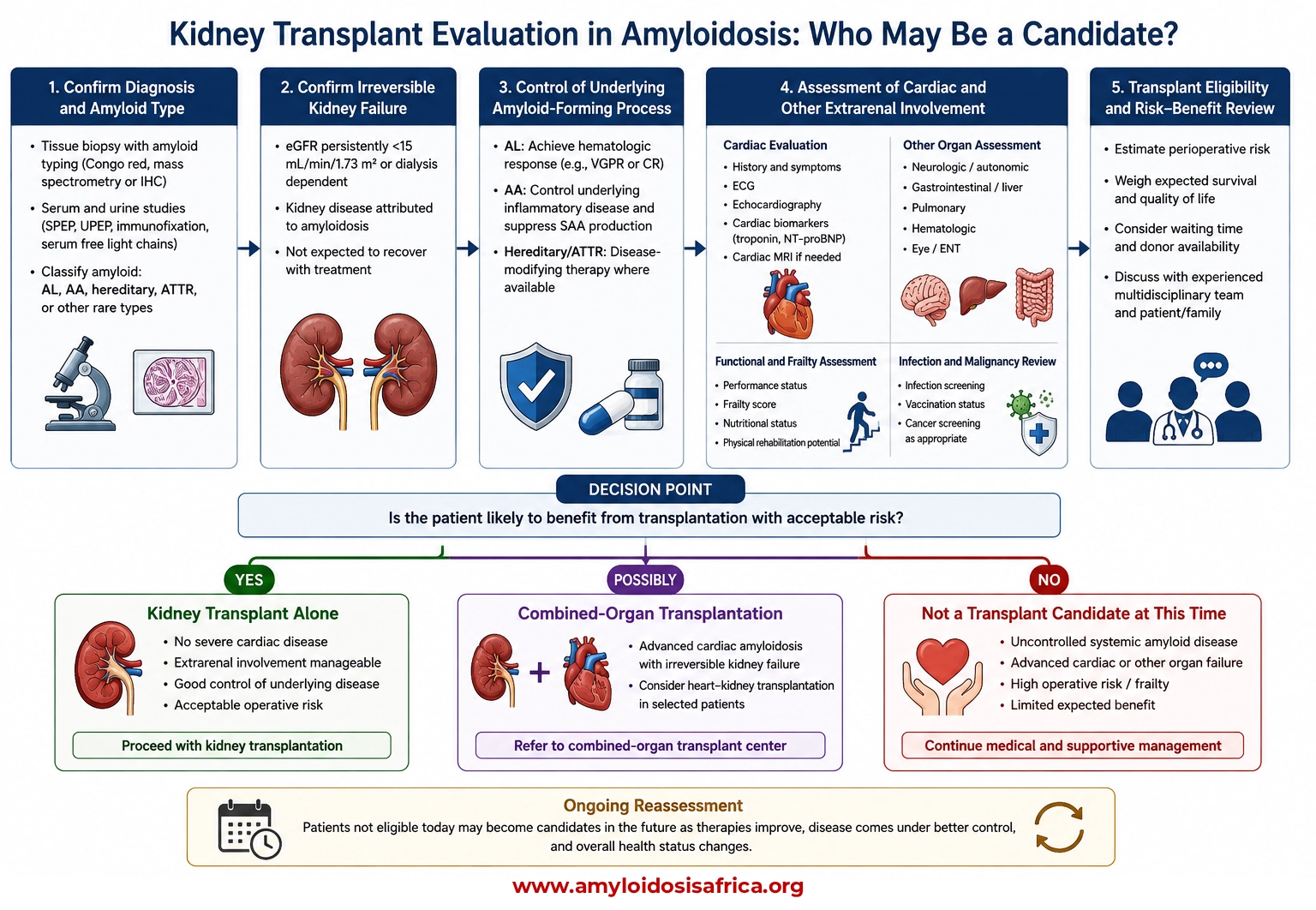
Figure 2. Kidney Transplant Evaluation in Amyloidosis: Who May Be a Candidate? Evaluation begins with accurate amyloid typing and confirmation of irreversible kidney failure. Clinicians then assess control of the underlying amyloid-producing process, cardiac and other extrarenal involvement, frailty and general transplant eligibility. Depending on the findings, selected patients may proceed to kidney transplantation alone, combined-organ transplantation or continued medical and supportive management.
Kidney Transplant Alone or Combined Heart–Kidney Transplantation?
Some patients with systemic amyloidosis have severe irreversible disease in both the heart and kidneys. In these cases, restoring kidney function alone may not provide sufficient benefit if advanced cardiac amyloidosis remains the major determinant of prognosis.
A multidisciplinary team may therefore consider combined heart–kidney transplantation in highly selected patients. This decision requires expertise in amyloidosis, advanced heart failure, nephrology and multiorgan transplantation.
Conversely, kidney transplantation alone may be appropriate when cardiac disease is absent, limited or sufficiently stable and the overall expected benefit is favorable.
There is no single transplant pathway for every patient. The correct strategy depends on amyloid type, cardiac disease severity, kidney disease, extracardiac involvement, disease control and the patient’s overall transplant risk.
What About ATTR Amyloidosis?
ATTR amyloidosis primarily causes cardiomyopathy and/or peripheral and autonomic neuropathy. Severe renal failure directly attributable to ATTR is much less characteristic than renal involvement in AL or AA amyloidosis.
Nevertheless, patients with ATTR may develop chronic kidney disease for amyloid-related or unrelated reasons. Therefore, clinicians should establish the cause of kidney dysfunction rather than assume that ATTR itself is responsible.
When advanced cardiac amyloidosis coexists with irreversible kidney failure, transplant specialists may consider whether isolated heart transplantation or combined heart–kidney transplantation offers the most appropriate strategy.
In hereditary ATTR and other suspected hereditary amyloidoses, genetic testing can help establish the underlying pathogenic variant and inform family assessment.
What Should Be Evaluated Before Kidney Transplantation?
Amyloidosis requires a broader pre-transplant assessment than kidney function alone. The evaluation should integrate nephrology, amyloidosis expertise and transplant medicine.
| Assessment | Why it matters |
|---|---|
| Amyloid typing | Accurate amyloid typing, supported where appropriate by monoclonal protein testing, tissue evaluation and other investigations, helps determine the precursor protein, disease-directed treatment and recurrence risk. |
| Hematologic assessment | Essential in AL amyloidosis to establish clonal control and depth of hematologic response. |
| Inflammatory disease assessment | Essential in AA amyloidosis to establish whether the underlying inflammatory driver is adequately suppressed. |
| Cardiac assessment | Identifies cardiac amyloid involvement that may affect perioperative risk, survival and suitability for kidney-only transplantation. |
| Neurologic/autonomic assessment | Severe neuropathy or autonomic dysfunction may affect functional status and transplant risk. |
| Gastrointestinal and nutritional assessment | Malabsorption, weight loss and severe gastrointestinal involvement may influence recovery and long-term outcome. |
| Functional status and frailty | Helps estimate operative risk, rehabilitation potential and expected benefit. |
| Infection and malignancy screening | Required because post-transplant immunosuppression increases these risks. |
| Psychosocial assessment | Evaluates medication adherence, support systems and ability to manage complex lifelong post-transplant care. |
What Happens After Kidney Transplantation?
Post-transplant management has two parallel objectives: protecting the transplanted kidney and maintaining control of the underlying amyloidosis.
Routine transplant care includes monitoring kidney function, immunosuppressive therapy, infection prevention, cardiovascular risk management and surveillance for rejection.
At the same time, amyloidosis-specific follow-up must continue.
After Transplantation for AL Amyloidosis
Patients require ongoing hematologic surveillance for evidence of clonal recurrence or increasing monoclonal light-chain production. If relapse occurs, modern plasma-cell-directed therapy may allow clinicians to regain hematologic control before substantial recurrent amyloid damage develops.
The international AL cohort provides an important example: although 29% of patients experienced hematologic relapse requiring treatment, graft loss from recurrent amyloid remained uncommon, and treatment prevented graft loss in the majority of patients with graft recurrence (2).
After Transplantation for AA Amyloidosis
Clinicians must continue controlling the inflammatory disorder. Depending on the underlying disease, treatment may include targeted anti-inflammatory or biologic therapy.
Inflammatory markers and, where available and clinically appropriate, SAA concentrations can help assess whether the amyloid-driving inflammatory process remains suppressed.
What Are the Expected Outcomes?
Modern evidence is substantially more encouraging than historical experience.
In selected AL amyloidosis patients, especially those with CR or VGPR, kidney transplantation can provide prolonged graft and patient survival (2). Similarly, contemporary AA amyloidosis cohorts demonstrate favorable graft outcomes and relatively low recurrence when patients are appropriately selected and their inflammatory disease is controlled (3, 4).
However, these results should not be interpreted as applying to every patient with amyloidosis and kidney failure. Published transplant cohorts are highly selected. Severe cardiac involvement, uncontrolled amyloid production, advanced systemic disease and significant frailty can substantially change the balance between benefit and risk.
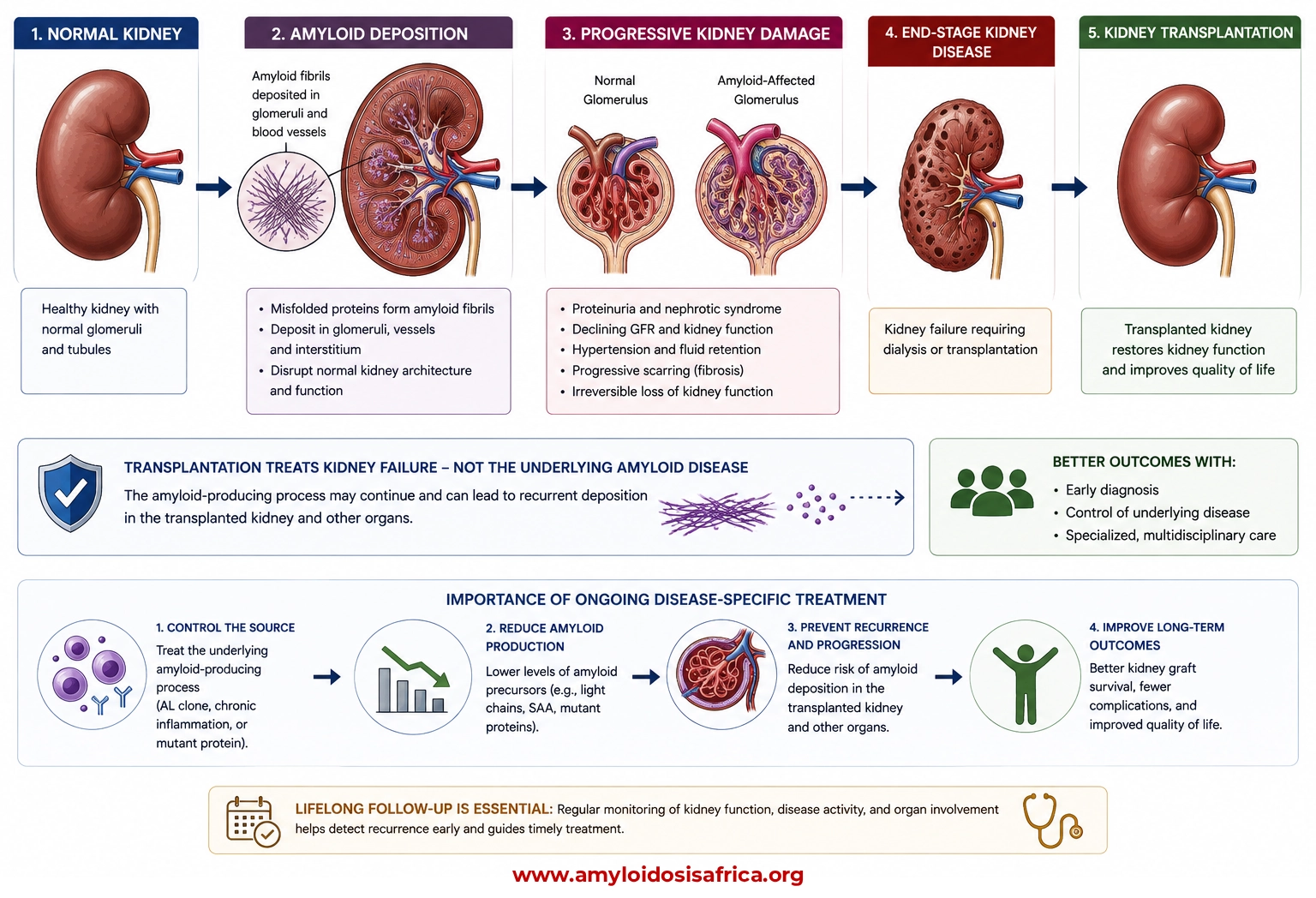
Figure 3. Renal Amyloid Deposition and Kidney Transplantation. Amyloid deposition can progressively damage renal structures and eventually cause irreversible kidney failure. Kidney transplantation replaces the damaged organ but does not eliminate the underlying amyloid-producing process. Continued disease-specific treatment is therefore essential to reduce systemic progression and the risk of recurrent amyloid deposition.
Special Considerations for Kidney Transplantation in Africa
For patients across Africa, the biological principles of transplant candidacy are the same, but access to transplantation and amyloidosis-specific care varies considerably between countries and health systems.
Potential barriers include limited access to amyloid typing, serum free light-chain testing, immunofixation, genetic testing, specialized pathology, cardiac imaging, disease-modifying therapies, dialysis and transplant programs.
These limitations make accurate diagnosis particularly important. A patient should not proceed through an amyloidosis transplant pathway without establishing the amyloid type whenever feasible because AL, AA, ATTR and hereditary forms require fundamentally different disease-control strategies.
Regional referral pathways may also become increasingly important. Amyloidosis centers, nephrologists, hematologists, cardiologists, rheumatologists, infectious-disease specialists and transplant programs need coordinated pathways that allow patients to move efficiently from diagnosis to disease control and, where appropriate, transplant assessment.
Africa-focused priority: Expanding access to accurate amyloid typing, disease-directed treatment and multidisciplinary transplant evaluation is essential if more patients with amyloidosis-related kidney failure are to benefit safely from transplantation.
Questions Patients May Want to Ask Their Transplant Team
- What type of amyloidosis do I have?
- Is amyloidosis the main cause of my kidney failure?
- Is the disease producing amyloid currently under control?
- Do I have amyloid involvement of my heart or other organs?
- Would kidney transplantation alone be appropriate for me?
- Could I require combined heart–kidney transplantation?
- What is my individual risk of amyloid recurring in the transplanted kidney?
- What treatment will I need for amyloidosis after transplantation?
- How will my underlying disease be monitored after transplant?
- Which center has experience managing both amyloidosis and transplantation?
Key Takeaways
- Kidney transplantation can be an effective treatment for carefully selected patients with amyloidosis-related kidney failure.
- Transplantation replaces the damaged kidney but does not eliminate the underlying source of amyloid.
- In AL amyloidosis, deep and durable hematologic control is strongly associated with better transplant outcomes.
- In AA amyloidosis, sustained control of the underlying inflammatory disease is fundamental.
- Amyloid can recur in the transplanted kidney, but modern disease-directed treatment has reduced the impact of recurrence in appropriately selected patients.
- Cardiac assessment is particularly important because significant cardiac amyloidosis may alter transplant eligibility or lead clinicians to consider combined heart–kidney transplantation.
- Transplant decisions should involve an experienced multidisciplinary team and should account for amyloid type, systemic disease burden, disease control, frailty and expected long-term benefit.
References
- Havasi A, Stern L, Lo S, et al. Validation of new renal staging system in AL amyloidosis treated with high dose melphalan and stem cell transplantation. American Journal of Hematology. 2016;91(10):E458–E460.
- Havasi A, Zeldenrust SR, Lentzsch S, et al. Outcomes of renal transplantation in patients with AL amyloidosis: an international collaboration through The International Kidney and Monoclonal Gammopathy Research Group. Blood Cancer Journal. 2022;12:119. doi:10.1038/s41408-022-00714-5.
- Law S, Gillmore JD, Lachmann HJ, et al. Renal transplant outcomes in amyloidosis. Nephrology Dialysis Transplantation. 2021;36(2):355–365. doi:10.1093/ndt/gfaa293.
- Schwarz C, et al. Kidney transplantation in patients with AA amyloidosis: outcomes in a French multicenter cohort. American Journal of Kidney Diseases. 2024;83(3). doi:10.1053/j.ajkd.2023.07.020.
- Lachmann HJ, Goodman HJB, Gilbertson JA, et al. Natural history and outcome in systemic AA amyloidosis. New England Journal of Medicine. 2007;356:2361–2371. doi:10.1056/NEJMoa070265.
- Kidney Disease: Improving Global Outcomes (KDIGO) Transplant Candidate Work Group. KDIGO Clinical Practice Guideline on the Evaluation and Management of Candidates for Kidney Transplantation. Transplantation. 2020;104(4S1):S11–S103.
- Leung N, Bridoux F, Batuman V, et al. The evaluation of monoclonal gammopathy of renal significance: a consensus report of the International Kidney and Monoclonal Gammopathy Research Group. Nature Reviews Nephrology. 2019;15:45–59. doi:10.1038/s41581-018-0077-4.
Medical Disclaimer
This article provides educational and informational content only and does not replace individualized medical advice, diagnosis or treatment. Kidney transplantation in amyloidosis requires comprehensive assessment by specialists experienced in amyloidosis, nephrology and transplantation. Eligibility and treatment decisions vary according to amyloid type, disease severity, treatment response, extrarenal organ involvement, comorbidities, local transplant criteria and available healthcare resources.

Leave a Reply