



Device Therapy in Cardiac Amyloidosis: Pacemakers, ICDs and Cardiac Resynchronization Therapy
Device therapy in cardiac amyloidosis may become necessary when amyloid-related heart disease causes clinically important conduction abnormalities, slow heart rhythms, ventricular arrhythmias, or selected forms of heart failure. Depending on the problem, clinicians may consider a permanent pacemaker, an implantable cardioverter-defibrillator (ICD), or cardiac resynchronization therapy (CRT) (1, 2).
These devices have very different purposes. A pacemaker primarily prevents excessively slow heart rates caused by electrical conduction disease. An ICD can detect and treat certain dangerous ventricular arrhythmias. CRT uses coordinated ventricular pacing to improve electrical and mechanical synchrony in selected patients.
However, a diagnosis of cardiac amyloidosis alone does not automatically mean that a cardiac device should be implanted. Device decisions depend on the patient’s rhythm problem, ventricular function, amyloid type, disease stage, other organ involvement, overall prognosis and the likelihood that the device will provide meaningful clinical benefit (1, 2).
Key principle: Pacemakers, ICDs and CRT devices treat specific electrical or mechanical complications of cardiac amyloidosis. They do not stop amyloid production, remove existing amyloid deposits or replace disease-specific treatment.
Why Can Amyloidosis Cause Electrical Problems in the Heart?
Cardiac amyloidosis develops when misfolded proteins form amyloid fibrils that accumulate within the heart. The two major forms are transthyretin cardiac amyloidosis (ATTR-CM) and immunoglobulin light-chain cardiac amyloidosis (AL-CM) (1, 2).
ATTR-CM may occur as hereditary ATTR amyloidosis, caused by a pathogenic TTR variant, or as wild-type ATTR amyloidosis. In AL amyloidosis, the amyloid-forming protein is an abnormal immunoglobulin light chain produced by a plasma cell or B-cell clone.
Amyloid-related disease can affect the myocardium and the heart’s electrical conduction system. As the disease progresses, patients may develop atrioventricular (AV) conduction abnormalities, bundle-branch block, sinus-node dysfunction, atrial fibrillation or ventricular arrhythmias. Electrical disease can also progress over time, even when abnormalities are initially mild (1, 3).
A study of 369 patients with ATTR cardiac amyloidosis demonstrated that high-grade AV block requiring pacemaker implantation was an important manifestation of conduction-system disease in both hereditary and wild-type ATTR (3).
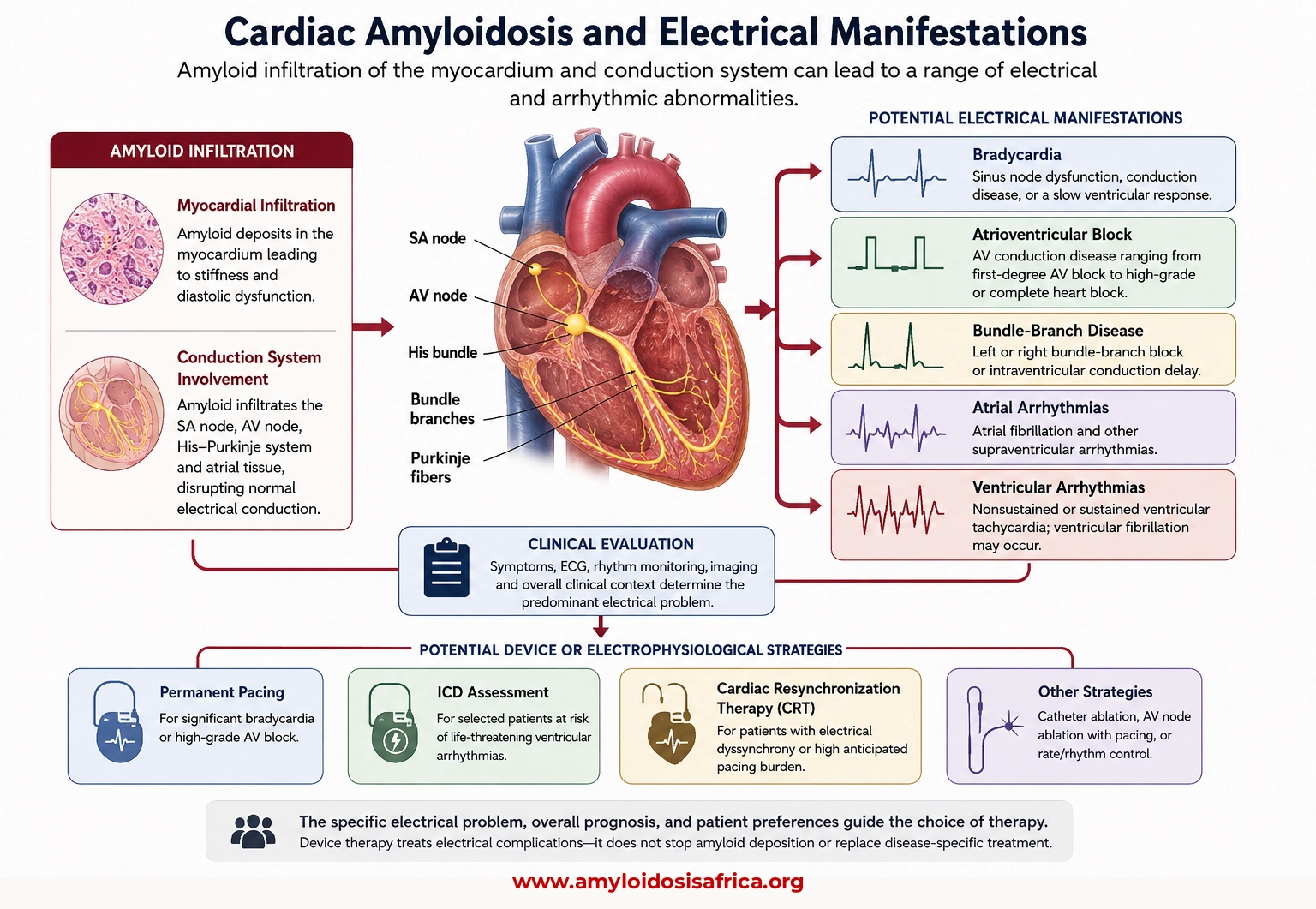
Figure 1. How Cardiac Amyloidosis Can Lead to Conduction Disease and Arrhythmias. Amyloid-related myocardial and conduction-system disease may contribute to bradycardia, atrioventricular block, bundle-branch disease, atrial arrhythmias and ventricular arrhythmias. The resulting electrical problem helps determine whether permanent pacing, ICD assessment, CRT or another electrophysiological strategy should be considered.
What Types of Cardiac Devices May Be Used?
Three major categories of implanted cardiac devices are particularly relevant to patients with cardiac amyloidosis: permanent pacemakers, ICDs and CRT devices. Some devices combine more than one function, but the therapeutic objectives remain different.
| Device | Main Purpose | Potential Role in Cardiac Amyloidosis |
|---|---|---|
| Permanent pacemaker | Treat clinically significant slow heart rhythms or conduction block | Used when established indications for permanent pacing are present |
| ICD | Detect and terminate selected potentially life-threatening ventricular arrhythmias | May be appropriate in selected patients; amyloidosis alone is not an indication for routine implantation |
| CRT-P | Provide coordinated pacing of the ventricles | May be considered in selected patients with an indication for resynchronization or substantial anticipated ventricular pacing |
| CRT-D | Combine cardiac resynchronization with defibrillator capability | May be considered when both CRT and ICD indications are clinically relevant |
Pacemakers and Conduction Disease
Permanent pacemakers have one of the clearest roles among cardiac implantable electronic devices in amyloidosis. The pacemaker does not treat amyloid deposition. Instead, it supports the heart rate when the natural electrical conduction system can no longer maintain an adequate rhythm.
The 2023 American College of Cardiology Expert Consensus Decision Pathway recommends close monitoring for the need for permanent pacing in cardiac amyloidosis and appropriate referral to electrophysiology when conduction disease develops (1).
When Might a Pacemaker Be Needed?
Pacemaker implantation should generally follow established pacing indications rather than being performed solely because a patient has amyloidosis.
Clinical situations can include significant AV block, symptomatic bradycardia or other clinically important conduction abnormalities. Symptoms that may raise concern include syncope, presyncope, dizziness, marked fatigue or worsening exercise intolerance, although these symptoms can also have other causes in amyloidosis.
ECG abnormalities may precede advanced conduction block. Therefore, clinicians often follow patients over time rather than relying on a single electrocardiogram.
Is Pacemaker Need More Common in ATTR?
Conduction-system disease is particularly well described in ATTR cardiac amyloidosis. In the study by Donnellan and colleagues, high-grade AV block requiring pacemaker implantation occurred in both hereditary and wild-type ATTR populations during follow-up (3).
However, conduction abnormalities can also occur in AL cardiac amyloidosis. The decision to implant a pacemaker should therefore depend on the electrical abnormality and clinical indication rather than amyloid subtype alone.
Why Does the Amount of Right-Ventricular Pacing Matter?
Pacemaker implantation can successfully address bradycardia or conduction block, but another important question is how much ventricular pacing the patient is likely to require.
Conventional right-ventricular pacing activates the ventricles differently from normal electrical conduction. When right-ventricular pacing is frequent, it can cause ventricular dyssynchrony and potentially worsen cardiac function in susceptible patients.
This issue may be particularly important in amyloid cardiomyopathy because myocardial function is already impaired.
In a retrospective study of 78 patients with ATTR cardiac amyloidosis and implanted cardiac devices, a right-ventricular pacing burden above 40% was associated with substantially greater worsening of left ventricular ejection fraction, mitral regurgitation and New York Heart Association functional class than a pacing burden below 40% (4).
The study was observational and does not establish that every patient with cardiac amyloidosis and substantial pacing requires CRT. Nevertheless, it highlights why anticipated pacing burden should form part of device planning.
Clinical consideration: In patients expected to require frequent ventricular pacing, clinicians should consider the potential consequences of long-term right-ventricular pacing when selecting the most appropriate pacing strategy.
What Is Cardiac Resynchronization Therapy?
Cardiac resynchronization therapy uses coordinated ventricular pacing to improve the timing of contraction between different regions of the heart.
CRT is well established for appropriately selected patients with conventional heart failure and electrical dyssynchrony. However, evidence specifically for cardiac amyloidosis is much more limited.
The 2023 ACC consensus states that CRT may be considered when pacemaker dependence or a high degree of anticipated pacing is present, while explicitly noting that benefit in cardiac amyloidosis has not been established (1).
Who Might Be Considered for CRT?
Patients may be evaluated for CRT when they meet established heart-failure and electrophysiological indications. In addition, CRT may be considered in selected patients in whom a high ventricular pacing burden is expected.
Assessment can include:
- left ventricular ejection fraction;
- QRS duration and morphology;
- presence of electrical dyssynchrony;
- anticipated or existing ventricular pacing burden;
- heart-failure symptoms;
- amyloidosis stage;
- right ventricular function;
- extracardiac involvement; and
- overall expected clinical benefit.
What Does the Evidence Show?
Observational evidence suggests that some patients with ATTR cardiac amyloidosis may benefit from biventricular pacing.
In the 2019 device study, patients receiving biventricular pacing showed improvements in left ventricular ejection fraction, NYHA functional class and mitral regurgitation severity, whereas a high right-ventricular pacing burden was associated with less favorable remodeling and clinical outcomes (4).
A subsequent study specifically evaluating CRT in ATTR cardiac amyloidosis also reported potential improvements in selected patients (5).
However, these studies were observational and relatively small. Therefore, they should not be interpreted as proof that CRT benefits every patient with cardiac amyloidosis.
Important: Cardiac amyloidosis itself is not an automatic indication for CRT. Device selection should remain based on the patient’s ventricular function, electrical characteristics, pacing requirements, heart-failure status and expected benefit.
What Is an Implantable Cardioverter-Defibrillator?
An implantable cardioverter-defibrillator (ICD) continuously monitors the cardiac rhythm. When the device detects certain dangerous ventricular tachyarrhythmias, it can deliver antitachycardia pacing or an electrical shock intended to restore a safer rhythm.
ICDs can therefore prevent some forms of sudden arrhythmic death. However, determining who will benefit from an ICD in cardiac amyloidosis is particularly challenging.
Why Is ICD Therapy More Controversial?
Ventricular arrhythmias occur in cardiac amyloidosis, and nonsustained ventricular arrhythmias are common in both AL-CM and ATTR-CM. Nevertheless, the presence of ventricular arrhythmias does not necessarily identify patients who will die from an arrhythmia that an ICD can prevent (1).
Sudden death in advanced cardiac amyloidosis may result from several mechanisms. Some deaths result from ventricular tachycardia or ventricular fibrillation, which an ICD may be able to treat. Others can occur because of severe heart failure or electromechanical dissociation, in which the heart has electrical activity but cannot generate an effective circulation. An ICD cannot correct the latter mechanism.
Several observational studies have documented appropriate ICD therapies in patients with cardiac amyloidosis. However, those studies have not convincingly demonstrated improved overall survival (1, 6, 7).
In a Mayo Clinic cohort reported by Lin and colleagues, appropriate ICD shocks occurred in some patients, particularly those with AL amyloidosis, but appropriate therapy did not translate into a demonstrated overall survival benefit (6).
Similarly, Hamon and colleagues evaluated ICD outcomes in cardiac amyloidosis and confirmed that appropriate device therapy can occur, while highlighting the difficulty of predicting who derives meaningful long-term benefit (7).
Key point: Current evidence does not support implanting an ICD simply because a patient has cardiac amyloidosis. Primary-prevention decisions should follow established ICD indications together with individualized assessment of arrhythmic risk, disease stage, competing causes of death and expected survival.
Primary Prevention vs Secondary Prevention
The distinction between primary and secondary prevention is important when considering an ICD.
| Strategy | What It Means | Consideration in Cardiac Amyloidosis |
|---|---|---|
| Primary prevention | ICD implantation before a sustained life-threatening ventricular arrhythmic event has occurred | Amyloidosis-specific survival benefit remains uncertain. Standard indications and individualized assessment should guide decisions. |
| Secondary prevention | ICD therapy after a documented serious ventricular arrhythmia or resuscitated cardiac arrest when otherwise clinically appropriate | May provide a stronger rationale, although overall prognosis and competing non-arrhythmic causes of death remain important. |
How Does Overall Prognosis Affect an ICD Decision?
An ICD is most useful when a patient has a meaningful risk of a treatable ventricular arrhythmia and is expected to survive long enough to benefit from preventing that event.
Therefore, clinicians must consider competing risks. Severe advanced heart failure, profound frailty, extensive extracardiac amyloidosis or another life-limiting condition may reduce the probability that ICD therapy will meaningfully improve survival or quality of life.
This is why ICD assessment in cardiac amyloidosis should include both electrophysiological risk and the patient’s overall disease trajectory.
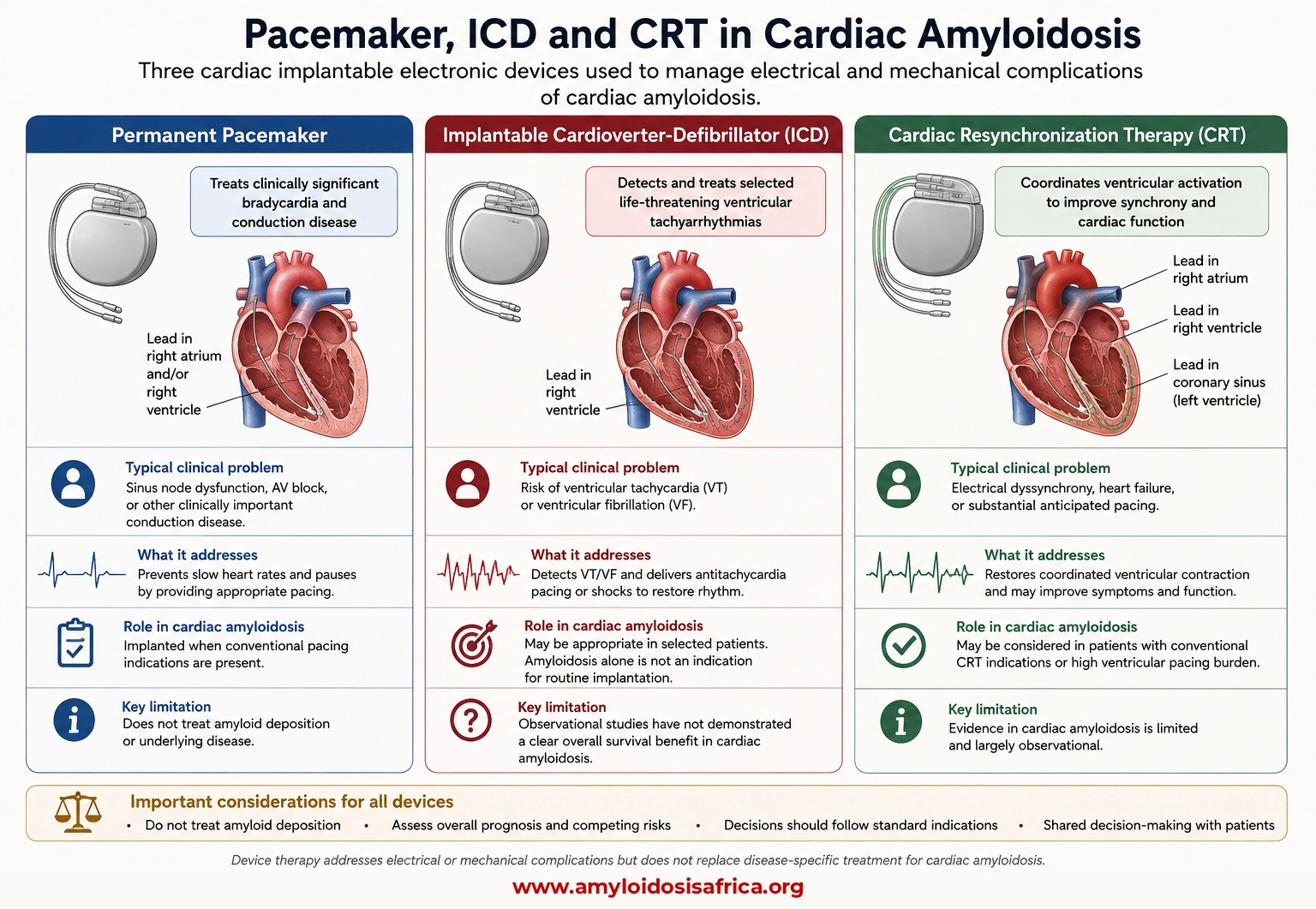
Figure 2. Device Therapy in Cardiac Amyloidosis: Which Device and When? Device selection depends on the clinical problem rather than the diagnosis of amyloidosis alone. Significant bradycardia or conduction disease may require permanent pacing. Selected patients at risk of ventricular arrhythmias may undergo ICD assessment, while patients with appropriate heart-failure, electrical or pacing characteristics may be evaluated for CRT.
What About Atrial Fibrillation?
Atrial fibrillation is common in cardiac amyloidosis, particularly ATTR-CM, but atrial fibrillation itself is not usually an indication for pacemaker implantation.
Management can be challenging because restrictive cardiac physiology may make patients more dependent on appropriate heart rate and atrial contribution to ventricular filling.
In selected patients with refractory atrial fibrillation, difficult ventricular-rate control or tachycardia-bradycardia syndrome, AV-junction ablation followed by permanent pacing may be considered as a later strategy when other approaches are unsuccessful or poorly tolerated (1).
Rhythm-control strategies may also be considered in selected patients. Observational ATTR data suggest that rhythm control can be more successful when performed earlier in the disease course (8).
Why Is Anticoagulation Important in Atrial Fibrillation?
Cardiac amyloidosis is associated with an important risk of intracardiac thrombus and thromboembolism.
The ACC consensus recommends anticoagulation in patients with cardiac amyloidosis and atrial fibrillation regardless of the conventional CHA2DS2-VASc score, provided there is no contraindication (1).
This issue is separate from pacemaker, ICD or CRT implantation but forms an important part of arrhythmia management in cardiac amyloidosis.
How Do Clinicians Decide Which Device Is Appropriate?
Device selection begins by defining the clinical problem. The team then determines whether correcting that problem is likely to improve symptoms, prevent clinically important events or support longer-term cardiac management.
Assessment may include:
- 12-lead electrocardiography;
- ambulatory rhythm monitoring when clinically indicated;
- documentation of bradycardia, AV block or ventricular arrhythmias;
- assessment of syncope or presyncope;
- echocardiography;
- left and right ventricular function;
- QRS duration and morphology;
- anticipated ventricular pacing burden;
- cardiac MRI when clinically appropriate;
- heart-failure severity;
- amyloid type and stage;
- extracardiac organ involvement;
- frailty and functional status;
- overall prognosis; and
- patient preferences and goals of care.
Accurate Amyloid Typing Remains Essential
A cardiac device addresses an electrical or mechanical complication, but clinicians still need to establish the underlying amyloid type accurately because disease-specific treatment and prognosis differ between ATTR and AL amyloidosis.
The diagnostic pathway generally begins with monoclonal protein testing to evaluate for a plasma-cell disorder. In patients without evidence of a monoclonal gammopathy, bone scintigraphy can allow non-invasive diagnosis of ATTR-CM when the appropriate criteria are fulfilled (1, 2).
Once ATTR is diagnosed, genetic testing distinguishes hereditary ATTR from wild-type disease.
In selected situations, tissue biopsy and definitive amyloid typing remain necessary.
Pacemaker vs ICD vs CRT
| Feature | Pacemaker | ICD | CRT |
|---|---|---|---|
| Main purpose | Prevent clinically significant bradycardia | Detect and treat selected ventricular tachyarrhythmias | Improve ventricular electrical and mechanical coordination |
| Typical problem | AV block or other clinically important conduction disease | Risk of potentially lethal ventricular arrhythmia | Electrical dyssynchrony, selected heart failure or substantial pacing requirement |
| Role in amyloidosis | Established when conventional pacing indications are present | Selected patients; routine amyloidosis-specific primary prevention is not supported by strong survival evidence | May be considered when conventional indications or substantial anticipated pacing are present |
| Major evidence limitation | Optimal pacing strategy in amyloidosis continues to evolve | No convincing amyloidosis-specific overall survival benefit demonstrated | Evidence largely observational; benefit has not been definitively established |
| Treats amyloid production? | No | No | No |
Device Therapy Does Not Treat the Amyloidosis Itself
This distinction is essential. Successful pacemaker, ICD or CRT implantation does not stop the production of amyloidogenic proteins and does not remove amyloid already deposited within the myocardium.
Patients therefore continue to require appropriate treatment of cardiac amyloidosis.
For ATTR-CM, disease-modifying therapy targets transthyretin production or stability according to the patient’s disease phenotype and treatment availability. For AL amyloidosis, therapy targets the abnormal plasma-cell or B-cell clone producing the amyloidogenic immunoglobulin light chains.
Device therapy and amyloid-directed treatment should therefore be viewed as complementary components of care rather than alternative strategies.
What Happens After Device Implantation?
Patients require ongoing follow-up after implantation. Device surveillance evaluates battery status, lead function, pacing percentages and arrhythmias recorded by the device.
For pacemaker recipients, the amount of right-ventricular pacing may become particularly relevant. Progressive ventricular dysfunction or a high pacing burden may prompt reassessment of the pacing strategy.
For ICD recipients, clinicians review ventricular arrhythmias, antitachycardia pacing and shocks to determine whether therapies were appropriate and whether medical or electrophysiological management should change.
For CRT recipients, follow-up may include symptoms, functional status, ECG findings, pacing percentages and serial assessment of cardiac function.
Remote device monitoring can also support surveillance between clinic visits where the required infrastructure is available.
What Are the Potential Risks of Cardiac Devices?
Although cardiac devices can provide important benefits, implantation is not risk-free.
Potential complications include:
- bleeding or hematoma;
- infection;
- pneumothorax;
- lead displacement or lead malfunction;
- vascular complications;
- device-related infection requiring extraction;
- inappropriate ICD shocks;
- psychological effects related to ICD therapy;
- progressive ventricular dysfunction associated with unfavorable pacing patterns; and
- future procedures for battery or lead replacement.
Therefore, clinicians should balance the expected device benefit against procedural burden, disease stage, comorbidities and patient preferences.
What About Advanced Heart Failure?
A cardiac implantable device cannot reverse end-stage restrictive amyloid cardiomyopathy.
If heart failure continues to progress despite disease-specific therapy, careful volume management and appropriate device treatment, clinicians should reassess the overall treatment strategy.
In highly selected patients, advanced therapies may include heart transplantation in cardiac amyloidosis.
However, transplant candidacy requires careful assessment of amyloid subtype, extracardiac disease, functional status, frailty, control of the underlying amyloid process and expected post-transplant benefit.
More broadly, see organ transplantation in amyloidosis for the principles that guide transplant assessment.
Considerations for African Health Systems
Access to cardiac implantable electronic devices varies substantially across Africa. Some specialist centers can provide comprehensive electrophysiology services, including pacemaker implantation, ICDs, CRT, device interrogation and remote monitoring. In other settings, these services remain limited or concentrated in major urban referral centers.
Cost is only one component of access. Sustainable device therapy also requires trained implanting physicians, electrophysiology support, imaging, catheterization or procedural facilities, device programmers, infection-prevention systems and reliable long-term follow-up.
Diagnostic capacity is equally important. Implanting an advanced cardiac device cannot compensate for failure to recognize and correctly classify the underlying amyloidosis.
Improving cardiac amyloidosis care in Africa therefore requires integrated pathways that connect disease recognition, accurate amyloid typing, cardiac imaging, rhythm assessment, disease-modifying treatment and access to electrophysiology services.
African data are also needed. Much of the published evidence on pacemakers, ICDs and CRT in cardiac amyloidosis comes from North American and European referral populations. African registries and multicountry research can help define conduction disease, arrhythmia burden, device utilization, treatment barriers and clinical outcomes across different healthcare systems.
Africa-focused priority: Expanding access to cardiac device therapy should occur alongside stronger diagnostic pathways, electrophysiology capacity, long-term device follow-up and access to disease-specific amyloidosis treatment.
Key Takeaways
- Cardiac amyloidosis can cause progressive conduction disease and clinically important arrhythmias.
- Permanent pacemakers are used when patients develop established indications for pacing, such as clinically important bradycardia or conduction block.
- A high right-ventricular pacing burden may adversely affect cardiac function in ATTR cardiac amyloidosis, making pacing strategy important.
- CRT may be considered in selected patients with conventional indications or substantial anticipated ventricular pacing, but amyloidosis-specific evidence remains limited.
- ICDs can successfully terminate some ventricular arrhythmias, but observational studies have not convincingly demonstrated an overall survival benefit specifically in cardiac amyloidosis.
- Cardiac amyloidosis alone is not an indication for routine primary-prevention ICD implantation.
- Device decisions should consider amyloid type, disease stage, heart-failure severity, extracardiac involvement, overall prognosis and patient preferences.
- Pacemakers, ICDs and CRT do not treat the underlying amyloid-producing process.
- Disease-specific amyloidosis therapy must continue alongside appropriate device management.
- Multidisciplinary assessment involving cardiology, electrophysiology, heart failure and amyloidosis specialists can help determine which patients are most likely to benefit.
Frequently Asked Questions
Do All Patients With Cardiac Amyloidosis Need a Pacemaker?
No. A pacemaker is generally implanted when a patient develops an established clinical indication such as significant symptomatic bradycardia or advanced conduction disease. Cardiac amyloidosis alone is not an indication for routine pacemaker implantation.
Is Conduction Disease Common in ATTR Cardiac Amyloidosis?
Yes. Conduction-system disease is an important manifestation of ATTR-CM and may progress over time. Therefore, patients require appropriate ECG and clinical follow-up, particularly when conduction abnormalities are already present.
Does an ICD Prevent Sudden Death in Cardiac Amyloidosis?
An ICD can prevent some deaths caused by treatable ventricular tachyarrhythmias. However, sudden death in cardiac amyloidosis can also occur through mechanisms that an ICD cannot treat. Current observational studies have not convincingly demonstrated an overall survival advantage from routine ICD implantation specifically for amyloidosis.
Can CRT Be Used in Cardiac Amyloidosis?
Yes, in selected patients. CRT may be considered when conventional resynchronization indications are present or when pacemaker dependence or a high ventricular pacing burden is anticipated. However, evidence specifically in cardiac amyloidosis remains limited.
Can a Pacemaker, ICD or CRT Stop Amyloid Deposition?
No. These devices treat electrical or mechanical complications of cardiac disease. Patients still require therapy directed at the underlying ATTR or AL amyloidosis.
Can Someone Have Both an ICD and CRT?
Yes. A CRT-D device combines cardiac resynchronization therapy with ICD functionality. It may be considered when a patient has appropriate indications for both resynchronization and defibrillator therapy.
References
- Kittleson MM, Ruberg FL, Ambardekar AV, et al. 2023 ACC Expert Consensus Decision Pathway on Comprehensive Multidisciplinary Care for the Patient With Cardiac Amyloidosis. J Am Coll Cardiol. 2023;81(11):1076–1126. doi:10.1016/j.jacc.2022.11.022.
- Garcia-Pavia P, Rapezzi C, Adler Y, et al. Diagnosis and treatment of cardiac amyloidosis: a position statement of the ESC Working Group on Myocardial and Pericardial Diseases. Eur Heart J. 2021;42(16):1554–1568. doi:10.1093/eurheartj/ehab072.
- Donnellan E, Wazni OM, Saliba WI, et al. Prevalence, incidence, and impact on mortality of conduction system disease in transthyretin cardiac amyloidosis. Am J Cardiol. 2020;128:140–146. doi:10.1016/j.amjcard.2020.05.021.
- Donnellan E, Wazni OM, Saliba WI, et al. Cardiac devices in patients with transthyretin amyloidosis: impact on functional class, left ventricular function, mitral regurgitation, and mortality. J Cardiovasc Electrophysiol. 2019;30(11):2427–2432. doi:10.1111/jce.14180.
- Donnellan E, Wazni OM, Hanna M, Kanj M, Saliba WI, Jaber WA. Cardiac resynchronization therapy for transthyretin cardiac amyloidosis. J Am Heart Assoc. 2020;9(14):e017335. doi:10.1161/JAHA.120.017335.
- Lin G, Dispenzieri A, Kyle R, Grogan M, Brady PA. Implantable cardioverter defibrillators in patients with cardiac amyloidosis. J Cardiovasc Electrophysiol. 2013;24(7):793–798. doi:10.1111/jce.12123.
- Hamon D, Algalarrondo V, Gandjbakhch E, et al. Outcome and incidence of appropriate implantable cardioverter-defibrillator therapy in patients with cardiac amyloidosis. Int J Cardiol. 2016;222:562–568. doi:10.1016/j.ijcard.2016.07.254.
- Donnellan E, Wazni OM, Hanna M, et al. Atrial fibrillation in transthyretin cardiac amyloidosis: predictors, prevalence, and efficacy of rhythm control strategies. JACC Clin Electrophysiol. 2020;6(9):1118–1127. doi:10.1016/j.jacep.2020.04.019.
Medical Disclaimer
This article provides general educational information and does not replace individualized medical advice, diagnosis or treatment. Decisions regarding pacemakers, implantable cardioverter-defibrillators, cardiac resynchronization therapy or other electrophysiological interventions should be made by qualified healthcare professionals after assessment of the individual patient’s rhythm abnormalities, cardiac function, amyloid type, disease stage, comorbidities, prognosis and preferences.

Leave a Reply